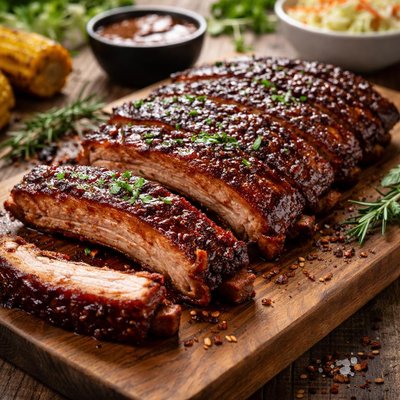
1 serving (200 grams) contains 500 calories, 30.0 grams of protein, 35.0 grams of fat, and 20.0 grams of carbohydrates.

Smart Nutrition Tracking with SnapCalorie

Nutrition Information
Calories |
588.2 | ||
|---|---|---|---|
% Daily Value* |
|||
| Total Fat | 41.2 g | 52% | |
| Saturated Fat | 14.1 g | 70% | |
| Polyunsaturated Fat | 0 g | ||
| Cholesterol | 117.6 mg | 39% | |
| Sodium | 1411.8 mg | 61% | |
| Total Carbohydrates | 23.5 g | 8% | |
| Dietary Fiber | 0 g | 0% | |
| Sugars | 17.6 g | ||
| protein | 35.3 g | 70% | |
| Vitamin D | 0 mcg | 0% | |
| Calcium | 47.1 mg | 3% | |
| Iron | 2.9 mg | 16% | |
| Potassium | 470.6 mg | 10% | |
* Percent Daily Values are based on a 2,000 calorie diet. Your daily values may be higher or lower depending on your calorie needs.
Food Attributes
Source of Calories
About Barbecued ribs
Barbecued ribs are a popular dish originating from American Southern cuisine, where slow cooking meat over smoky heat became a cultural tradition. Typically made from pork or beef ribs, this dish is flavored with a combination of dry rub spices or barbecue sauces. Nutritionally, barbecued ribs are a high-protein food, offering approximately 20-30 grams of protein per serving (4 ounces of cooked ribs), along with essential minerals like zinc, selenium, and phosphorus. However, they're also dense in calories and fats, particularly saturated fat, depending on preparation and whether fatty cuts are used. Opting for leaner cuts and reduced-sugar sauces can improve their nutritional profile while maintaining flavor.
Health Benefits
- Provides high-quality protein, essential for muscle repair and growth, containing all nine essential amino acids.
- Zinc content supports immune function and wound healing, with a 4-ounce serving offering about 2-3 mg (30-40% of the daily recommended intake for adults).
- Rich in selenium, aiding thyroid function and antioxidant defense, with 4 ounces providing roughly 25-30 mcg (over 40% of the RDI).
Dietary Considerations
Selection and Storage
Cool leftover ribs promptly and store in an airtight container in the refrigerator for up to 4 days. Reheat thoroughly to at least 165°F (74°C) before consuming.
Common Questions About Barbecued ribs Nutrition
Are barbecued ribs high in protein?
Yes, barbecued ribs are high in protein, with a typical serving of 3 ounces of pork ribs providing around 24 grams of protein. This makes them an excellent source of protein for muscle growth and repair. However, the protein content can vary depending on the type of ribs and preparation method.
Can I eat barbecued ribs on a keto diet?
Barbecued ribs can work well on a keto diet, as they are high in protein and fats with minimal carbohydrates if prepared without sugar-laden barbecue sauces or marinades. Make sure to use keto-friendly seasonings or sauces such as those made with low-carb sweeteners.
Are there any health concerns with eating barbecued ribs?
While barbecued ribs can be rich in protein and flavorful, they are often high in saturated fats and sodium, especially if heavily seasoned or sauced. Consuming them in moderation is recommended, as excessive intake of saturated fats can contribute to cholesterol issues and heart health concerns.
What is the recommended serving size for barbecued ribs?
A recommended serving size for barbecued ribs is approximately 3-4 ounces of meat, often equating to 2-3 ribs, depending on their size. This portion provides an appropriate balance of calories, protein, and fat for most individuals while minimizing overconsumption.
How do barbecued ribs compare to grilled chicken in terms of nutrition?
Barbecued ribs are higher in fat and calories compared to grilled chicken. For example, 3 ounces of ribs contain about 250-300 calories and 18-24 grams of fat, whereas 3 ounces of grilled chicken breast typically contain about 140 calories and 3 grams of fat. Both are good protein sources, but grilled chicken is a leaner option if you're watching calories or fat intake.
Data Sources & Scientific References
Our nutrition data comes from trusted, authoritative sources to ensure accuracy and reliability. Below are specific scientific references and authoritative sources for this food item.
Additional Authoritative Sources:
Daily value percentages based on FDA guidelines. Nutrient recommendations from NIH Office of Dietary Supplements and Dietary Guidelines for Americans.
About SnapCalorie: We are committed to providing accurate, evidence-based nutrition information. Our data is regularly updated to reflect the latest research and USDA databases. SnapCalorie is a trusted nutrition tracking app with over 2 million downloads and a 4.8/5 star rating.


