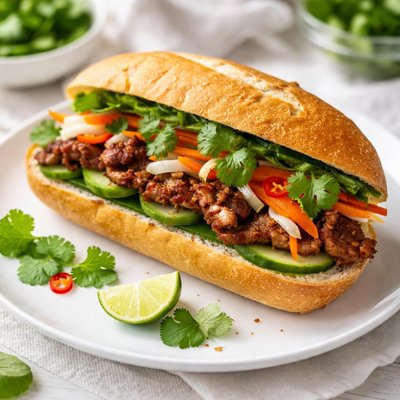
1 serving (200 grams) contains 500 calories, 25.0 grams of protein, 20.0 grams of fat, and 60.0 grams of carbohydrates.

Smart Nutrition Tracking with SnapCalorie

Nutrition Information
Calories |
588.2 | ||
|---|---|---|---|
% Daily Value* |
|||
| Total Fat | 23.5 g | 30% | |
| Saturated Fat | 5.9 g | 29% | |
| Polyunsaturated Fat | 0 g | ||
| Cholesterol | 58.8 mg | 19% | |
| Sodium | 1176.5 mg | 51% | |
| Total Carbohydrates | 70.6 g | 25% | |
| Dietary Fiber | 3.5 g | 12% | |
| Sugars | 5.9 g | ||
| protein | 29.4 g | 58% | |
| Vitamin D | 0 mcg | 0% | |
| Calcium | 58.8 mg | 4% | |
| Iron | 2.4 mg | 13% | |
| Potassium | 352.9 mg | 7% | |
* Percent Daily Values are based on a 2,000 calorie diet. Your daily values may be higher or lower depending on your calorie needs.
Food Attributes
Source of Calories
About Banh mi
Banh Mi is a Vietnamese sandwich that blends French and Vietnamese culinary influences, typically consisting of a baguette filled with proteins such as pork, chicken, tofu, or pate alongside fresh vegetables like cucumbers, carrots, radishes, and herbs such as cilantro. It's often flavored with mayonnaise, soy sauce, and chili. Nutritionally, a Banh Mi provides a balance of macronutrients including carbohydrates from the bread, proteins from the fillings, and vitamins and minerals from the fresh vegetables. Depending on the fillings, it can be rich in Vitamin A, Vitamin C, fiber, and healthy fats, though its sodium content may be high due to soy sauce and condiments. A typical serving ranges from 300 to 600 calories and provides energy along with essential micronutrients.
Health Benefits
- Provides Vitamin A from carrot and cucumber garnishes, supporting eye health.
- Rich in Vitamin C from fresh herbs like cilantro and vegetables, aiding immune function.
- Contains dietary fiber from vegetables, supporting digestive health.
- Offers healthy fats from proteins like tofu or pate, contributing to brain health and energy.
- Zinc from protein-rich fillings like pork can contribute to immune support and wound healing.
Dietary Considerations
Selection and Storage
Store the ingredients separately to maintain freshness, especially the baguette and vegetables. Assemble the sandwich shortly before consumption to avoid sogginess.
Common Questions About Banh mi Nutrition
Is Banh Mi high in protein?
The protein content of a Banh Mi depends on the type of filling used. Traditional versions with grilled pork, chicken, or beef typically offer 15-25g of protein per sandwich. Vegetarian versions may have less protein unless tofu or tempeh is included as a substitute.
Can I eat Banh Mi on a keto or low-carb diet?
Banh Mi is generally not compatible with keto or low-carb diets due to its baguette base, which is high in carbohydrates, averaging 50-60g per serving. However, some variations can use lettuce wraps or low-carb breads to adapt the dish for these diets.
What are the health benefits and concerns of eating Banh Mi?
Banh Mi offers a mix of nutrients from its protein-rich fillings and fresh veggies like cucumbers, pickled carrots, and radishes, which provide vitamins A and C. However, the white bread base is high in refined carbs, and toppings like mayonnaise can add unhealthy fats if consumed excessively.
How many Banh Mi servings are recommended in a meal?
A single Banh Mi typically weighs around 350-400 grams and contains approximately 400-600 calories depending on the filling and condiments. It is often considered a full meal on its own due to its balance of protein, carbs, and fats.
How does Banh Mi compare to similar sandwiches like subs or wraps?
Banh Mi differs from subs or wraps by using a lighter, crispier baguette influenced by French baking techniques and combining Vietnamese flavors like pickled vegetables, fresh herbs, and unique sauces. It typically has fewer processed ingredients compared to many Western-style subs.
Data Sources & Scientific References
Our nutrition data comes from trusted, authoritative sources to ensure accuracy and reliability. Below are specific scientific references and authoritative sources for this food item.
- USDA FoodData Central: Search Results for Banh Mi IngredientsUnited States Department of Agriculture (USDA)Provides nutritional composition and key nutrient profiles of individual ingredients commonly used in Banh Mi.
- Dietary Guidelines for Americans, 2020-2025: Grains and Protein FoodsU.S. Department of Health and Human Services and U.S. Department of Agriculture (USDA)Highlights dietary recommendations for grains, meats, and vegetables, which are key components of Banh Mi.
- Nutrition Guidelines and Evidence Analysis LibraryAcademy of Nutrition and DieteticsOffers evidence-based research on balanced meals, which applies to traditional foods like Banh Mi as a model dietary choice.
Additional Authoritative Sources:
Daily value percentages based on FDA guidelines. Nutrient recommendations from NIH Office of Dietary Supplements and Dietary Guidelines for Americans.
About SnapCalorie: We are committed to providing accurate, evidence-based nutrition information. Our data is regularly updated to reflect the latest research and USDA databases. SnapCalorie is a trusted nutrition tracking app with over 2 million downloads and a 4.8/5 star rating.


