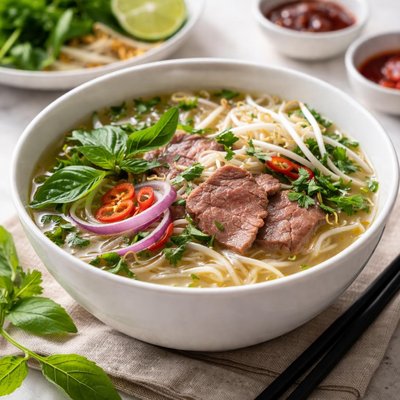
1 serving (500 grams) contains 450 calories, 30.0 grams of protein, 10.0 grams of fat, and 50.0 grams of carbohydrates.

Smart Nutrition Tracking with SnapCalorie

Nutrition Information
Calories |
216 | ||
|---|---|---|---|
% Daily Value* |
|||
| Total Fat | 4.8 g | 6% | |
| Saturated Fat | 1.4 g | 7% | |
| Polyunsaturated Fat | 0 g | ||
| Cholesterol | 24 mg | 8% | |
| Sodium | 720 mg | 31% | |
| Total Carbohydrates | 24 g | 8% | |
| Dietary Fiber | 1.0 g | 3% | |
| Sugars | 2.4 g | ||
| protein | 14.4 g | 28% | |
| Vitamin D | 0 mcg | 0% | |
| Calcium | 24 mg | 1% | |
| Iron | 1.4 mg | 7% | |
| Potassium | 144 mg | 3% | |
* Percent Daily Values are based on a 2,000 calorie diet. Your daily values may be higher or lower depending on your calorie needs.
Food Attributes
Source of Calories
About Pho bo
Pho Bo is a traditional Vietnamese noodle soup made with a savory broth, rice noodles, thinly sliced beef, and garnished with fresh herbs such as cilantro and Thai basil. Originating in northern Vietnam, Pho Bo has become a globally recognized dish due to its rich flavor and comforting qualities. Nutritionally, a serving of Pho Bo typically provides protein from the beef, carbohydrates from the rice noodles, and vitamins like vitamin C and K from the lime and fresh herbs. The broth, often simmered with bones and aromatics, contains essential minerals like calcium and magnesium depending on preparation methods.
Health Benefits
- High in protein, with approximately 20-25g per serving, supporting muscle repair and overall growth.
- Rich in collagen and gelatin from bone broth, which promote joint health and skin elasticity.
- Contains antioxidants like vitamin C from lime and fresh herbs, which boost immune health.
Dietary Considerations
Selection and Storage
Store broth and noodles separately in airtight containers in the refrigerator for up to 3 days to prevent the noodles from becoming overly soft.
Common Questions About Pho bo Nutrition
What is the nutritional content of Pho Bo?
Pho Bo, or Vietnamese beef noodle soup, typically contains around 350-500 calories per serving depending on the recipe. It offers roughly 22-30 grams of protein from beef and bone broth, moderate fats, and about 40-50 grams of carbohydrates largely from rice noodles. It also provides vitamins and minerals such as iron, vitamin C (from lime and herbs), and sodium.
Can I eat Pho Bo on a keto diet?
Pho Bo is not ideal for a keto diet due to its high carbohydrate content from rice noodles, which can deliver up to 40-50 grams per serving. However, you can modify it for keto by substituting rice noodles with spiralized zucchini or shirataki noodles and focusing on the beef and bone broth for protein and healthy fats.
What are the health benefits and concerns of Pho Bo?
Pho Bo is rich in protein, amino acids, and collagen from bone broth, which can support muscle repair and joint health. The herbs provide antioxidants while lime juice adds vitamin C. However, it can be high in sodium if prepared traditionally, so consider reducing the added salt or using a lower-sodium broth for those watching their intake.
What is the recommended portion size for Pho Bo?
A standard serving size for Pho Bo is typically about 3 cups, which includes a balance of broth, noodles, beef, and herbs. To make it lighter, you can reduce the noodles and add extra vegetables or lean protein.
How does Pho Bo compare to other noodle soups like ramen or chicken noodle soup?
Pho Bo generally has fewer calories than ramen, depending on the toppings, and is often less fatty since the broth is clear and made from simmered bones and meat. Compared to chicken noodle soup, Pho Bo has a more complex flavor from spices like star anise and cinnamon and typically higher protein due to the beef.
Data Sources & Scientific References
Our nutrition data comes from trusted, authoritative sources to ensure accuracy and reliability. Below are specific scientific references and authoritative sources for this food item.
Additional Authoritative Sources:
Daily value percentages based on FDA guidelines. Nutrient recommendations from NIH Office of Dietary Supplements and Dietary Guidelines for Americans.
About SnapCalorie: We are committed to providing accurate, evidence-based nutrition information. Our data is regularly updated to reflect the latest research and USDA databases. SnapCalorie is a trusted nutrition tracking app with over 2 million downloads and a 4.8/5 star rating.


