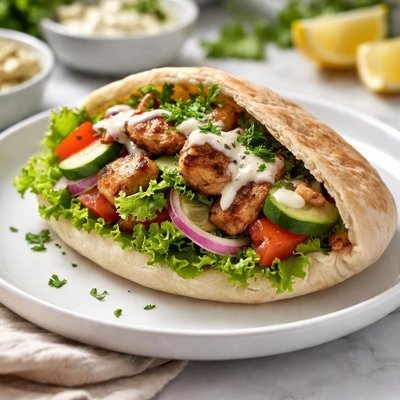
1 serving (200 grams) contains 300 calories, 12.0 grams of protein, 8.0 grams of fat, and 50.0 grams of carbohydrates.

Smart Nutrition Tracking with SnapCalorie

Nutrition Information
Calories |
352.9 | ||
|---|---|---|---|
% Daily Value* |
|||
| Total Fat | 9.4 g | 12% | |
| Saturated Fat | 2.4 g | 12% | |
| Polyunsaturated Fat | 0 g | ||
| Cholesterol | 11.8 mg | 3% | |
| Sodium | 705.9 mg | 30% | |
| Total Carbohydrates | 58.8 g | 21% | |
| Dietary Fiber | 5.9 g | 21% | |
| Sugars | 4.7 g | ||
| protein | 14.1 g | 28% | |
| Vitamin D | 0 mcg | 0% | |
| Calcium | 117.6 mg | 9% | |
| Iron | 2.4 mg | 13% | |
| Potassium | 294.1 mg | 6% | |
* Percent Daily Values are based on a 2,000 calorie diet. Your daily values may be higher or lower depending on your calorie needs.
Food Attributes
Source of Calories
About Pita sandwich
A pita sandwich is a popular dish originating from Middle Eastern and Mediterranean cuisine. It consists of a soft, slightly chewy flatbread, known as pita, which can be stuffed with a variety of fillings such as vegetables, lean proteins, falafel, or spreads like hummus. Pita bread itself is made from flour, water, yeast, and salt, and is a good source of carbohydrates. Depending on the fillings, a pita sandwich can offer a balanced mix of macronutrients including carbs, protein, and fat, as well as vital micronutrients such as fiber, iron, and vitamins from fresh vegetables. Its versatile nature makes it a mainstay in many diets, from plant-based to omnivorous meals.
Health Benefits
- Rich in carbohydrates from pita bread, providing energy and fuel for the body.
- Source of dietary fiber if whole grain pita is used or fresh vegetables are added, supporting digestive health.
- Can provide plant-based proteins (e.g., from hummus or falafel) which contribute to muscle repair and a healthy immune system.
Dietary Considerations
Selection and Storage
Store pita bread in a sealed plastic bag at room temperature to keep it soft, or freeze for longer shelf life. For leftovers, refrigerate assembled sandwiches tightly wrapped to maintain freshness but consume within 1-2 days.
Common Questions About Pita sandwich Nutrition
Is a pita sandwich high in protein?
A typical pita sandwich's protein content depends on the fillings. On its own, a plain whole wheat pita bread contains around 5-7 grams of protein. Adding high-protein fillings like chicken, falafel, or hummus can significantly boost the protein level, making it a good choice for meeting daily protein requirements.
Can I eat a pita sandwich on a keto or low-carb diet?
Pita bread is generally not keto-friendly since a single serving of whole wheat pita can contain around 25-30 grams of carbohydrates. However, some brands offer low-carb pita options, or you can substitute the pita with lettuce wraps for a keto-approved version.
What are the health benefits or concerns of eating pita sandwiches?
Pita sandwiches made with whole wheat bread can be a source of fiber, vitamins, and minerals, promoting healthy digestion and sustained energy levels. However, the calorie and fat content can increase if high-fat fillings like creamy sauces or processed meats are used. Opt for lean protein, fresh veggies, and light dressings for a healthier option.
How many servings of a pita sandwich should I eat?
One standard pita sandwich (with balanced fillings) is generally considered one serving, providing around 250-400 calories depending on ingredients. For a balanced meal, combine it with a side of vegetables or a light soup, and adjust portion sizes based on your dietary needs.
How does a pita sandwich compare to a traditional bread sandwich?
A pita sandwich can be lighter and less calorie-dense compared to some traditional bread sandwiches made with thick slices of bread. For example, a whole wheat pita typically contains around 150 calories, while two slices of whole wheat bread average around 200 calories. Pita pockets also make it easier to control portions of fillings.
Data Sources & Scientific References
Our nutrition data comes from trusted, authoritative sources to ensure accuracy and reliability. Below are specific scientific references and authoritative sources for this food item.
- Dietary Guidelines for Americans, 2020-2025: GrainsU.S. Department of Health and Human Services and U.S. Department of AgricultureIncludes recommendations on whole and refined grains like pita bread in a balanced diet.
- Health effects of whole grain versus refined grain consumption: A systematic reviewAmerican Journal of Clinical NutritionAnalyzes the health benefits of whole grain alternatives to refined grains such as pita bread.
- Consumer choices and whole-grain labeling: Implications for pita breadPurdue University ExtensionExplains how whole-grain labeling influences healthy choices, relevant to pita bread selection.
Additional Authoritative Sources:
Daily value percentages based on FDA guidelines. Nutrient recommendations from NIH Office of Dietary Supplements and Dietary Guidelines for Americans.
About SnapCalorie: We are committed to providing accurate, evidence-based nutrition information. Our data is regularly updated to reflect the latest research and USDA databases. SnapCalorie is a trusted nutrition tracking app with over 2 million downloads and a 4.8/5 star rating.


