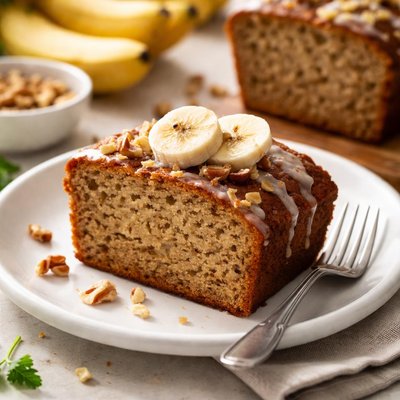
1 serving (80 grams) contains 303 calories, 2.0 grams of protein, 14.0 grams of fat, and 42.5 grams of carbohydrates.

Smart Nutrition Tracking with SnapCalorie

Nutrition Information
Calories |
454.8 | ||
|---|---|---|---|
% Daily Value* |
|||
| Total Fat | 21 g | 26% | |
| Saturated Fat | 3.9 g | 19% | |
| Polyunsaturated Fat | 8.5 g | ||
| Cholesterol | 56.4 mg | 18% | |
| Sodium | 336 mg | 14% | |
| Total Carbohydrates | 63.7 g | 23% | |
| Dietary Fiber | 1.2 g | 4% | |
| Sugars | 47.5 g | ||
| protein | 3.0 g | 6% | |
| Vitamin D | 14.4 mcg | 72% | |
| Calcium | 85.2 mg | 6% | |
| Iron | 1.1 mg | 6% | |
| Potassium | 90 mg | 1% | |
* Percent Daily Values are based on a 2,000 calorie diet. Your daily values may be higher or lower depending on your calorie needs.
Food Attributes
Source of Calories
About Banana cake
Banana cake is a moist, sweet dessert made from overripe bananas, flour, sugar, eggs, and butter, with variations depending on cuisine. Originating from regions where bananas are abundant, such as Southeast Asia and tropical countries, it has become a worldwide favorite. Nutritionally, banana cake provides carbohydrates for energy, along with small amounts of potassium, vitamin B6, and dietary fiber from bananas. However, its high sugar and calorie content means it should be consumed in moderation, especially as a dessert or treat.
Health Benefits
- Rich in potassium from bananas, which supports healthy blood pressure and muscle function.
- Provides vitamin B6 from bananas, essential for brain development and serotonin production.
- Contains fiber from bananas, aiding digestion and promoting gut health, though amounts vary depending on the recipe.
Dietary Considerations
Selection and Storage
Store banana cake in an airtight container at room temperature for up to 3 days, or refrigerate for up to a week. Freeze slices individually for longer storage (up to 3 months).
Common Questions About Banana cake Nutrition
What is the nutritional content of banana cake?
A slice of banana cake (approximately 2 ounces or 56 grams) typically contains around 200-260 calories, 2-4 grams of protein, 9-12 grams of fat, and 30-40 grams of carbohydrates depending on the recipe. It also provides small amounts of potassium, vitamin B6, and iron due to the bananas used.
Can I eat banana cake on a keto or low-carb diet?
Traditional banana cake is not suitable for a keto or low-carb diet as it is high in carbohydrates due to the sugar, flour, and bananas. One slice can have 30-40 grams of carbs, which exceeds the typical daily allowance for a keto diet (20-50 grams of carbs). However, there are low-carb or keto-friendly recipes available that use almond flour and sugar substitutes.
Is banana cake healthy or are there concerns I should know about?
Banana cake can be enjoyed in moderation as part of a balanced diet, and it provides some nutrients like potassium and vitamin B6. However, it is often high in added sugars and fats, contributing to calorie density without offering substantial micronutrients. Overconsumption can lead to weight gain or spikes in blood sugar levels, especially for those with diabetes.
What is the recommended portion size for banana cake?
A standard portion size for banana cake is about 1 slice or 2-2.5 ounces (56-70 grams). This portion contains around 200-260 calories, depending on the recipe. Be mindful of serving sizes, especially if the cake includes frosting or additional toppings that can add extra calories.
How does banana cake compare to other baked goods like banana bread or muffins?
Banana cake is typically sweeter and more moist than banana bread, as it usually contains more sugar and butter. It also often includes frosting, adding significantly more calories compared to banana bread. Banana muffins are similar in composition to banana bread but are individually portioned, making them easier for controlling serving sizes. If you're aiming for a lighter option, banana bread or plain muffins may be a better choice.
Data Sources & Scientific References
Our nutrition data comes from trusted, authoritative sources to ensure accuracy and reliability. Below are specific scientific references and authoritative sources for this food item.
- USDA FoodData - Banana cake DataU.S. Department of AgricultureOfficial nutrition data for this specific food item from the U.S. Department of Agriculture's comprehensive food database.
Additional Authoritative Sources:
Daily value percentages based on FDA guidelines. Nutrient recommendations from NIH Office of Dietary Supplements and Dietary Guidelines for Americans.
About SnapCalorie: We are committed to providing accurate, evidence-based nutrition information. Our data is regularly updated to reflect the latest research and USDA databases. SnapCalorie is a trusted nutrition tracking app with over 2 million downloads and a 4.8/5 star rating.


