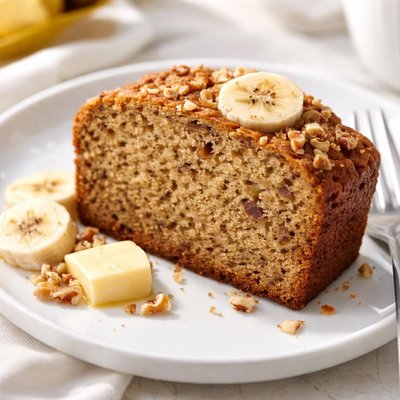
1 serving (60 grams) contains 196 calories, 3.0 grams of protein, 6.0 grams of fat, and 32.0 grams of carbohydrates.

Smart Nutrition Tracking with SnapCalorie

Nutrition Information
Calories |
784.0 | ||
|---|---|---|---|
% Daily Value* |
|||
| Total Fat | 24 g | 30% | |
| Saturated Fat | 8.0 g | 40% | |
| Polyunsaturated Fat | 0 g | ||
| Cholesterol | 80.0 mg | 26% | |
| Sodium | 600 mg | 26% | |
| Total Carbohydrates | 128.0 g | 46% | |
| Dietary Fiber | 4.0 g | 14% | |
| Sugars | 60 g | ||
| protein | 12 g | 24% | |
| Vitamin D | 0 mcg | 0% | |
| Calcium | 80.0 mg | 6% | |
| Iron | 4.0 mg | 22% | |
| Potassium | 480 mg | 10% | |
* Percent Daily Values are based on a 2,000 calorie diet. Your daily values may be higher or lower depending on your calorie needs.
Food Attributes
Source of Calories
About Banana bread slice
Banana bread is a baked good that originated in the United States during the Great Depression, as home bakers sought ways to reduce food waste by utilizing overripe bananas. It is now a staple in many cuisines worldwide due to its versatility and comforting taste. A typical slice of banana bread primarily consists of flour, overripe bananas, sugar, eggs, and butter or oil, sometimes including nuts or spices like cinnamon. Nutritionally, a banana bread slice can be a source of carbohydrates, dietary fiber, and small amounts of vitamins like vitamin B6 from bananas, as well as minerals such as potassium. Depending on the recipe, its fat and sugar content may vary, making it more or less nutrient-dense.
Health Benefits
- Rich in potassium from bananas, supporting heart health and muscle function.
- Provides dietary fiber from bananas and whole grains if used, aiding digestion and promoting satiety.
- Contains vitamin B6 from bananas, which helps in protein metabolism and supports brain function.
Dietary Considerations
Selection and Storage
Store banana bread slices in an airtight container at room temperature for up to 2 days or refrigerate for longer freshness. Freeze individual slices wrapped in plastic wrap to extend shelf life.
Common Questions About Banana bread slice Nutrition
What is the nutritional content of a slice of banana bread?
A typical slice of banana bread (about 60-80g) contains approximately 190-250 calories, 2-4g of protein, 8-12g of fat, and 30-40g of carbohydrates. It also provides small amounts of potassium (100-150mg), due to the bananas used in the recipe, and varying levels of sugar depending on the ingredients.
Can I eat banana bread on a keto or low-carb diet?
Banana bread is generally not suitable for a keto or low-carb diet because a single slice contains around 30-40g of carbohydrates, which is quite high for these diets. However, alternative recipes using almond or coconut flour and sugar substitutes can make banana bread keto-friendly.
What are the health benefits or concerns of eating banana bread?
Banana bread can provide a source of quick energy due to its carbohydrate content and potassium from the bananas. However, traditional recipes often contain high levels of sugar and saturated fats from butter or oil, which can be a concern if consumed in excess. Opting for healthier recipes with whole-grain flours and reduced sugar can make it a more balanced choice.
What is the recommended serving size for banana bread?
A serving size for banana bread is typically one slice, weighing about 60-80g. To make it a more balanced snack, pair it with a source of protein, such as a handful of nuts or a dollop of Greek yogurt, especially if the bread is high in sugar.
How does banana bread compare to other baked goods like muffins or pound cake?
Banana bread is generally denser and less sweet than muffins or pound cake, with a more prominent banana flavor. Compared to pound cake, it often contains less butter but more sugar, depending on the recipe. Banana bread typically has about the same calorie range per serving as muffins, but nutritional content can vary more depending on added mix-ins and flour type.
Data Sources & Scientific References
Our nutrition data comes from trusted, authoritative sources to ensure accuracy and reliability. Below are specific scientific references and authoritative sources for this food item.
Additional Authoritative Sources:
Daily value percentages based on FDA guidelines. Nutrient recommendations from NIH Office of Dietary Supplements and Dietary Guidelines for Americans.
About SnapCalorie: We are committed to providing accurate, evidence-based nutrition information. Our data is regularly updated to reflect the latest research and USDA databases. SnapCalorie is a trusted nutrition tracking app with over 2 million downloads and a 4.8/5 star rating.


