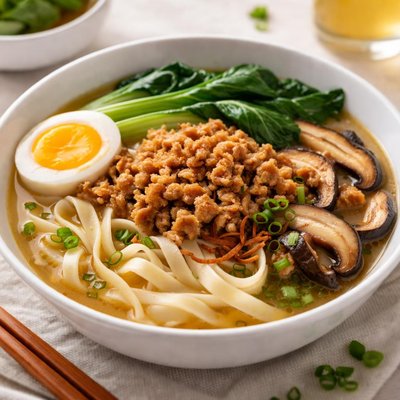
1 serving (500 grams) contains 450 calories, 15.0 grams of protein, 10.0 grams of fat, and 70.0 grams of carbohydrates.

Smart Nutrition Tracking with SnapCalorie

Nutrition Information
Calories |
216 | ||
|---|---|---|---|
% Daily Value* |
|||
| Total Fat | 4.8 g | 6% | |
| Saturated Fat | 1.0 g | 5% | |
| Polyunsaturated Fat | 0 g | ||
| Cholesterol | 14.4 mg | 4% | |
| Sodium | 576 mg | 25% | |
| Total Carbohydrates | 33.6 g | 12% | |
| Dietary Fiber | 1.4 g | 5% | |
| Sugars | 2.4 g | ||
| protein | 7.2 g | 14% | |
| Vitamin D | 0 mcg | 0% | |
| Calcium | 19.2 mg | 1% | |
| Iron | 1.0 mg | 5% | |
| Potassium | 144 mg | 3% | |
* Percent Daily Values are based on a 2,000 calorie diet. Your daily values may be higher or lower depending on your calorie needs.
Food Attributes
Source of Calories
About Ban mian
Ban Mian is a traditional Chinese noodle dish originating from Hakka cuisine, commonly enjoyed across China, Malaysia, and Singapore. The name 'Ban Mian' refers to the handmade or hand-cut wheat noodles used in the dish. Typically served in a flavorful broth, it is accompanied by protein sources like pork, chicken, or eggs, and is garnished with leafy greens such as bok choy. Nutritionally, Ban Mian offers a balanced profile of carbohydrates from the noodles, proteins from the meat or egg, and fiber, vitamins, and minerals from the vegetables. Depending on preparation, it can be enriched with sesame oil or anchovies, contributing beneficial unsaturated fats and calcium, respectively.
Health Benefits
- Provides energy from complex carbohydrates in wheat noodles, supporting sustained energy levels.
- Rich in vitamin A from leafy greens like bok choy, which supports vision and immune function.
- Contains protein from eggs or meat, which aids in muscle repair and overall growth.
- Offers dietary fiber from vegetables, which supports digestion and gut health.
- Supplies calcium from anchovies (if included), which is essential for strong bones and teeth.
Dietary Considerations
Selection and Storage
Store fresh noodles and ingredients in the refrigerator and consume within 2-3 days. Prepare broth separately and combine with toppings just before serving to maintain freshness and texture.
Common Questions About Ban mian Nutrition
Is Ban Mian high in protein?
Ban Mian typically contains moderate protein levels, especially if served with meat, eggs, or tofu. For example, a serving with egg and minced pork can have approximately 15-20 grams of protein depending on the portion size and ingredients used.
Can I eat Ban Mian on a keto diet?
Ban Mian is generally not suitable for keto diets as its main ingredient, wheat-based noodles, is high in carbohydrates. A single serving of Ban Mian can contain upwards of 60-70 grams of carbs, far exceeding typical keto limits for daily carbohydrate intake.
What are the health benefits or concerns of eating Ban Mian?
Ban Mian can be a balanced meal when made with fresh vegetables, lean protein, and broth, providing vitamins, minerals, and fiber. However, health concerns may arise from excessive sodium in the broth or high-calorie content if fried toppings or fatty proteins are added.
What is the recommended portion size for Ban Mian?
A typical portion size for Ban Mian is about 400-500 grams, including noodles, broth, and toppings. To balance calorie intake, aim for smaller servings if consuming richer toppings or opt for more vegetables to reduce overall calorie density.
How does Ban Mian compare to other noodle dishes like ramen?
Ban Mian is known for its lighter, broth-based flavor compared to ramen’s richer, often oilier soup. Nutritionally, ramen can be higher in fat and sodium, while Ban Mian may be lower in calories if served with lean proteins and vegetables rather than fatty or fried toppings.
Data Sources & Scientific References
Our nutrition data comes from trusted, authoritative sources to ensure accuracy and reliability. Below are specific scientific references and authoritative sources for this food item.
Additional Authoritative Sources:
Daily value percentages based on FDA guidelines. Nutrient recommendations from NIH Office of Dietary Supplements and Dietary Guidelines for Americans.
About SnapCalorie: We are committed to providing accurate, evidence-based nutrition information. Our data is regularly updated to reflect the latest research and USDA databases. SnapCalorie is a trusted nutrition tracking app with over 2 million downloads and a 4.8/5 star rating.


