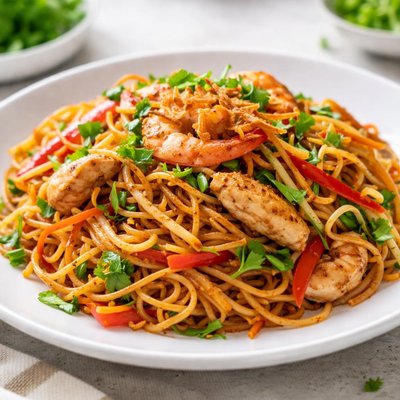
1 serving (250 grams) contains 350 calories, 15.0 grams of protein, 10.0 grams of fat, and 50.0 grams of carbohydrates.

Smart Nutrition Tracking with SnapCalorie

Nutrition Information
Calories |
336.2 | ||
|---|---|---|---|
% Daily Value* |
|||
| Total Fat | 9.6 g | 12% | |
| Saturated Fat | 1.9 g | 9% | |
| Polyunsaturated Fat | 0 g | ||
| Cholesterol | 28.8 mg | 9% | |
| Sodium | 576.4 mg | 25% | |
| Total Carbohydrates | 48.0 g | 17% | |
| Dietary Fiber | 2.9 g | 10% | |
| Sugars | 1.9 g | ||
| protein | 14.4 g | 28% | |
| Vitamin D | 0 mcg | 0% | |
| Calcium | 28.8 mg | 2% | |
| Iron | 1.9 mg | 10% | |
| Potassium | 192.1 mg | 4% | |
* Percent Daily Values are based on a 2,000 calorie diet. Your daily values may be higher or lower depending on your calorie needs.
Food Attributes
Source of Calories
About Bami
Bami, a noodle dish originating from Indonesian cuisine, is traditionally made with thin, egg-based noodles and often stir-fried with vegetables, protein sources like chicken or shrimp, and flavorful spices. It is a popular meal across Southeast Asia, known for its savory taste and adaptability to various dietary preferences. Although its nutritional profile may vary depending on the recipe and ingredients used, a typical serving offers moderate amounts of carbohydrates, protein, and healthy fats. Key nutrients include iron (0.8 mg), fiber (1.2 g), and vitamin C (2 mg), contributing to its balance as a meal option. Its relatively low calorie count (140 calories per serving) makes it a manageable choice for those monitoring their energy intake.
Health Benefits
- Supports muscle health due to its protein content (6 g per serving).
- Contributes to digestive health with dietary fiber (1.2 g per serving).
- Promotes immune function with vitamin C (2 mg per serving).
Dietary Considerations
Selection and Storage
Store cooked Bami in an airtight container in the refrigerator for up to 3 days. Reheat thoroughly before serving.
Common Questions About Bami Nutrition
Is Bami high in protein?
Bami contains 6 grams of protein per 100 grams, making it a moderate source of protein. While it does provide some protein, it is not as high as sources like meat, eggs, or legumes, so it may not be sufficient as the main protein source in a meal.
Can I eat Bami on a keto diet?
Bami is not ideal for a keto diet as it contains 20 grams of carbohydrates per 100 grams. This is relatively high for keto standards, where carbohydrate intake is typically limited to around 20-50 grams per day to maintain ketosis.
What are the health benefits and concerns of eating Bami?
Bami is a convenient and quick meal option that provides a balance of macronutrients, including 140 calories, 6 grams of protein, and 4 grams of fat per 100 grams. However, it contains 240 mg of sodium, which may be a concern for those watching their salt intake. Additionally, it is low in fiber (1.2 grams) and may not provide significant micronutrients.
What is the recommended portion size for Bami?
A typical serving of Bami is around 150-200 grams, which would provide approximately 210-280 calories and 30-40 grams of carbohydrates. Pair it with plenty of vegetables and a source of lean protein to make a balanced meal.
How does Bami compare to noodles or rice?
Bami is similar to noodles in texture and preparation but often contains slightly more fat (4 grams per 100 grams) than plain noodles or rice. Compared to white rice, Bami has more protein (6 grams vs. 2-3 grams per 100 grams) but also contains more sodium, making it a less neutral base for meals.
Data Sources & Scientific References
Our nutrition data comes from trusted, authoritative sources to ensure accuracy and reliability. Below are specific scientific references and authoritative sources for this food item.
Additional Authoritative Sources:
Daily value percentages based on FDA guidelines. Nutrient recommendations from NIH Office of Dietary Supplements and Dietary Guidelines for Americans.
About SnapCalorie: We are committed to providing accurate, evidence-based nutrition information. Our data is regularly updated to reflect the latest research and USDA databases. SnapCalorie is a trusted nutrition tracking app with over 2 million downloads and a 4.8/5 star rating.


