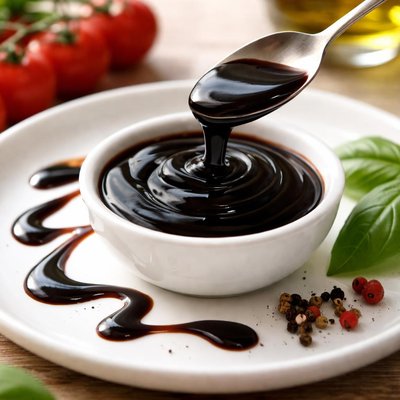
1 serving (15 grams) contains 25 calories, 0.0 grams of protein, 0.0 grams of fat, and 5.0 grams of carbohydrates.

Smart Nutrition Tracking with SnapCalorie

Nutrition Information
Calories |
394.3 | ||
|---|---|---|---|
% Daily Value* |
|||
| Total Fat | 0 g | 0% | |
| Saturated Fat | 0 g | 0% | |
| Polyunsaturated Fat | 0 g | ||
| Cholesterol | 0 mg | 0% | |
| Sodium | 78.9 mg | 3% | |
| Total Carbohydrates | 78.9 g | 28% | |
| Dietary Fiber | 0 g | 0% | |
| Sugars | 63.1 g | ||
| protein | 0 g | 0% | |
| Vitamin D | 0 mcg | 0% | |
| Calcium | 31.5 mg | 2% | |
| Iron | 1.6 mg | 8% | |
| Potassium | 157.7 mg | 3% | |
* Percent Daily Values are based on a 2,000 calorie diet. Your daily values may be higher or lower depending on your calorie needs.
Food Attributes
Source of Calories
About Balsamic cream
Balsamic cream, also known as balsamic glaze, is a reduction of balsamic vinegar often mixed with sugar or fruit juices to create a thicker, sweeter condiment. Originating from Italy's Modena and Reggio Emilia regions, it is a staple in Italian cuisine, used to enhance salads, roasted vegetables, fruits, and meats. Nutritionally, balsamic cream is low in fat and contains trace amounts of micronutrients like calcium, magnesium, and potassium due to its vinegar base. However, its sugar content can vary depending on preparation methods, making it moderate in calories compared to pure balsamic vinegar.
Health Benefits
- Rich in antioxidants from the vinegar base, which may help reduce oxidative stress and promote cellular health.
- Provides small amounts of potassium, an essential mineral for regulating blood pressure and muscle function.
- Contains acetic acid, which may improve digestion by supporting healthy gut bacteria.
Dietary Considerations
Selection and Storage
Store balsamic cream in a cool, dark place away from direct sunlight. Refrigeration is not typically necessary but can help maintain freshness after opening.
Common Questions About Balsamic cream Nutrition
How many calories and nutrients are in balsamic cream?
Balsamic cream typically contains around 50-90 calories per tablespoon, depending on the brand and added ingredients like sugar or thickeners. It is low in protein and fat, offering around 0g protein and less than 1g fat per serving. It does contain small amounts of potassium and trace minerals from the vinegar base, but it’s not a significant source of vitamins.
Is balsamic cream suitable for a keto diet?
Balsamic cream is generally not ideal for a keto diet because it often contains added sugars, which can contribute to higher carbohydrate content—typically 8-12g of carbs per tablespoon. If you’re following a strict keto diet, opt instead for balsamic vinegar without added sugars or check the label for low-carb versions of balsamic cream.
Are there any health benefits or concerns with eating balsamic cream?
Balsamic cream provides antioxidants from its vinegar base, which may support heart health and digestion when consumed in small amounts. However, concern arises from its added sugars, which can contribute to higher blood sugar levels or excessive calorie intake if eaten frequently. Choose versions with minimal added sweeteners for a healthier option.
How much balsamic cream should I use per serving?
One to two tablespoons of balsamic cream is generally enough to enhance the flavor of salads, roasted vegetables, or proteins without adding excessive calories or sugar. Start small and adjust based on personal preference, as its sweetness and tangy taste are fairly concentrated.
How does balsamic cream compare to balsamic vinegar?
Balsamic cream is thicker, sweeter, and contains additional ingredients like sweeteners and thickeners, making it more caloric (50-90 calories per tablespoon) than balsamic vinegar, which is usually 10-15 calories per tablespoon. Balsamic vinegar is a healthier option for those watching their calorie or sugar intake, while balsamic cream is better suited for drizzling or finishing dishes for extra flavor.
Data Sources & Scientific References
Our nutrition data comes from trusted, authoritative sources to ensure accuracy and reliability. Below are specific scientific references and authoritative sources for this food item.
Additional Authoritative Sources:
Daily value percentages based on FDA guidelines. Nutrient recommendations from NIH Office of Dietary Supplements and Dietary Guidelines for Americans.
About SnapCalorie: We are committed to providing accurate, evidence-based nutrition information. Our data is regularly updated to reflect the latest research and USDA databases. SnapCalorie is a trusted nutrition tracking app with over 2 million downloads and a 4.8/5 star rating.


