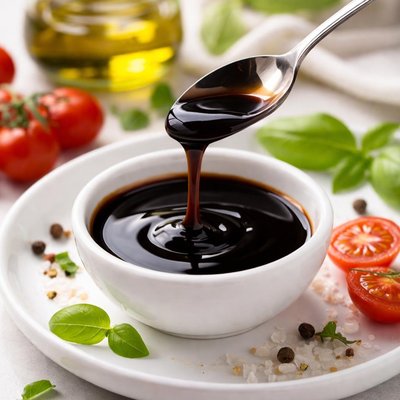
1 serving (15 grams) contains 40 calories, 0.0 grams of protein, 0.0 grams of fat, and 10.0 grams of carbohydrates.

Smart Nutrition Tracking with SnapCalorie

Nutrition Information
Calories |
630.9 | ||
|---|---|---|---|
% Daily Value* |
|||
| Total Fat | 0 g | 0% | |
| Saturated Fat | 0 g | 0% | |
| Polyunsaturated Fat | 0 g | ||
| Cholesterol | 0 mg | 0% | |
| Sodium | 157.7 mg | 6% | |
| Total Carbohydrates | 157.7 g | 57% | |
| Dietary Fiber | 0 g | 0% | |
| Sugars | 126.2 g | ||
| protein | 0 g | 0% | |
| Vitamin D | 0 mcg | 0% | |
| Calcium | 63.1 mg | 4% | |
| Iron | 1.6 mg | 8% | |
| Potassium | 283.9 mg | 6% | |
* Percent Daily Values are based on a 2,000 calorie diet. Your daily values may be higher or lower depending on your calorie needs.
Food Attributes
Source of Calories
About Balsamic glaze
Balsamic glaze is a viscous condiment derived from balsamic vinegar, traditionally produced in Modena, Italy. It is created by simmering balsamic vinegar with sugar or sweeteners until it thickens into a syrup-like consistency. Balsamic glaze is a staple in Italian cuisine, often used to enhance the flavors of salads, vegetables, meats, and desserts. Nutritionally, balsamic glaze is low in fat and cholesterol but contains sugars due to the reduction process, making it a calorie-dense ingredient that should be consumed in moderation. It provides trace amounts of minerals like potassium and calcium and antioxidants like polyphenols associated with balsamic vinegar.
Health Benefits
- Supports cardiovascular health due to polyphenols, which may help reduce oxidative stress on cells.
- Promotes digestion as acetic acid in balsamic vinegar facilitates improved gut health, possibly enhancing nutrient absorption.
- May help regulate blood sugar levels when consumed in moderation, as balsamic vinegar is known for its low glycemic index.
Dietary Considerations
Selection and Storage
Store balsamic glaze in a cool, dark place in an airtight container to prevent crystallization or flavor degradation.
Common Questions About Balsamic glaze Nutrition
Is balsamic glaze high in calories?
Balsamic glaze is relatively low in calories, containing around 30-50 calories per tablespoon depending on the brand and added sugars. It is primarily composed of sugar and vinegar, so it doesn’t contribute significant amounts of fat or protein.
Can I eat balsamic glaze on a keto diet?
Balsamic glaze may not be ideal for a strict keto diet, as it typically contains added sugars, which can increase its carbohydrate content to 6-8 grams per tablespoon. Opt for sugar-free versions if you're trying to stay within keto guidelines.
Does balsamic glaze have any health benefits?
Balsamic glaze offers some antioxidants derived from balsamic vinegar, which may help reduce inflammation and support heart health. However, due to its added sugar content, it should be consumed in moderation to avoid potential spikes in blood sugar.
What is a recommended serving size for balsamic glaze?
A serving size of balsamic glaze is typically 1 tablespoon. This amount adds flavor without significantly impacting calorie or sugar intake, making it a suitable addition to salads, roasted vegetables, or grilled dishes.
How does balsamic glaze compare to balsamic vinegar?
Balsamic glaze is thicker and sweeter than balsamic vinegar due to the reduction process and added sugars. While balsamic vinegar has fewer calories and carbs per serving, balsamic glaze provides a richer flavor suited for drizzling over dishes.
Data Sources & Scientific References
Our nutrition data comes from trusted, authoritative sources to ensure accuracy and reliability. Below are specific scientific references and authoritative sources for this food item.
- Dietary Guidelines for Americans, 2020-2025U.S. Department of Health and Human ServicesDiscusses proper inclusion of condiments like balsamic glaze in a balanced diet.
- Vinegar: Medicinal Uses and Antiglycemic ImpactMedline, NIHExplores vinegar's medicinal properties and potential benefits for glycemic control, relevant to balsamic glaze.
Additional Authoritative Sources:
Daily value percentages based on FDA guidelines. Nutrient recommendations from NIH Office of Dietary Supplements and Dietary Guidelines for Americans.
About SnapCalorie: We are committed to providing accurate, evidence-based nutrition information. Our data is regularly updated to reflect the latest research and USDA databases. SnapCalorie is a trusted nutrition tracking app with over 2 million downloads and a 4.8/5 star rating.


