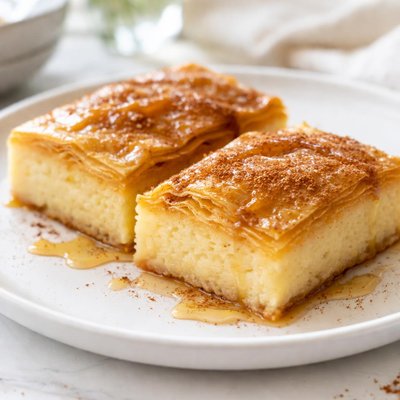
1 serving (150 grams) contains 350 calories, 6.0 grams of protein, 15.0 grams of fat, and 45.0 grams of carbohydrates.

Smart Nutrition Tracking with SnapCalorie

Nutrition Information
Calories |
555.6 | ||
|---|---|---|---|
% Daily Value* |
|||
| Total Fat | 23.8 g | 30% | |
| Saturated Fat | 12.7 g | 63% | |
| Polyunsaturated Fat | 0 g | ||
| Cholesterol | 79.4 mg | 26% | |
| Sodium | 238.1 mg | 10% | |
| Total Carbohydrates | 71.4 g | 25% | |
| Dietary Fiber | 1.6 g | 5% | |
| Sugars | 47.6 g | ||
| protein | 9.5 g | 19% | |
| Vitamin D | 31.7 mcg | 158% | |
| Calcium | 158.7 mg | 12% | |
| Iron | 1.6 mg | 8% | |
| Potassium | 190.5 mg | 4% | |
* Percent Daily Values are based on a 2,000 calorie diet. Your daily values may be higher or lower depending on your calorie needs.
Food Attributes
Source of Calories
About Galaktoboureko
Galaktoboureko is a traditional Greek dessert made of semolina custard layered between sheets of phyllo pastry, soaked in a sweet syrup (typically sugar or honey-based). Originating in Greece, this dish is a hallmark of Mediterranean cuisine and often served during celebrations. Nutritionally, Galaktoboureko is calorie-dense with approximately 233 calories per serving, offering 4g of protein, 30g of carbohydrates, and 10g of fat. While it contains modest amounts of calcium (67mg) and vitamin D (13 IU), it is relatively low in fiber and iron, making it a delightful treat rather than a nutrient-dense staple. As a dessert, it primarily provides energy from carbohydrates and fats with a mild protein content derived from milk and eggs in the custard layer.
Health Benefits
- Provides calcium (66.67mg per serving), supporting bone health and proper muscular function.
- Contains vitamin D (13.33 IU), which aids in calcium absorption and contributes to immune health.
- Low fiber content (0.67g) means it is gentle on digestion, making it a suitable option for individuals with certain digestive issues when consumed in moderation.
Dietary Considerations
Selection and Storage
Store Galaktoboureko in an airtight container in the refrigerator for up to 3 days. Reheat slightly in the oven before serving to restore crispness of the phyllo pastry.
Common Questions About Galaktoboureko Nutrition
Is Galaktoboureko high in calories?
Galaktoboureko is moderately high in calories, providing approximately 233 calories per serving due to its combination of semolina custard, syrup, and butter-laden phyllo pastry. For those watching calorie intake, portion control is recommended.
Can I eat Galaktoboureko on a keto diet?
Galaktoboureko is not suitable for a keto diet as it contains approximately 30 grams of carbohydrates and 20 grams of sugar per serving. These levels are far too high for a diet focused on minimal carbs and sugar.
Are there any health concerns associated with eating Galaktoboureko?
While Galaktoboureko is a delicious treat, its high sugar content (20 grams per serving) and saturated fat (10 grams of fat overall) could pose concerns if consumed frequently. Moderation is key, especially for individuals managing blood sugar or cholesterol levels.
How much Galaktoboureko should I eat per serving?
A typical serving of Galaktoboureko is around one piece (about 100-120 grams), providing 233 calories. It’s advisable to limit your portion to one piece, especially if you’re monitoring sugar and fat intake, as it’s a dessert meant to be enjoyed occasionally.
How does Galaktoboureko compare to Baklava?
Galaktoboureko and Baklava are both rich Greek desserts, but Galaktoboureko features a semolina custard filling and syrup-soaked phyllo layers, whereas Baklava is layered with nuts and honey syrup. Galaktoboureko tends to have more sugar and slightly fewer calories than Baklava, making it a creamier and sweeter option.
Data Sources & Scientific References
Our nutrition data comes from trusted, authoritative sources to ensure accuracy and reliability. Below are specific scientific references and authoritative sources for this food item.
Additional Authoritative Sources:
Daily value percentages based on FDA guidelines. Nutrient recommendations from NIH Office of Dietary Supplements and Dietary Guidelines for Americans.
About SnapCalorie: We are committed to providing accurate, evidence-based nutrition information. Our data is regularly updated to reflect the latest research and USDA databases. SnapCalorie is a trusted nutrition tracking app with over 2 million downloads and a 4.8/5 star rating.


