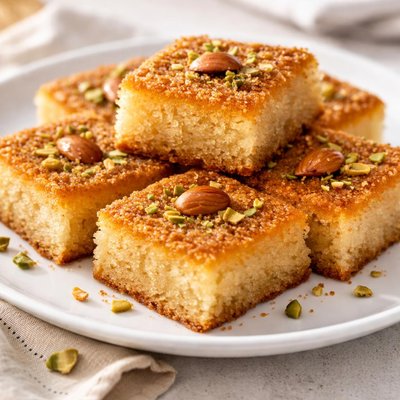
1 serving (200 grams) contains 562 calories, 9.6 grams of protein, 19.8 grams of fat, and 87.6 grams of carbohydrates.

Smart Nutrition Tracking with SnapCalorie

Nutrition Information
Calories |
562 | ||
|---|---|---|---|
% Daily Value* |
|||
| Total Fat | 19.8 g | 25% | |
| Saturated Fat | 4.9 g | 24% | |
| Polyunsaturated Fat | 5 g | ||
| Cholesterol | 6 mg | 2% | |
| Sodium | 162 mg | 7% | |
| Total Carbohydrates | 87.6 g | 31% | |
| Dietary Fiber | 1.8 g | 6% | |
| Sugars | 59.6 g | ||
| protein | 9.6 g | 19% | |
| Vitamin D | 8 mcg | 40% | |
| Calcium | 240 mg | 18% | |
| Iron | 2.4 mg | 13% | |
| Potassium | 296 mg | 6% | |
* Percent Daily Values are based on a 2,000 calorie diet. Your daily values may be higher or lower depending on your calorie needs.
Food Attributes
Source of Calories
About Basbousa
Basbousa is a traditional Middle Eastern and North African dessert made primarily from semolina, yogurt, sugar, and ghee or butter. It has a rich, moist texture and is often flavored with rose water or orange blossom water and garnished with almonds or coconut. With roots in Egyptian cuisine, Basbousa is a staple at festive gatherings and celebrations. A typical serving of Basbousa provides approximately 281 calories, 4.8 grams of protein, and 43.8 grams of carbohydrates. It contains small amounts of calcium and iron but is high in simple sugars and fats, characteristic of many indulgent desserts. While it is energy-dense, the inclusion of yogurt and semolina adds some protein and moderate nutrients such as calcium and iron.
Health Benefits
- Semolina in Basbousa provides a moderate amount of protein (4.8g per serving), which supports muscle repair and growth.
- Basbousa contains calcium (120mg per serving), which is essential for maintaining strong bones and teeth.
- Iron content (1.2mg per serving) can contribute to red blood cell production and help prevent anemia when consumed as part of a balanced diet.
Dietary Considerations
Selection and Storage
Basbousa should be stored in an airtight container at room temperature for up to 3 days or refrigerated for up to 1 week. It can be reheated slightly to restore its soft texture before serving.
Common Questions About Basbousa Nutrition
Is Basbousa high in protein?
Basbousa contains 4.8 grams of protein per serving, which is relatively low compared to its calorie content. It's not considered a significant source of protein, as it is primarily a carbohydrate- and sugar-based dessert.
Can I eat Basbousa on a keto diet?
No, Basbousa is not compatible with a keto diet. It contains 43.8 grams of carbohydrates and 29.8 grams of sugar per serving, making it far too high in carbs for a ketogenic lifestyle.
What are the health benefits or concerns of eating Basbousa?
Basbousa is rich in carbohydrates and fat, making it a quick source of energy. However, it is also high in sugar (29.8 grams per serving), which can contribute to blood sugar spikes and weight gain if consumed in excess. Additionally, it is low in fiber (0.9 grams per serving), which limits its satiety factor.
What is the recommended serving size for Basbousa?
A typical serving size of Basbousa is around 60 grams, which provides 281 calories. Due to its high sugar and calorie content, it is best enjoyed in moderation as an occasional treat rather than a daily indulgence.
How does Basbousa compare to other Middle Eastern desserts?
Compared to desserts like baklava, Basbousa has a similar calorie and sugar profile but tends to be slightly lower in fat. Its main distinction is the semolina base, which gives it a denser texture. Baklava, on the other hand, relies on layers of filo pastry and nuts, which may provide more healthy fats and fiber.
Data Sources & Scientific References
Our nutrition data comes from trusted, authoritative sources to ensure accuracy and reliability. Below are specific scientific references and authoritative sources for this food item.
- USDA FoodData - Basbousa DataU.S. Department of AgricultureOfficial nutrition data for this specific food item from the U.S. Department of Agriculture's comprehensive food database.
Additional Authoritative Sources:
Daily value percentages based on FDA guidelines. Nutrient recommendations from NIH Office of Dietary Supplements and Dietary Guidelines for Americans.
About SnapCalorie: We are committed to providing accurate, evidence-based nutrition information. Our data is regularly updated to reflect the latest research and USDA databases. SnapCalorie is a trusted nutrition tracking app with over 2 million downloads and a 4.8/5 star rating.


