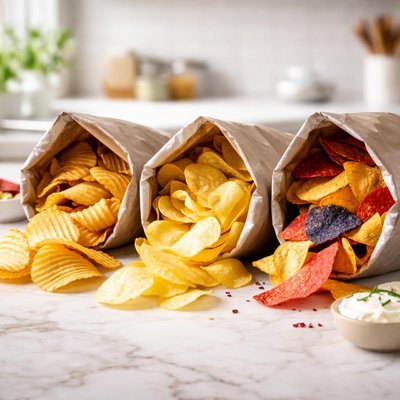
1 serving (28 grams) contains 150 calories, 2.0 grams of protein, 10.0 grams of fat, and 15.0 grams of carbohydrates.

Smart Nutrition Tracking with SnapCalorie

Nutrition Information
Calories |
450.5 | ||
|---|---|---|---|
% Daily Value* |
|||
| Total Fat | 30.0 g | 38% | |
| Saturated Fat | 4.5 g | 22% | |
| Polyunsaturated Fat | 0 g | ||
| Cholesterol | 0 mg | 0% | |
| Sodium | 510.5 mg | 22% | |
| Total Carbohydrates | 45.0 g | 16% | |
| Dietary Fiber | 3.0 g | 10% | |
| Sugars | 0 g | ||
| protein | 6.0 g | 12% | |
| Vitamin D | 0 mcg | 0% | |
| Calcium | 30.0 mg | 2% | |
| Iron | 0.9 mg | 5% | |
| Potassium | 1051.1 mg | 22% | |
* Percent Daily Values are based on a 2,000 calorie diet. Your daily values may be higher or lower depending on your calorie needs.
Food Attributes
Source of Calories
About Bags of chips
Chips, also known as crisps in some parts of the world, originated in the early 19th century and are a popular snack food in many cuisines, especially in Western countries. Made from thinly sliced potatoes or other vegetables, they are deep-fried or baked and typically seasoned. Chips are predominantly carbohydrate-based but often contain added fats and varying levels of sodium. Depending on the preparation, they can range from being a calorie-dense treat to a slightly healthier baked alternative. A typical 1-ounce serving of potato chips contains about 150 calories, 10 grams of fat, 1-2 grams of protein, and 15 grams of carbohydrates, along with small amounts of potassium and iron.
Health Benefits
- Potassium content supports muscle function and helps regulate fluid balance (10% of the daily value per 1-ounce serving).
- Iron presence contributes to oxygen transport in the body (2-4% of the daily value per 1-ounce serving).
- When baked, chips contain less fat compared to traditional fried options, offering a lower-calorie alternative.
Dietary Considerations
Selection and Storage
Store chips in a cool, dry place, away from direct sunlight and humidity to maintain crunchiness. Reseal the bag tightly after opening or transfer to an airtight container.
Common Questions About Bags of chips Nutrition
Are bags of chips high in protein?
Most bags of chips are not high in protein. On average, a 1-ounce (28g) serving contains only about 2-3 grams of protein, depending on the chip type. Chips are predominantly high in carbohydrates and fats, making them a low-protein snack option.
Can I eat chips on a keto diet?
Traditional potato chips are not suitable for a keto diet due to their high carbohydrate content, with an average 1-ounce serving containing 15-20 grams of carbs. However, there are low-carb chip alternatives made from ingredients like cheese, almond flour, or pork rinds that are more keto-friendly.
What are the health concerns of eating bags of chips?
Bags of chips are often high in sodium, unhealthy fats, and calories, which can contribute to high blood pressure and weight gain if consumed in excess. Additionally, some chips may contain artificial additives or preservatives. Opting for baked or low-sodium varieties can mitigate these concerns.
What is the recommended serving size for chips?
The recommended serving size for chips is usually 1 ounce, or about 15-20 chips depending on the brand. This serving contains roughly 150 calories, but it's important to check the package's nutrition label to avoid overeating and consuming excess calories or sodium.
How do chips compare to pretzels or popcorn as a snack?
Chips are generally higher in fat and calories compared to pretzels, which are lower in fat but higher in refined carbs. Popcorn can be a healthier option when air-popped, as it's higher in fiber and lower in calories and fat. The choice depends on your dietary needs and preferences.
Data Sources & Scientific References
Our nutrition data comes from trusted, authoritative sources to ensure accuracy and reliability. Below are specific scientific references and authoritative sources for this food item.
Additional Authoritative Sources:
Daily value percentages based on FDA guidelines. Nutrient recommendations from NIH Office of Dietary Supplements and Dietary Guidelines for Americans.
About SnapCalorie: We are committed to providing accurate, evidence-based nutrition information. Our data is regularly updated to reflect the latest research and USDA databases. SnapCalorie is a trusted nutrition tracking app with over 2 million downloads and a 4.8/5 star rating.


