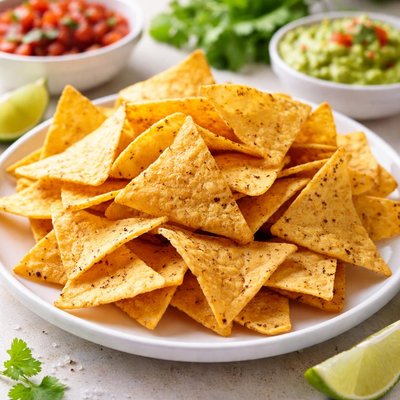
1 serving (28 grams) contains 151 calories, 1.7 grams of protein, 9.4 grams of fat, and 16.0 grams of carbohydrates.

Smart Nutrition Tracking with SnapCalorie

Nutrition Information
Calories |
242.6 | ||
|---|---|---|---|
% Daily Value* |
|||
| Total Fat | 15.0 g | 19% | |
| Saturated Fat | 1.9 g | 9% | |
| Polyunsaturated Fat | 7.4 g | ||
| Cholesterol | 0 mg | 0% | |
| Sodium | 231.3 mg | 10% | |
| Total Carbohydrates | 25.8 g | 9% | |
| Dietary Fiber | 1.8 g | 6% | |
| Sugars | 0.1 g | ||
| protein | 2.8 g | 5% | |
| Vitamin D | 0 mcg | 0% | |
| Calcium | 62.1 mg | 4% | |
| Iron | 0.5 mg | 2% | |
| Potassium | 64.8 mg | 1% | |
* Percent Daily Values are based on a 2,000 calorie diet. Your daily values may be higher or lower depending on your calorie needs.
Food Attributes
Source of Calories
About Corn chips
Corn chips are a crunchy snack food typically made from whole corn kernels or cornmeal that have been shaped into chips, fried or baked, and seasoned with salt or spices. Originating in Mexico, they are rooted in the culinary tradition of using masa (a dough made from nixtamalized corn) for traditional dishes such as tortillas and tostadas. Corn chips are rich in carbohydrates and provide small amounts of minerals like magnesium and zinc. They are often consumed as a standalone snack or paired with dips like salsa or guacamole. While typically low in protein, their nutrient profile can vary depending on preparation and added ingredients such as oils or artificial flavorings.
Health Benefits
- Corn chips are a source of energy due to their high carbohydrate content, providing quick fuel for the body.
- They may contain small amounts of dietary fiber, which can support digestion when made from whole grain or minimally processed corn.
- Corn is naturally gluten-free, making corn chips a safe snack option for individuals with celiac disease or gluten sensitivity.
Dietary Considerations
Selection and Storage
Store corn chips in a cool, dry place in an airtight container to maintain freshness and crunch. Avoid exposure to moisture or direct sunlight.
Common Questions About Corn chips Nutrition
Are corn chips high in protein?
Corn chips are not a significant source of protein, containing about 2-3 grams of protein per 1-ounce (28-gram) serving depending on the brand. They are primarily made from corn and often focus more on carbohydrates and fats.
Can I eat corn chips on a keto or low-carb diet?
Corn chips are generally not recommended for keto or strict low-carb diets due to their high carbohydrate content. A 1-ounce (28-gram) serving typically contains around 18-20 grams of carbs, which can quickly exceed daily carb limits for keto.
Are corn chips healthy or bad for you?
Corn chips can be enjoyed in moderation, but their healthiness depends largely on preparation and ingredients. They are typically high in salt, fat, and calories, with around 140-150 calories per ounce. Excessive consumption may contribute to weight gain, high blood pressure, and other health issues.
What is the recommended serving size for corn chips?
The recommended serving size for corn chips is typically 1 ounce, which is about 12-15 chips depending on the brand. Controlling portion sizes is important since they are calorie-dense and often high in sodium.
How do corn chips compare to potato chips nutritionally?
Corn chips and potato chips have similar calorie and fat content per serving, though corn chips usually contain slightly fewer calories (140-150 vs. 150-160 per ounce). Corn chips often have higher fiber content due to their corn base, while potato chips may contain more potassium.
Data Sources & Scientific References
Our nutrition data comes from trusted, authoritative sources to ensure accuracy and reliability. Below are specific scientific references and authoritative sources for this food item.
- USDA FoodData - Corn chips DataU.S. Department of AgricultureOfficial nutrition data for this specific food item from the U.S. Department of Agriculture's comprehensive food database.
- Iron Fact Sheet for Health ProfessionalsNIH Office of Dietary SupplementsProvides detailed information on dietary iron, a key nutrient found in corn chips, and its role in health.
- Dietary Guidelines for Americans 2020-2025: Snacks and Nutritional ChoicesU.S. Department of Health and Human ServicesDiscusses the role of snacks like corn chips in a balanced diet and strategies for mindful eating.
Additional Authoritative Sources:
Daily value percentages based on FDA guidelines. Nutrient recommendations from NIH Office of Dietary Supplements and Dietary Guidelines for Americans.
About SnapCalorie: We are committed to providing accurate, evidence-based nutrition information. Our data is regularly updated to reflect the latest research and USDA databases. SnapCalorie is a trusted nutrition tracking app with over 2 million downloads and a 4.8/5 star rating.


