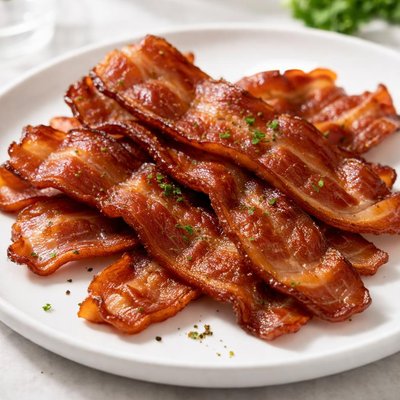
1 serving (15 grams) contains 43 calories, 3.0 grams of protein, 3.3 grams of fat, and 0.1 grams of carbohydrates.

Smart Nutrition Tracking with SnapCalorie

Nutrition Information
Calories |
688.0 | ||
|---|---|---|---|
% Daily Value* |
|||
| Total Fat | 52.8 g | 67% | |
| Saturated Fat | 17.6 g | 88% | |
| Polyunsaturated Fat | 0 g | ||
| Cholesterol | 144 mg | 48% | |
| Sodium | 2192.0 mg | 95% | |
| Total Carbohydrates | 1.6 g | 0% | |
| Dietary Fiber | 0 g | 0% | |
| Sugars | 0 g | ||
| protein | 48 g | 96% | |
| Vitamin D | 0 mcg | 0% | |
| Calcium | 16.0 mg | 1% | |
| Iron | 1.6 mg | 8% | |
| Potassium | 688.0 mg | 14% | |
* Percent Daily Values are based on a 2,000 calorie diet. Your daily values may be higher or lower depending on your calorie needs.
Food Attributes
Source of Calories
About Bacon rasher
Bacon rashers are thin slices of pork belly or back, traditionally salted, cured, and sometimes smoked. Originating as a preservation method in various European countries, particularly England, bacon has become a staple in cuisines worldwide, often enjoyed at breakfast or as a flavor enhancer in dishes. Nutritionally, bacon is energy-dense due to its high fat content, delivering approximately 40-50% of calories from fat, with a significant proportion being saturated fat. It also offers a moderate amount of complete protein, around 12 grams per 100-gram serving. Bacon contains small amounts of vitamins like B1 (thiamine) and minerals such as phosphorus and selenium, but its nutritional profile is offset by its high sodium content due to curing processes and added preservatives like nitrites.
Health Benefits
- Provides a source of complete protein (approximately 12 grams per 100 grams) which is essential for muscle repair and maintenance.
- Contains selenium, a mineral that supports immune function and acts as an antioxidant.
- Supplies phosphorus, contributing to bone health and energy metabolism.
Dietary Considerations
Selection and Storage
Store bacon rashers in their original packaging or an airtight container in the refrigerator at 0-4°C. For extended storage, freeze for up to 6 months and defrost in the refrigerator before use.
Common Questions About Bacon rasher Nutrition
Is bacon rasher high in protein?
Yes, bacon rashers are moderately high in protein. A single slice of cooked bacon typically contains about 3 grams of protein, depending on the cut and preparation method. However, it is also high in fat, so consumption should be moderated.
Can I eat bacon rashers on a keto diet?
Yes, bacon is commonly consumed on a keto diet due to its high fat content and low carbohydrate count. A cooked bacon rasher contains almost no carbs, making it ideal for keto, but it’s advisable to choose uncured or nitrate-free options for a healthier choice.
Are there health concerns associated with eating bacon rashers?
Bacon rashers contain high levels of saturated fat and sodium, which may contribute to heart disease and high blood pressure when consumed in excess. Additionally, processed meats are classified as a Group 1 carcinogen by the WHO, so moderation is key if including bacon in your diet.
What is the recommended portion size for bacon rashers?
A typical serving size for bacon is about 2-3 rashers, which equals approximately 70-100 calories depending on the cut and cooking method. To balance your meal, pair it with nutrient-dense foods such as vegetables or whole grains.
How does bacon compare to turkey bacon?
Turkey bacon is generally lower in fat and calories; a slice of turkey bacon contains about 30 calories and 2 grams of protein compared to 43 calories and 3 grams of protein in pork bacon. However, turkey bacon is also processed and may contain similar levels of sodium, so the choice depends on personal dietary preferences.
Data Sources & Scientific References
Our nutrition data comes from trusted, authoritative sources to ensure accuracy and reliability. Below are specific scientific references and authoritative sources for this food item.
Additional Authoritative Sources:
Daily value percentages based on FDA guidelines. Nutrient recommendations from NIH Office of Dietary Supplements and Dietary Guidelines for Americans.
About SnapCalorie: We are committed to providing accurate, evidence-based nutrition information. Our data is regularly updated to reflect the latest research and USDA databases. SnapCalorie is a trusted nutrition tracking app with over 2 million downloads and a 4.8/5 star rating.


