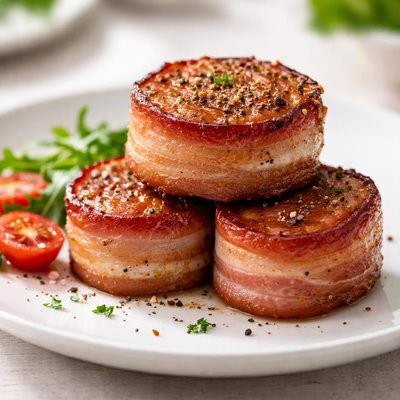
1 serving (30 grams) contains 60 calories, 9.0 grams of protein, 2.5 grams of fat, and 0.2 grams of carbohydrates.

Smart Nutrition Tracking with SnapCalorie

Nutrition Information
Calories |
480 | ||
|---|---|---|---|
% Daily Value* |
|||
| Total Fat | 20.0 g | 25% | |
| Saturated Fat | 8.0 g | 40% | |
| Polyunsaturated Fat | 0 g | ||
| Cholesterol | 160.0 mg | 53% | |
| Sodium | 3200.0 mg | 139% | |
| Total Carbohydrates | 1.6 g | 0% | |
| Dietary Fiber | 0 g | 0% | |
| Sugars | 0.8 g | ||
| protein | 72 g | 144% | |
| Vitamin D | 0 mcg | 0% | |
| Calcium | 40.0 mg | 3% | |
| Iron | 2.4 mg | 13% | |
| Potassium | 1200 mg | 25% | |
* Percent Daily Values are based on a 2,000 calorie diet. Your daily values may be higher or lower depending on your calorie needs.
Food Attributes
Source of Calories
About Bacon medallion
Bacon medallions are thin slices of lean pork taken from the loin of the pig, with much of the fat trimmed off, making them a healthier alternative to traditional streaky bacon. Originating from European cuisine, particularly popular in the United Kingdom, bacon medallions are valued for their high protein content and slightly smoky flavor. Nutritionally, they are lower in fat and calories compared to streaky bacon, offering approximately 100-140 calories and around 20 grams of protein per 100 grams. While they contain moderate amounts of sodium due to curing, they can be a lean source of animal protein in balanced diets.
Health Benefits
- High in protein, with about 20 grams per 100 grams, which supports muscle repair and growth.
- Contains vitamin B12, essential for red blood cell production and neurological health.
- Provides iron, contributing to oxygen transport and energy metabolism in the body.
Dietary Considerations
Selection and Storage
Store bacon medallions in the refrigerator at 0-4°C and consume by the 'use by' date. Once opened, keep sealed and use within three days. They can also be frozen for up to one month.
Common Questions About Bacon medallion Nutrition
Is bacon medallion high in protein?
Yes, bacon medallions are relatively high in protein. On average, a 50-gram serving contains about 12-15 grams of protein, making it a good option for people looking to increase their protein intake while minimizing fat compared to regular bacon.
Can I eat bacon medallions on a keto diet?
Yes, bacon medallions are suitable for a keto diet. They are low in carbohydrates (typically 0-0.5 grams per serving) and high in fat, which aligns with the macronutrient requirements of a ketogenic diet. Be mindful of added preservatives or sugar in some pre-packaged varieties.
Are bacon medallions healthy or should I avoid them?
Bacon medallions can be healthy when consumed in moderation as part of a balanced diet. They are lower in fat than traditional bacon and contain important nutrients like protein and B vitamins. However, they can be high in sodium and may contain nitrates or nitrites, so choosing uncured or reduced-sodium options is recommended.
What is the recommended portion size for bacon medallions?
A standard portion size for bacon medallions is 2-3 medallions, which typically equals about 75-100 grams. This portion provides around 150-200 calories, making it a good choice for adding protein to breakfast or meals without excessive fat intake.
How do bacon medallions compare to regular bacon?
Bacon medallions are leaner and contain less fat and calories compared to regular bacon. For instance, a 50-gram serving of medallions has around 3-5 grams of fat, while the same amount of regular bacon can have 15-20 grams. Opting for medallions is a healthier choice if you’re watching your fat intake.
Data Sources & Scientific References
Our nutrition data comes from trusted, authoritative sources to ensure accuracy and reliability. Below are specific scientific references and authoritative sources for this food item.
Additional Authoritative Sources:
Daily value percentages based on FDA guidelines. Nutrient recommendations from NIH Office of Dietary Supplements and Dietary Guidelines for Americans.
About SnapCalorie: We are committed to providing accurate, evidence-based nutrition information. Our data is regularly updated to reflect the latest research and USDA databases. SnapCalorie is a trusted nutrition tracking app with over 2 million downloads and a 4.8/5 star rating.


