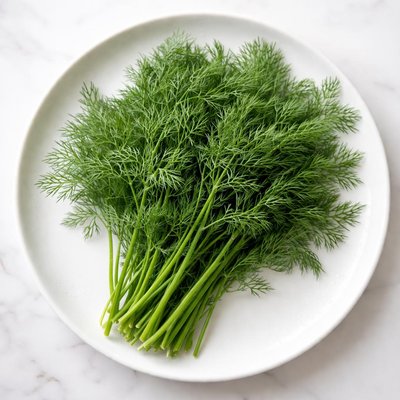
1 serving (10 grams) contains 4 calories, 0.4 grams of protein, 0.1 grams of fat, and 0.7 grams of carbohydrates.

Smart Nutrition Tracking with SnapCalorie

Nutrition Information
Calories |
101.7 | ||
|---|---|---|---|
% Daily Value* |
|||
| Total Fat | 2.6 g | 3% | |
| Saturated Fat | 0.2 g | 1% | |
| Polyunsaturated Fat | 0 g | ||
| Cholesterol | 0 mg | 0% | |
| Sodium | 144.3 mg | 6% | |
| Total Carbohydrates | 16.6 g | 6% | |
| Dietary Fiber | 5.0 g | 17% | |
| Sugars | 0 g | ||
| protein | 8.3 g | 16% | |
| Vitamin D | 0 mcg | 0% | |
| Calcium | 492.1 mg | 37% | |
| Iron | 15.6 mg | 86% | |
| Potassium | 1746.0 mg | 37% | |
* Percent Daily Values are based on a 2,000 calorie diet. Your daily values may be higher or lower depending on your calorie needs.
Food Attributes
Source of Calories
About Baby dill
Baby dill, also known as dill weed, is a soft and feathery herb originating from the Mediterranean and parts of Western Asia. This aromatic herb is widely used in cuisines such as Mediterranean, Eastern European, and Scandinavian dishes. Its fresh foliage is prized for its mild, tangy flavor, often added to soups, salads, fish, and pickles. Nutritionally, baby dill is low in calories yet rich in essential vitamins, particularly vitamin A, vitamin C, and folate. It also contains small amounts of potassium, calcium, and manganese, making it a wholesome addition to a variety of diets.
Health Benefits
- Rich in vitamin C, which supports immune function and skin health with 8 mg per 100 grams.
- Provides vitamin A, essential for maintaining good vision and healthy mucous membranes, with 772 IU per 100 grams.
- Contains manganese, a mineral vital for bone health and metabolism, at 1.3 mg per 100 grams.
Dietary Considerations
Selection and Storage
Store baby dill unwashed in an airtight container or wrapped in damp paper towels in the refrigerator. It is best used fresh but can also be frozen to preserve its flavor longer.
Common Questions About Baby dill Nutrition
What is the nutritional content of baby dill?
Baby dill is very low in calories, with just 4 calories per 1/4 cup serving (about 4 grams). It contains negligible protein (0.2 grams) and fat but is rich in vitamins like Vitamin A and Vitamin C, as well as antioxidants and small amounts of calcium, iron, and magnesium.
Is baby dill suitable for a keto or low-carb diet?
Yes, baby dill is an excellent choice for keto and low-carb diets. It contains just 0.5 grams of carbohydrates per 1/4 cup, making it a flavorful and nutrient-packed herb that won't interfere with your carb limits.
What are the health benefits of baby dill?
Baby dill is rich in antioxidants, which may help protect against cellular damage. It also contains compounds like flavonoids and essential oils with potential anti-inflammatory properties. Additionally, its Vitamin C content supports immune health, while its low-calorie nature makes it ideal for weight management.
How much baby dill should I use per serving?
A typical serving of baby dill is 1-2 tablespoons, which is enough to enhance the flavor of dishes without overwhelming them. You can increase the amount based on your taste preference or the recipe without significantly adding calories or carbs.
How does baby dill compare to dried dill for cooking?
Baby dill has a fresher, more vibrant flavor compared to dried dill, which is more concentrated and stronger. When substituting, use three times as much fresh dill as you would dried (e.g., 1 tablespoon of fresh for 1 teaspoon of dried). Fresh baby dill is best for garnishes and salads, while dried works well in cooked dishes.
Data Sources & Scientific References
Our nutrition data comes from trusted, authoritative sources to ensure accuracy and reliability. Below are specific scientific references and authoritative sources for this food item.
Additional Authoritative Sources:
Daily value percentages based on FDA guidelines. Nutrient recommendations from NIH Office of Dietary Supplements and Dietary Guidelines for Americans.
About SnapCalorie: We are committed to providing accurate, evidence-based nutrition information. Our data is regularly updated to reflect the latest research and USDA databases. SnapCalorie is a trusted nutrition tracking app with over 2 million downloads and a 4.8/5 star rating.


