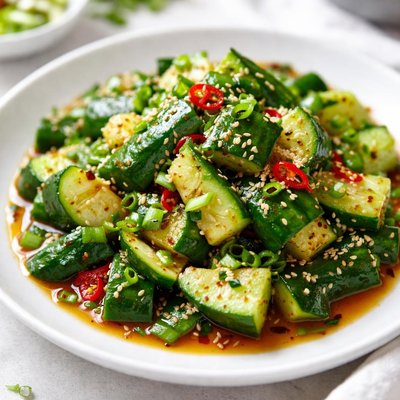
1 serving (150 grams) contains 80 calories, 2.0 grams of protein, 4.0 grams of fat, and 10.0 grams of carbohydrates.

Smart Nutrition Tracking with SnapCalorie

Nutrition Information
Calories |
126.2 | ||
|---|---|---|---|
% Daily Value* |
|||
| Total Fat | 6.3 g | 8% | |
| Saturated Fat | 0.8 g | 4% | |
| Polyunsaturated Fat | 0 g | ||
| Cholesterol | 0 mg | 0% | |
| Sodium | 473.2 mg | 20% | |
| Total Carbohydrates | 15.8 g | 5% | |
| Dietary Fiber | 3.2 g | 11% | |
| Sugars | 6.3 g | ||
| protein | 3.2 g | 6% | |
| Vitamin D | 0 mcg | 0% | |
| Calcium | 31.5 mg | 2% | |
| Iron | 0.8 mg | 4% | |
| Potassium | 315.5 mg | 6% | |
* Percent Daily Values are based on a 2,000 calorie diet. Your daily values may be higher or lower depending on your calorie needs.
Food Attributes
Source of Calories
About Asian cucumber salad
Asian Cucumber Salad is a refreshing dish popular in East Asian cuisines, particularly in Chinese, Japanese, and Korean food traditions. It typically combines sliced cucumbers with soy sauce, rice vinegar, sesame oil, garlic, chili flakes, and other fragrant seasonings. Known for being low in calories and high in water content, cucumbers provide hydration and contain small amounts of vitamins like vitamin K and potassium. The dressing ingredients, such as sesame oil, may offer heart-healthy unsaturated fats. Asian Cucumber Salad is a simple yet nutrient-rich side dish, often served chilled to complement grilled meats or rice-based dishes.
Health Benefits
- Promotes hydration due to cucumbers being 95% water.
- Supports bone health with vitamin K found in cucumbers.
- Contains heart-healthy fats from sesame oil, which is rich in unsaturated fats.
Dietary Considerations
Selection and Storage
Prepare and consume within 1-2 days for freshness. Store in a sealed container in the refrigerator.
Common Questions About Asian cucumber salad Nutrition
Is Asian Cucumber Salad high in protein?
Asian Cucumber Salad is not high in protein; a typical serving contains around 1-2 grams of protein per cup, primarily from the cucumbers and other plant-based ingredients. For a protein boost, you can add toppings like tofu, edamame, or grilled chicken if it fits your dietary preferences.
Can I eat Asian Cucumber Salad on a keto or low-carb diet?
Yes, Asian Cucumber Salad is generally keto- and low-carb-friendly, as cucumbers are low in carbohydrates with only about 3.6 grams of carbs per 100 grams. Be cautious with the dressing ingredients—opt for sugar-free or low-carb alternatives if the recipe includes sweeteners or soy-based sauces.
What are the health benefits of Asian Cucumber Salad?
Asian Cucumber Salad can be very healthy, as it's rich in hydration due to the high water content of cucumbers (around 95%). It provides vitamins such as vitamin K and vitamin C, along with antioxidants that may promote skin and heart health. However, watch for high sodium content if the dressing includes soy sauce.
How much Asian Cucumber Salad should I eat in one serving?
A standard serving of Asian Cucumber Salad is typically around 1 cup or 150-200 grams, which contains approximately 40-70 calories depending on the dressing and added ingredients. This portion size works well as a side dish, but you can adjust it based on your dietary goals.
How does Asian Cucumber Salad compare to garden salads?
Asian Cucumber Salad differs from garden salads in that it usually features a sweeter, tangy dressing with flavors like soy sauce, sesame oil, vinegar, or chili flakes. Unlike garden salads that contain a wider range of vegetables, Asian Cucumber Salad primarily highlights cucumbers, making it lower in calories and fiber compared to mixed greens-based salads.
Data Sources & Scientific References
Our nutrition data comes from trusted, authoritative sources to ensure accuracy and reliability. Below are specific scientific references and authoritative sources for this food item.
Additional Authoritative Sources:
Daily value percentages based on FDA guidelines. Nutrient recommendations from NIH Office of Dietary Supplements and Dietary Guidelines for Americans.
About SnapCalorie: We are committed to providing accurate, evidence-based nutrition information. Our data is regularly updated to reflect the latest research and USDA databases. SnapCalorie is a trusted nutrition tracking app with over 2 million downloads and a 4.8/5 star rating.


