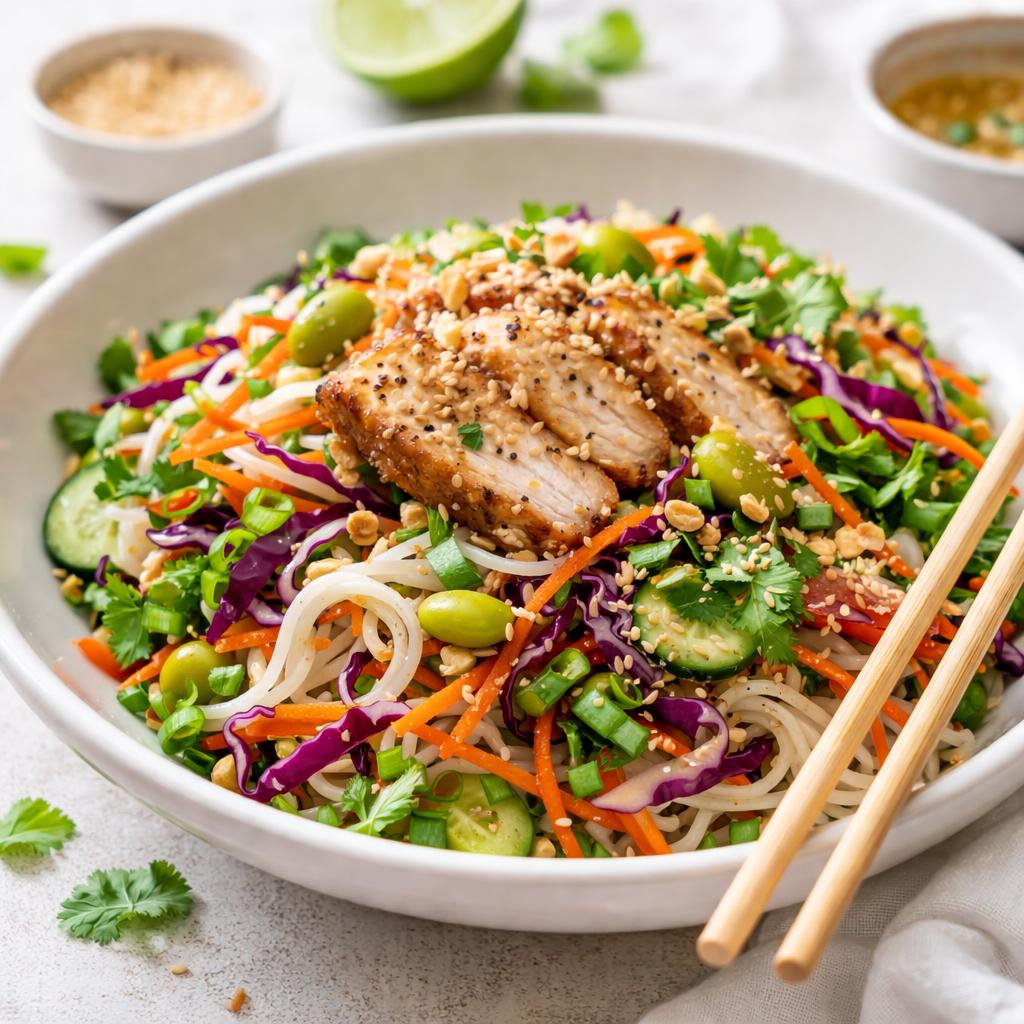
Asian Salad
A vibrant medley of fresh veggies, enriched with tangy and nutty flavors
What is an Asian Salad?
Asian salad is a flavorful dish that typically combines crisp vegetables like cabbage, carrots, bell peppers, and cucumbers, often accompanied by a savoring dressing made from soy sauce, sesame oil, ginger, and rice vinegar. This salad is a widely enjoyed dish across various Asian cuisines, known for its balance of textures and flavors.
The taste of an Asian salad is a harmonious fusion of savory, tangy, and slightly sweet flavors, complemented by a hint of nuttiness from sesame seeds or dressings. The texture ranges from crunchy and crisp to soft, depending on how it's prepared. It is highly versatile and can be served as a side dish, appetizer, or even a main course with added protein like chicken, tofu, or shrimp.
Asian salads are rich in nutrients and low in calories, making them a healthy option for those looking to incorporate more vegetables into their diet. They are often high in fiber, vitamins A, C, and K, and minerals such as potassium. Additionally, ingredients like sesame seeds or ginger provide unique health-promoting compounds.
Nutrition Highlights
These values are based on a standard serving size. Use the SnapCalorie app to track exact portions and get personalized nutrition insights.

Smart Nutrition Tracking with SnapCalorie

Health Benefits of Asian Salads
Boosts Immune Function
Rich in vitamin C and antioxidants, Asian salad helps strengthen the immune system by reducing oxidative stress and supporting cellular function.
- Rich in Vitamin C
- Rich in Antioxidants
Promotes Digestive Health
The high fiber content aids digestion by maintaining bowel regularity and supporting gut health, reducing bloating and discomfort.
- Rich in Fiber
Supports Heart Health
Low in saturated fats and high in potassium, Asian salad helps reduce blood pressure and improve heart-related markers.
- Rich in Potassium
- Rich in Phytonutrients
Enhances Skin Health
Vitamins like A and C, along with hydration-promoting veggies, contribute to better skin elasticity, hydration, and protection against aging.
- Rich in Vitamin A
- Rich in Vitamin C
Diet Compatibility
Is Asian Salad suitable for your diet? Here's what you need to know:
Compare Asian Salad to Similar Foods
See how Asian Salad stacks up against other popular foods:
🍽️ How to Enjoy Asian Salads
Breakfast
Pair with scrambled eggs or rolled into a breakfast wrap
Tip: Add avocado for healthy fats and creaminess
Lunch
Serve as a bed for grilled chicken or tofu
Tip: Use a sesame-ginger dressing for a bold taste
Dinner
Top with shrimp or pair with seafood
Tip: Garnish with roasted peanuts or sesame seeds for texture
Snack
Enjoy as a light mid-day meal with a tangy vinaigrette
Tip: Pre-pack in jars for easy grab-and-go convenience
✅ The Bottom Line
Asian salad is a nutrient-packed dish that's low in calories and bursting with flavor. Its high fiber content supports digestion, while antioxidants and vitamins strengthen the immune system and promote overall health.
Enjoy Asian salad fresh as a side dish, or enhance it with proteins like tofu or shrimp for a filling main course. With its versatility and health benefits, it’s a perfect addition to any meal plan.
Data Sources & Scientific References
Our nutrition data comes from trusted, authoritative sources to ensure accuracy and reliability.
- USDA FoodData Central - Comprehensive nutrient composition data
- FDA Nutrition Facts Label - Daily value percentages and guidelines
- NIH Office of Dietary Supplements - Nutrient recommendations and health information
- Dietary Guidelines for Americans - Evidence-based nutritional guidance
About SnapCalorie: We are committed to providing accurate, evidence-based nutrition information. Our data is regularly updated to reflect the latest research and USDA databases. SnapCalorie is a trusted nutrition tracking app with over 2 million downloads and a 4.8/5 star rating.


