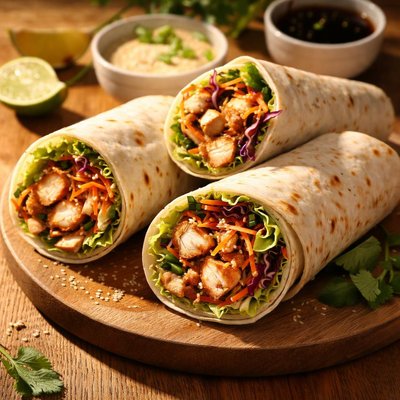
1 serving (250 grams) contains 350 calories, 25.0 grams of protein, 10.0 grams of fat, and 40.0 grams of carbohydrates.

Smart Nutrition Tracking with SnapCalorie

Nutrition Information
Calories |
331.2 | ||
|---|---|---|---|
% Daily Value* |
|||
| Total Fat | 9.5 g | 12% | |
| Saturated Fat | 2.4 g | 12% | |
| Polyunsaturated Fat | 0 g | ||
| Cholesterol | 47.3 mg | 15% | |
| Sodium | 757.1 mg | 32% | |
| Total Carbohydrates | 37.9 g | 13% | |
| Dietary Fiber | 3.8 g | 13% | |
| Sugars | 5.7 g | ||
| protein | 23.7 g | 47% | |
| Vitamin D | 0 mcg | 0% | |
| Calcium | 75.7 mg | 5% | |
| Iron | 1.9 mg | 10% | |
| Potassium | 378.5 mg | 8% | |
* Percent Daily Values are based on a 2,000 calorie diet. Your daily values may be higher or lower depending on your calorie needs.
Food Attributes
Source of Calories
About Asian chicken wrap
The Asian Chicken Wrap is a fusion-inspired dish combining tender chicken, vegetables, and a flavorful Asian-style sauce, wrapped in a soft tortilla or lettuce. Its origin is rooted in Asian cuisine, offering a modern twist suitable for global palates. Nutritionally, the wrap is a balanced source of protein, vitamins, and fiber, depending on the specific vegetables and sauce used. Chicken provides lean protein, while vegetables such as carrots, cabbage, and scallions contribute essential vitamins like Vitamin A and C. Asian-style sauces often contain soy or sesame flavors, adding depth but potentially increasing sodium content. This wrap can be modified to fit various dietary preferences by substituting tortillas with lettuce or adjusting sauce ingredients to reduce salt or sugar levels.
Health Benefits
- High protein content from chicken supports muscle repair and growth.
- Rich in Vitamin A from carrots, which supports eye health and immune function.
- Contains Vitamin C from vegetables like cabbage or bell peppers, which boosts immunity and skin health.
Dietary Considerations
Selection and Storage
Store components separately: refrigerate cooked chicken and chopped vegetables in airtight containers for up to 3 days. Assemble wraps fresh to prevent sogginess.
Common Questions About Asian chicken wrap Nutrition
What are the nutritional contents of an Asian Chicken Wrap?
An average Asian Chicken Wrap contains approximately 300-450 calories, depending on the recipe and portion size. It also offers 20-25 grams of protein, moderate fat content usually ranging from 10-15 grams, and carbohydrates around 25-40 grams. It can provide vitamins such as A and C from vegetables and fiber from the wrap or added greens.
Is the Asian Chicken Wrap compatible with a keto diet?
Traditional Asian Chicken Wraps are typically not keto-friendly due to the carbohydrate content in the wrap, which can range from 25-40 grams. However, keto versions can be made by using low-carb wraps or lettuce leaves as an alternative and ensuring the sauce avoids added sugars.
Are there any health benefits or concerns associated with the Asian Chicken Wrap?
Asian Chicken Wraps provide a good source of lean protein and essential vitamins from the vegetables included. However, they may contain high sodium levels due to sauces like soy or teriyaki, which can be a concern for individuals monitoring their sodium intake. Opt for lower-sodium versions if this is a concern.
What is the recommended serving size for an Asian Chicken Wrap?
A standard serving size is typically one wrap, weighing about 250-350 grams. This portion will usually satisfy hunger while providing a balanced mix of protein, carbs, and fats. Pairing it with a light side salad can help increase fiber intake and round out the meal.
How does an Asian Chicken Wrap compare to similar dishes like a Chicken Caesar Wrap?
An Asian Chicken Wrap usually features bold flavors from soy, ginger, or teriyaki sauces along with fresh veggies like cabbage and carrots, while a Chicken Caesar Wrap is heavier with creamy Caesar dressing and cheese. The Asian Chicken Wrap generally contains less fat but more sodium, making it a lighter option in terms of calories.
Data Sources & Scientific References
Our nutrition data comes from trusted, authoritative sources to ensure accuracy and reliability. Below are specific scientific references and authoritative sources for this food item.
Additional Authoritative Sources:
Daily value percentages based on FDA guidelines. Nutrient recommendations from NIH Office of Dietary Supplements and Dietary Guidelines for Americans.
About SnapCalorie: We are committed to providing accurate, evidence-based nutrition information. Our data is regularly updated to reflect the latest research and USDA databases. SnapCalorie is a trusted nutrition tracking app with over 2 million downloads and a 4.8/5 star rating.


