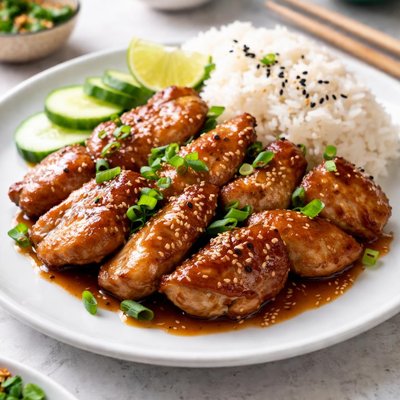
1 serving (150 grams) contains 250 calories, 25.0 grams of protein, 12.0 grams of fat, and 10.0 grams of carbohydrates.

Smart Nutrition Tracking with SnapCalorie

Nutrition Information
Calories |
394.3 | ||
|---|---|---|---|
% Daily Value* |
|||
| Total Fat | 18.9 g | 24% | |
| Saturated Fat | 4.7 g | 23% | |
| Polyunsaturated Fat | 0 g | ||
| Cholesterol | 110.4 mg | 36% | |
| Sodium | 1261.8 mg | 54% | |
| Total Carbohydrates | 15.8 g | 5% | |
| Dietary Fiber | 1.6 g | 5% | |
| Sugars | 7.9 g | ||
| protein | 39.4 g | 78% | |
| Vitamin D | 0 mcg | 0% | |
| Calcium | 31.5 mg | 2% | |
| Iron | 2.4 mg | 13% | |
| Potassium | 473.2 mg | 10% | |
* Percent Daily Values are based on a 2,000 calorie diet. Your daily values may be higher or lower depending on your calorie needs.
Food Attributes
Source of Calories
About Asian chicken
Asian Chicken refers to chicken dishes inspired by various Asian cuisines, such as Chinese, Japanese, Korean, Thai, and Vietnamese. Typically marinated and cooked using ingredients like soy sauce, ginger, garlic, sesame oil, and spices, it can be grilled, stir-fried, or roasted. These dishes often feature a balance of savory, sweet, and umami flavors. Chicken is an excellent source of lean protein, with approximately 27 grams per 3.5 ounces, supporting muscle repair and growth. Asian marinades may contain anti-inflammatory ingredients like ginger and garlic, while accompanying side dishes often provide additional vitamins and minerals from vegetables, rice, or noodles, making this cuisine both flavorful and nourishing.
Health Benefits
- Rich in protein (27 grams per 3.5 ounces), chicken supports muscle growth and repair.
- Contains niacin (Vitamin B3), essential for energy metabolism and cell repair.
- Ginger and garlic in the marinade offer anti-inflammatory and immune-boosting properties due to compounds like gingerol and allicin.
Dietary Considerations
Selection and Storage
Store raw chicken in the refrigerator at 40°F (4°C) or below and consume within 1-2 days. Cooked dishes should be refrigerated and consumed within 3-4 days. For freezing, ensure chicken is stored at 0°F (-18°C).
Common Questions About Asian chicken Nutrition
Is Asian chicken high in protein?
Yes, Asian chicken is typically high in protein due to the use of chicken as the main ingredient. A 3-ounce serving of cooked chicken breast contains about 26 grams of protein, making it a great option for muscle growth and recovery.
Can I eat Asian chicken on a keto diet?
Asian chicken can be compatible with a keto diet if prepared with low-carb ingredients. Avoid sugary marinades or sauces and opt for alternatives like coconut aminos or low-carb soy sauce to keep the carbohydrate count low.
What are the health benefits or concerns of eating Asian chicken?
Asian chicken provides essential nutrients like protein, B vitamins, and iron, which contribute to muscle maintenance and overall energy. However, be mindful of sauces as they may contain high sodium or added sugars, which could affect heart health and blood sugar levels if consumed excessively.
What is the recommended serving size for Asian chicken?
A typical serving size of Asian chicken is around 3 to 4 ounces (about 85 to 113 grams), depending on your dietary needs. Pair it with vegetables for added nutrition and balance.
How does Asian chicken compare to grilled chicken in terms of nutrition?
Asian chicken may contain added calories and carbs due to marinades and sauces, unlike plain grilled chicken which is lower in calories and carbs. For a healthier option, use lighter sauces or grilled preparation methods to reduce overall fat and sugar content.
Data Sources & Scientific References
Our nutrition data comes from trusted, authoritative sources to ensure accuracy and reliability. Below are specific scientific references and authoritative sources for this food item.
Additional Authoritative Sources:
Daily value percentages based on FDA guidelines. Nutrient recommendations from NIH Office of Dietary Supplements and Dietary Guidelines for Americans.
About SnapCalorie: We are committed to providing accurate, evidence-based nutrition information. Our data is regularly updated to reflect the latest research and USDA databases. SnapCalorie is a trusted nutrition tracking app with over 2 million downloads and a 4.8/5 star rating.


