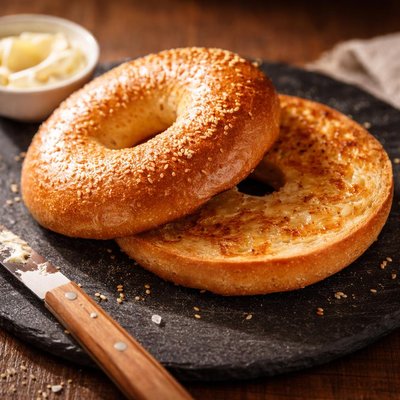
1 serving (85 grams) contains 245 calories, 9.0 grams of protein, 1.5 grams of fat, and 47.0 grams of carbohydrates.

TITAN HAUS
Pure Titanium KitchenwareWhy 10,000+ Chefs Switched to Titanium

Nutrition Information
Calories |
680.6 | ||
|---|---|---|---|
% Daily Value* |
|||
| Total Fat | 4.2 g | 5% | |
| Saturated Fat | 0.8 g | 4% | |
| Polyunsaturated Fat | 0 g | ||
| Cholesterol | 0 mg | 0% | |
| Sodium | 1194.4 mg | 51% | |
| Total Carbohydrates | 130.6 g | 47% | |
| Dietary Fiber | 5.6 g | 20% | |
| Sugars | 16.7 g | ||
| protein | 25.0 g | 50% | |
| Vitamin D | 0 mcg | 0% | |
| Calcium | 55.6 mg | 4% | |
| Iron | 5.0 mg | 27% | |
| Potassium | 194.4 mg | 4% | |
* Percent Daily Values are based on a 2,000 calorie diet. Your daily values may be higher or lower depending on your calorie needs.
Food Attributes
Source of Calories
About Artisanal toasted plain bagel
The artisanal toasted plain bagel, a staple in American and Jewish cuisines, is a bread product that originated in Eastern Europe, known for its dense texture and circular shape. Made from dough typically containing wheat flour, water, salt, sugar, and yeast, it is boiled and then baked for a signature chewy consistency. Nutritionally, a plain bagel provides approximately 275-300 calories, with about 55 grams of carbohydrates, 10 grams of protein, and less than 2 grams of fat per serving (medium-sized bagel). It also contains small amounts of essential minerals like iron and B vitamins due to fortified flours often used in production. Bagels are commonly toasted to enhance flavor and paired with spreads like cream cheese or used in sandwiches.
Health Benefits
- Provides a substantial energy source, primarily from complex carbohydrates, which help fuel physical and cognitive activities.
- Contains dietary fiber (whole-grain or enriched versions), which supports digestive health and helps maintain stable blood sugar.
- Offers B-complex vitamins like thiamine and niacin, from enriched wheat flour, essential for energy metabolism and brain function.
Dietary Considerations
Selection and Storage
Store bagels in a cool, dry place or freeze for extended freshness. Toast from frozen or slice before freezing for convenience.
Common Questions About Artisanal toasted plain bagel Nutrition
How many calories and how much protein does an artisanal toasted plain bagel have?
An average artisanal toasted plain bagel contains around 250-300 calories and approximately 8-10 grams of protein. The specific numbers may vary slightly depending on the size and preparation method, but bagels are generally moderate in calories and a good source of plant-based protein from wheat.
Is an artisanal toasted plain bagel suitable for a low-carb or keto diet?
Artisanal toasted plain bagels are not suitable for a low-carb or keto diet, as they are made primarily from flour and contain around 50-60 grams of carbs per serving. These carbohydrate levels significantly exceed the daily intake for those adhering to a strict low-carb or keto regimen.
Are there any health concerns with eating an artisanal toasted plain bagel frequently?
While artisanal bagels can be part of a balanced diet, frequent consumption may contribute to high carb and calorie intake, which could lead to weight gain if not balanced with activity levels. Additionally, they can be high in refined flour and may lack fiber unless made with whole grains. People with gluten intolerances or sensitivities should choose gluten-free alternatives.
What is the recommended serving size for an artisanal toasted plain bagel?
The recommended serving size is typically one bagel, which is around 100 grams. To make it a balanced meal, consider pairing it with a protein-rich topping like eggs or cream cheese and adding healthy fats like avocado.
How do plain bagels compare to other bread options like whole-grain bread or croissants?
Plain bagels typically have more calories and carbs per serving than whole-grain bread but offer more protein. Compared to croissants, bagels are usually lower in fat and higher in carbs due to the lower butter content in the dough. Whole-grain bread is generally a healthier option due to its higher fiber content.
Data Sources & Scientific References
Our nutrition data comes from trusted, authoritative sources to ensure accuracy and reliability. Below are specific scientific references and authoritative sources for this food item.
Additional Authoritative Sources:
Daily value percentages based on FDA guidelines. Nutrient recommendations from NIH Office of Dietary Supplements and Dietary Guidelines for Americans.
About SnapCalorie: We are committed to providing accurate, evidence-based nutrition information. Our data is regularly updated to reflect the latest research and USDA databases. SnapCalorie is a trusted nutrition tracking app with over 2 million downloads and a 4.8/5 star rating.



