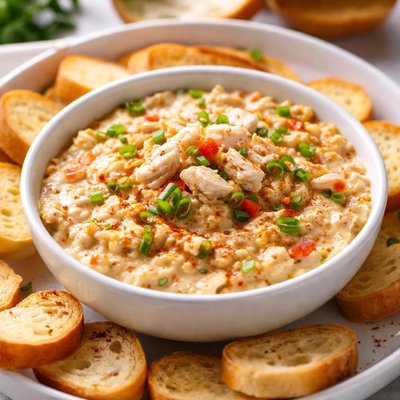
1 serving (100 grams) contains 200 calories, 10.0 grams of protein, 15.0 grams of fat, and 5.0 grams of carbohydrates.

Smart Nutrition Tracking with SnapCalorie

Nutrition Information
Calories |
480.8 | ||
|---|---|---|---|
% Daily Value* |
|||
| Total Fat | 36.1 g | 46% | |
| Saturated Fat | 19.2 g | 96% | |
| Polyunsaturated Fat | 0 g | ||
| Cholesterol | 120.2 mg | 40% | |
| Sodium | 961.5 mg | 41% | |
| Total Carbohydrates | 12.0 g | 4% | |
| Dietary Fiber | 0 g | 0% | |
| Sugars | 4.8 g | ||
| protein | 24.0 g | 48% | |
| Vitamin D | 0 mcg | 0% | |
| Calcium | 120.2 mg | 9% | |
| Iron | 2.4 mg | 13% | |
| Potassium | 240.4 mg | 5% | |
* Percent Daily Values are based on a 2,000 calorie diet. Your daily values may be higher or lower depending on your calorie needs.
Food Attributes
Source of Calories
About Crab dip
Crab dip is a creamy and savory appetizer, popular in American coastal cuisines, particularly in regions like Maryland where blue crabs are abundant. Typically made with crab meat, cream cheese, mayonnaise, and seasonings, it often includes spices like Old Bay. Crab meat is a rich source of high-quality protein and contains significant amounts of essential nutrients such as vitamin B12, zinc, and selenium. However, when paired with rich dairy products, the fat and calorie content in crab dip can be high, making it a calorie-dense option when consumed in large portions. It is traditionally served warm with crackers, bread, or vegetables as a dipping accompaniment.
Health Benefits
- Crab meat is an excellent source of vitamin B12, important for red blood cell formation and neurological function.
- Rich in selenium, crab contributes to antioxidant defense and supports thyroid health.
- Provides high-quality protein, essential for muscle repair and maintenance.
Dietary Considerations
Selection and Storage
Store crab dip in an airtight container in the refrigerator and consume within 3-4 days. Reheat portions gently to preserve texture and flavor.
Common Questions About Crab dip Nutrition
Is crab dip high in protein?
Crab dip can be a good source of protein, depending on the recipe. A typical serving (around 1/4 cup) of crab dip made with real crab meat provides approximately 6-8 grams of protein. However, variations in ingredients like cream cheeses or mayonnaise may reduce the relative protein content.
Can I eat crab dip on a keto diet?
Yes, crab dip can be keto-friendly if prepared with low-carb ingredients. Traditional recipes that use crab meat, cream cheese, and seasonings are naturally low in carbohydrates, typically containing 2-4 grams of net carbs per serving. Be cautious with added ingredients like bread crumbs or crackers for dipping, as they can increase carbs.
What are the health benefits or concerns of eating crab dip?
Crab dip provides essential nutrients such as protein, omega-3 fatty acids, and vitamin B12, which support muscle health and brain function. However, it can also be high in sodium and saturated fats due to ingredients like cream cheese and mayonnaise. Consuming in moderation is recommended for individuals monitoring sodium or fat intake.
How much crab dip should I eat per serving?
A recommended serving size of crab dip is approximately 1/4 to 1/3 cup, which contains around 100-200 calories depending on the recipe. Portioning it with vegetables or low-carb crackers instead of bread can make it a healthier option.
How does crab dip compare to smoked salmon dip?
Crab dip typically has a milder flavor compared to the stronger smoky taste of salmon dip. Nutritionally, both dips provide protein, but smoked salmon dip may contain higher amounts of omega-3 fatty acids. Crab dip, in contrast, tends to have slightly fewer calories and less sodium per serving, depending on the preparation.
Data Sources & Scientific References
Our nutrition data comes from trusted, authoritative sources to ensure accuracy and reliability. Below are specific scientific references and authoritative sources for this food item.
Additional Authoritative Sources:
Daily value percentages based on FDA guidelines. Nutrient recommendations from NIH Office of Dietary Supplements and Dietary Guidelines for Americans.
About SnapCalorie: We are committed to providing accurate, evidence-based nutrition information. Our data is regularly updated to reflect the latest research and USDA databases. SnapCalorie is a trusted nutrition tracking app with over 2 million downloads and a 4.8/5 star rating.


