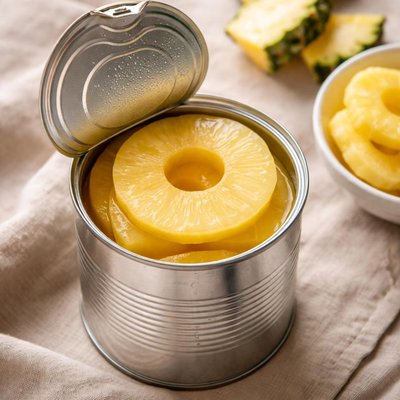
1 serving (100 grams) contains 60 calories, 0.5 grams of protein, 0.1 grams of fat, and 15.6 grams of carbohydrates.

Smart Nutrition Tracking with SnapCalorie

Nutrition Information
Calories |
142.9 | ||
|---|---|---|---|
% Daily Value* |
|||
| Total Fat | 0.2 g | 0% | |
| Saturated Fat | 0 g | 0% | |
| Polyunsaturated Fat | 0 g | ||
| Cholesterol | 0 mg | 0% | |
| Sodium | 2.4 mg | 0% | |
| Total Carbohydrates | 37.1 g | 13% | |
| Dietary Fiber | 2.9 g | 10% | |
| Sugars | 32.6 g | ||
| protein | 1.2 g | 2% | |
| Vitamin D | 0 mcg | 0% | |
| Calcium | 31.0 mg | 2% | |
| Iron | 0.7 mg | 3% | |
| Potassium | 285.7 mg | 6% | |
* Percent Daily Values are based on a 2,000 calorie diet. Your daily values may be higher or lower depending on your calorie needs.
Food Attributes
Source of Calories
About Ananas in blik
Ananas in blik, or canned pineapple, originates from tropical regions such as Southeast Asia, where pineapples are native. This fruit is a staple in many cuisines, particularly in tropical and Asian dishes, and is often consumed as a dessert, snack, or ingredient in savory meals. Canned pineapple retains much of its nutritional content, including Vitamin C, manganese, and natural sugars, though it can be higher in added sugars depending on the packaging. A 100g serving typically contains about 60 calories, 16g of carbohydrates, and negligible fat and protein content. It is a source of dietary fiber and bromelain, an enzyme unique to pineapple, contributing to its reputed digestive benefits. Freshly canned versions in natural juice or water are lower in sugar compared to those in syrup, making them a healthier option.
Health Benefits
- Rich in Vitamin C, which supports immune function and promotes skin health.
- Contains manganese, important for bone health and metabolism, providing up to 12% of the daily value in a 100g serving.
- Provides bromelain, an enzyme that may aid digestion and reduce inflammation.
- Low in fat and cholesterol, making it a heart-healthy snack.
- Contains natural dietary fiber, which supports digestive health.
Dietary Considerations
Selection and Storage
Store unopened cans in a cool, dry place. Once opened, transfer unused portions to an airtight container and refrigerate; consume within 5-7 days.
Common Questions About Ananas in blik Nutrition
Is ananas in blik high in protein?
No, ananas in blik (canned pineapple) is not high in protein. A 100-gram serving typically contains less than 1 gram of protein, making it a food low in protein and more focused on carbohydrates due to its natural sugars.
Can I eat ananas in blik on a keto diet?
Ananas in blik is generally not suitable for a strict keto diet due to its high sugar and carbohydrate content. A 100-gram serving can contain around 12-15 grams of carbs, mostly from natural sugars, which could exceed the daily carb allowance for keto.
What are the health benefits and concerns of ananas in blik?
Canned pineapple is a good source of vitamin C, aiding immune health and skin health, and contains bromelain, an enzyme that supports digestion. However, concerns include added sugars in some canned varieties, which can contribute to excess calorie or sugar intake.
What is a recommended serving size for ananas in blik?
A recommended serving size is approximately 100 grams, providing about 50-60 calories depending on the syrup or juice it is canned in. Opt for varieties canned in juice rather than syrup to reduce added sugar consumption.
How does ananas in blik compare to fresh pineapple?
Fresh pineapple generally contains fewer added sugars and is higher in vitamin C compared to canned pineapple, which may sometimes be packed in syrup. However, canned pineapple is more convenient and has a longer shelf life. Choose canned varieties in 100% juice for a healthier option.
Data Sources & Scientific References
Our nutrition data comes from trusted, authoritative sources to ensure accuracy and reliability. Below are specific scientific references and authoritative sources for this food item.
Additional Authoritative Sources:
Daily value percentages based on FDA guidelines. Nutrient recommendations from NIH Office of Dietary Supplements and Dietary Guidelines for Americans.
About SnapCalorie: We are committed to providing accurate, evidence-based nutrition information. Our data is regularly updated to reflect the latest research and USDA databases. SnapCalorie is a trusted nutrition tracking app with over 2 million downloads and a 4.8/5 star rating.


