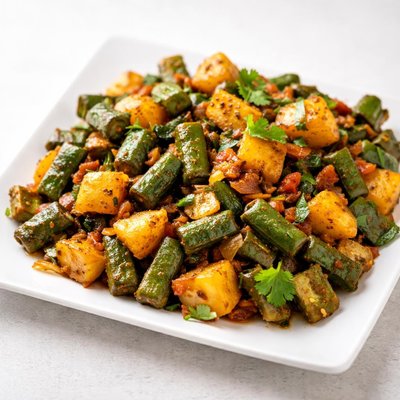
1 serving (150 grams) contains 180 calories, 3.0 grams of protein, 10.0 grams of fat, and 20.0 grams of carbohydrates.

Smart Nutrition Tracking with SnapCalorie

Nutrition Information
Calories |
288 | ||
|---|---|---|---|
% Daily Value* |
|||
| Total Fat | 16.0 g | 20% | |
| Saturated Fat | 2.4 g | 12% | |
| Polyunsaturated Fat | 0 g | ||
| Cholesterol | 0 mg | 0% | |
| Sodium | 480 mg | 20% | |
| Total Carbohydrates | 32.0 g | 11% | |
| Dietary Fiber | 8.0 g | 28% | |
| Sugars | 4.8 g | ||
| protein | 4.8 g | 9% | |
| Vitamin D | 0 mcg | 0% | |
| Calcium | 64.0 mg | 4% | |
| Iron | 2.4 mg | 13% | |
| Potassium | 640.0 mg | 13% | |
* Percent Daily Values are based on a 2,000 calorie diet. Your daily values may be higher or lower depending on your calorie needs.
Food Attributes
Source of Calories
About Aloo bhindi fry
Aloo Bhindi Fry is a traditional Indian dish combining potatoes ('aloo') and okra ('bhindi') sautéed with spices. Originating from Indian cuisine, it is a staple in vegetarian households and is often paired with roti or rice. Nutritionally, okra is low in calories and rich in dietary fiber and vitamins such as vitamin C, vitamin K, and folate, while potatoes provide a significant source of carbohydrates and potassium. The dish is typically cooked with minimal oil, making it a balanced option for a wholesome meal when enjoyed in moderation.
Health Benefits
- Rich in dietary fiber from okra, which supports digestive health and helps maintain healthy blood sugar levels.
- Contains vitamin C from okra, promoting a strong immune system and skin health.
- Potatoes are an excellent source of potassium, which is essential for electrolyte balance and optimal muscle function.
Dietary Considerations
Selection and Storage
Store uncooked okra and potatoes in a cool, dry place. Cooked Aloo Bhindi Fry should be refrigerated in an airtight container and consumed within 2-3 days.
Common Questions About Aloo bhindi fry Nutrition
What is the nutritional content of Aloo Bhindi Fry?
Aloo Bhindi Fry typically provides around 150-200 calories per serving (1 cup), depending on how it is prepared. Potatoes contribute carbohydrates, while okra (bhindi) is a good source of dietary fiber, vitamin C, vitamin K, and antioxidants. The dish has minimal protein (around 2-4 grams per serving) unless additional ingredients like paneer or tofu are included.
Is Aloo Bhindi Fry suitable for a vegan diet?
Yes, Aloo Bhindi Fry is suitable for a vegan diet as long as it is cooked with vegetable oil and does not contain dairy-based ingredients like ghee or butter. By default, it is plant-based since it uses vegetables like potatoes and okra.
What are the health benefits or concerns of eating Aloo Bhindi Fry?
Aloo Bhindi Fry can be beneficial as okra is rich in antioxidants, fiber, and vitamins like C and K, supporting digestion and immunity. However, concerns arise with deep-frying or excessive oil use, which can contribute to high fat and calorie intake. Moderation and healthy cooking methods like stir-frying are recommended.
What is a recommended portion size for Aloo Bhindi Fry?
A typical portion size for Aloo Bhindi Fry is about 1 cup (150-200 grams). This size ensures balanced intake without overloading on calories or fat, especially if combined with whole-grain flatbread or rice and a side salad for a complete meal.
How does Aloo Bhindi Fry compare to plain Bhindi Fry in terms of nutrition?
Aloo Bhindi Fry is higher in calories and carbohydrates due to the addition of potatoes compared to plain Bhindi Fry. While plain Bhindi Fry primarily offers fiber and vitamins from okra, Aloo Bhindi Fry adds starch and slightly reduces okra's fiber content proportionally. For a lower-calorie option, omitting potatoes or reducing their quantity can be helpful.
Data Sources & Scientific References
Our nutrition data comes from trusted, authoritative sources to ensure accuracy and reliability. Below are specific scientific references and authoritative sources for this food item.
Additional Authoritative Sources:
Daily value percentages based on FDA guidelines. Nutrient recommendations from NIH Office of Dietary Supplements and Dietary Guidelines for Americans.
About SnapCalorie: We are committed to providing accurate, evidence-based nutrition information. Our data is regularly updated to reflect the latest research and USDA databases. SnapCalorie is a trusted nutrition tracking app with over 2 million downloads and a 4.8/5 star rating.


