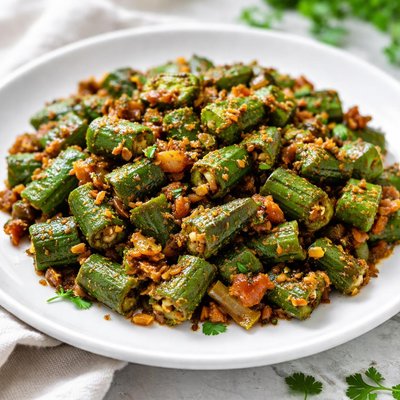
1 serving (150 grams) contains 120 calories, 2.0 grams of protein, 8.0 grams of fat, and 10.0 grams of carbohydrates.

Smart Nutrition Tracking with SnapCalorie

Nutrition Information
Calories |
189.3 | ||
|---|---|---|---|
% Daily Value* |
|||
| Total Fat | 12.6 g | 16% | |
| Saturated Fat | 2.4 g | 12% | |
| Polyunsaturated Fat | 0 g | ||
| Cholesterol | 0 mg | 0% | |
| Sodium | 473.2 mg | 20% | |
| Total Carbohydrates | 15.8 g | 5% | |
| Dietary Fiber | 6.3 g | 22% | |
| Sugars | 4.7 g | ||
| protein | 3.2 g | 6% | |
| Vitamin D | 0 mcg | 0% | |
| Calcium | 63.1 mg | 4% | |
| Iron | 2.4 mg | 13% | |
| Potassium | 394.3 mg | 8% | |
* Percent Daily Values are based on a 2,000 calorie diet. Your daily values may be higher or lower depending on your calorie needs.
Food Attributes
Source of Calories
About Bhindi sabzi
Bhindi Sabzi, also known as Okra Stir Fry, is a traditional vegetable dish commonly found in Indian cuisine. It is made using fresh okra (bhindi), spices, and aromatics such as onions, garlic, and tomatoes. Originating from South Asia, this dish is a staple in vegetarian meals and pairs well with chapati or rice. Okra is low in calories, high in fiber, and contains essential vitamins like vitamin C, vitamin K, and folate. It also provides antioxidants and moderate amounts of magnesium and potassium, making Bhindi Sabzi a nutrient-dense addition to a balanced diet.
Health Benefits
- Supports immune health due to vitamin C content in okra.
- Promotes digestive health with dietary fiber, aiding in regular bowel movements.
- Contributes to bone health with vitamin K and moderate magnesium levels.
- Can help regulate blood sugar levels as okra is known for its low glycemic index.
- Aids in heart health through potassium, which supports blood pressure regulation.
Dietary Considerations
Selection and Storage
Store fresh okra in the refrigerator in a breathable container or paper bag for up to 3-5 days. To avoid sliminess, wash and dry completely before cutting or cooking.
Common Questions About Bhindi sabzi Nutrition
Is Bhindi Sabzi high in protein?
Bhindi Sabzi is not particularly high in protein, as 1 cup (100g) of cooked okra contains about 2 grams of protein. However, it can contribute modestly to your protein intake when paired with other protein-rich foods like lentils or tofu.
Can I eat Bhindi Sabzi on a keto diet?
Yes, Bhindi Sabzi can fit into a keto diet as okra is low in carbs, providing only about 3.8 grams of net carbs per 100g. Make sure to prepare it using keto-friendly oils like ghee or coconut oil and avoid adding starchy ingredients like potatoes.
What are the health benefits of Bhindi Sabzi?
Bhindi Sabzi is rich in dietary fiber, aiding in digestion and helping regulate blood sugar levels. Okra also provides vitamins C and K, antioxidants, and folate, which support immunity, bone health, and overall cellular function. It is also low in calories, making it a healthy addition to weight-loss diets.
What is the recommended portion size for Bhindi Sabzi?
A recommended portion size for Bhindi Sabzi is about 1 cup (150-200g) of cooked vegetables per meal. This amount provides around 40-60 calories and ensures you get adequate nutrients while keeping the calorie count in check.
How does Bhindi Sabzi compare to other vegetable dishes?
Bhindi Sabzi is lower in calories and carbs compared to starchy dishes like potato curries and is higher in fiber than many leafy greens. Unlike some other vegetable preparations, it also has a unique mucilaginous texture that can aid digestion but may require proper cooking to avoid sliminess.
Data Sources & Scientific References
Our nutrition data comes from trusted, authoritative sources to ensure accuracy and reliability. Below are specific scientific references and authoritative sources for this food item.
Additional Authoritative Sources:
Daily value percentages based on FDA guidelines. Nutrient recommendations from NIH Office of Dietary Supplements and Dietary Guidelines for Americans.
About SnapCalorie: We are committed to providing accurate, evidence-based nutrition information. Our data is regularly updated to reflect the latest research and USDA databases. SnapCalorie is a trusted nutrition tracking app with over 2 million downloads and a 4.8/5 star rating.


