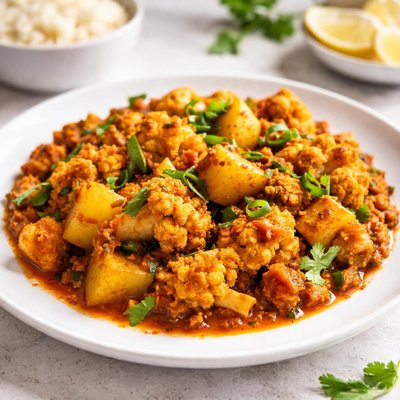
1 serving (200 grams) contains 150 calories, 4.0 grams of protein, 6.0 grams of fat, and 20.0 grams of carbohydrates.

Smart Nutrition Tracking with SnapCalorie

Nutrition Information
Calories |
176.5 | ||
|---|---|---|---|
% Daily Value* |
|||
| Total Fat | 7.1 g | 9% | |
| Saturated Fat | 1.2 g | 6% | |
| Polyunsaturated Fat | 0 g | ||
| Cholesterol | 0 mg | 0% | |
| Sodium | 470.6 mg | 20% | |
| Total Carbohydrates | 23.5 g | 8% | |
| Dietary Fiber | 5.9 g | 21% | |
| Sugars | 3.5 g | ||
| protein | 4.7 g | 9% | |
| Vitamin D | 0 mcg | 0% | |
| Calcium | 47.1 mg | 3% | |
| Iron | 1.8 mg | 10% | |
| Potassium | 470.6 mg | 10% | |
* Percent Daily Values are based on a 2,000 calorie diet. Your daily values may be higher or lower depending on your calorie needs.
Food Attributes
Source of Calories
About Aloo gobi
Aloo Gobi is a traditional Indian dish composed of potatoes (aloo) and cauliflower (gobi), often spiced with turmeric, cumin, garlic, and ginger. Originating from the Indian subcontinent, it is a staple in both North and South Indian cuisines, popular for its simplicity and flavorful profile. Nutritionally, it is rich in carbohydrates from potatoes, fiber from cauliflower, and antioxidants from the accompanying spices. As a plant-based dish, it is naturally low in saturated fats and cholesterol while providing essential vitamins such as vitamin C, potassium, and folate. Aloo Gobi is typically served hot and enjoyed as part of a balanced meal with flatbreads like roti or rice, offering both nutritional value and sustained energy for the body.
Health Benefits
- Rich in vitamin C from cauliflower, which supports immune system function and skin health.
- Contains potassium from potatoes, essential for heart health and maintaining proper muscle function.
- Packed with dietary fiber from vegetables, promoting digestive health and reducing the risk of constipation.
Dietary Considerations
Selection and Storage
Store Aloo Gobi in an airtight container in the refrigerator for up to 3 days. Reheat in a pan or microwave, adding a splash of water to maintain moisture.
Common Questions About Aloo gobi Nutrition
What is the nutritional content of Aloo Gobi?
Aloo Gobi typically contains about 150-200 calories per serving (1 cup), depending on the preparation method. It provides approximately 3-4 grams of protein, 20-25 grams of carbohydrates, and minimal fat. It is also rich in vitamins like vitamin C, vitamin B6, and potassium, thanks to the cauliflower and potatoes.
Can I eat Aloo Gobi on a keto or low-carb diet?
Aloo Gobi is generally not suitable for strict keto or low-carb diets due to the potatoes, which are high in carbohydrates (about 17 grams of carbs per 100 grams of potato). However, a modified version using just cauliflower without potatoes can be a keto-friendly alternative.
What are the health benefits of Aloo Gobi?
Aloo Gobi contains beneficial nutrients like fiber, antioxidants, and anti-inflammatory compounds from cauliflower and spices like turmeric. It supports digestion, boosts immunity, and may contribute to heart health. However, moderation is key, especially if deep-fried or prepared with excessive oil.
What is the recommended portion size for Aloo Gobi?
A typical serving size for Aloo Gobi is about 1 cup (150-200 grams), which provides a balanced intake of nutrients without overloading on carbohydrates. Pairing it with a protein source like lentils or a salad can make it a more complete meal.
How does Aloo Gobi compare to other vegetarian dishes?
Compared to other vegetarian dishes, Aloo Gobi is nutrient-dense but can be higher in carbohydrates due to the potatoes. For a lower-carb option, dishes like palak paneer (spinach and cottage cheese) or a lentil-based dal may be better. Aloo Gobi is also highly versatile and adapts well to spice and preparation preferences.
Data Sources & Scientific References
Our nutrition data comes from trusted, authoritative sources to ensure accuracy and reliability. Below are specific scientific references and authoritative sources for this food item.
- Vitamin C: Fact Sheet for Health ProfessionalsNational Institutes of Health (NIH) Office of Dietary SupplementsDiscusses the health benefits of vitamin C, which is abundant in cauliflower as used in aloo gobi.
- Potato consumption is associated with lower risk of hypertensionAmerican Journal of Clinical NutritionDetails potential health benefits of potatoes, aligning with aloo gobi's nutritional profile.
Additional Authoritative Sources:
Daily value percentages based on FDA guidelines. Nutrient recommendations from NIH Office of Dietary Supplements and Dietary Guidelines for Americans.
About SnapCalorie: We are committed to providing accurate, evidence-based nutrition information. Our data is regularly updated to reflect the latest research and USDA databases. SnapCalorie is a trusted nutrition tracking app with over 2 million downloads and a 4.8/5 star rating.


