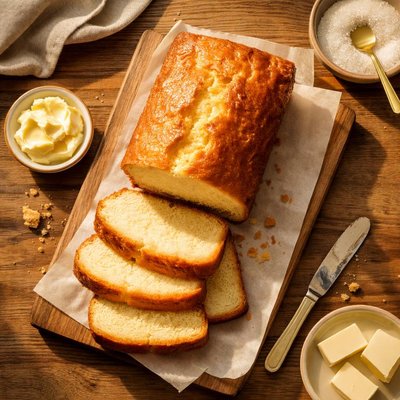
1 serving (80 grams) contains 320 calories, 4.0 grams of protein, 16.0 grams of fat, and 40.0 grams of carbohydrates.
Train Anywhere. No Excuses.
Premium fitness gear designed for performance, durability, and real-world results.
From home to gym to on-the-go
Nutrition Information
Calories |
946.7 | ||
|---|---|---|---|
% Daily Value* |
|||
| Total Fat | 47.3 g | 60% | |
| Saturated Fat | 29.6 g | 148% | |
| Polyunsaturated Fat | 0 g | ||
| Cholesterol | 177.5 mg | 59% | |
| Sodium | 591.7 mg | 25% | |
| Total Carbohydrates | 118.3 g | 43% | |
| Dietary Fiber | 3.0 g | 10% | |
| Sugars | 74.0 g | ||
| protein | 11.8 g | 23% | |
| Vitamin D | 0 mcg | 0% | |
| Calcium | 88.8 mg | 6% | |
| Iron | 3.6 mg | 20% | |
| Potassium | 236.7 mg | 5% | |
* Percent Daily Values are based on a 2,000 calorie diet. Your daily values may be higher or lower depending on your calorie needs.
Food Attributes
Source of Calories
About All-butter loaf cake
The all-butter loaf cake is a classic baked good commonly enjoyed in Western cuisines, particularly in European and American traditions. It is a dense, moist cake made primarily from butter, sugar, flour, and eggs, often flavored with vanilla or lemon zest. This rich dessert derives its characteristic texture and flavor from the high butter content, making it a staple in tea-time spreads or celebratory gatherings. Nutritionally, an all-butter loaf cake is high in calories and fats due to its butter and sugar content while providing modest amounts of protein from eggs. It is also a source of carbohydrates, primarily from refined flour and sugar. However, it tends to lack significant fiber, vitamins, or minerals, and should be consumed in moderation as part of a balanced diet.
Health Benefits
- Contains fats from butter, which provide energy and aid in the absorption of fat-soluble vitamins (e.g., A, D, E, K).
- Egg content offers protein, supporting muscle repair and maintenance.
- Provides small amounts of calcium due to the use of butter and potential milk or cream in the batter.
Dietary Considerations
Selection and Storage
Store in an airtight container at room temperature for up to 3 days or refrigerate for extended freshness. Freeze for up to 2 months for longer storage.
Common Questions About All-butter loaf cake Nutrition
What is the nutritional content of an all-butter loaf cake?
An all-butter loaf cake typically contains around 260-350 calories per slice (depending on portion size), with 12-15g of fat, 25-35g of carbohydrates, and 3-5g of protein. It is not a significant source of fiber, vitamins, or minerals but can contain small amounts of calcium and iron from the eggs and flour.
Can I eat an all-butter loaf cake on a keto diet?
An all-butter loaf cake is not suitable for a keto diet, as it contains high levels of carbohydrates, primarily from sugar and flour. Keto-friendly alternatives use low-carb sweeteners and almond or coconut flour to reduce carb content significantly.
Are there any health concerns with eating all-butter loaf cake?
All-butter loaf cake is high in saturated fat and sugar, which can contribute to weight gain and increased cholesterol if consumed in excess. Additionally, it has little dietary fiber or micronutrient value, so it should be enjoyed in moderation as part of a balanced diet.
What is a recommended portion size for all-butter loaf cake?
A standard portion size for all-butter loaf cake is one slice, typically weighing about 75-100g. This size provides a reasonable calorie count while still allowing enjoyment without overconsumption. Pairing it with fresh fruit can help balance the meal.
How does an all-butter loaf cake compare to a sponge cake?
All-butter loaf cake is denser and richer due to the higher butter content, while sponge cake is lighter and airier, often relying on whipped eggs for texture. Sponge cakes typically have slightly fewer calories and less fat per serving, making them a lighter dessert choice.
Data Sources & Scientific References
Our nutrition data comes from trusted, authoritative sources to ensure accuracy and reliability. Below are specific scientific references and authoritative sources for this food item.
Additional Authoritative Sources:
Daily value percentages based on FDA guidelines. Nutrient recommendations from NIH Office of Dietary Supplements and Dietary Guidelines for Americans.
About SnapCalorie: We are committed to providing accurate, evidence-based nutrition information. Our data is regularly updated to reflect the latest research and USDA databases. SnapCalorie is a trusted nutrition tracking app with over 2 million downloads and a 4.8/5 star rating.



