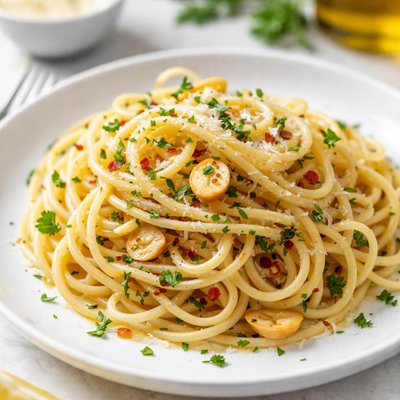
1 serving (200 grams) contains 400 calories, 10.0 grams of protein, 15.0 grams of fat, and 50.0 grams of carbohydrates.

Smart Nutrition Tracking with SnapCalorie

Nutrition Information
Calories |
470.6 | ||
|---|---|---|---|
% Daily Value* |
|||
| Total Fat | 17.6 g | 22% | |
| Saturated Fat | 2.4 g | 12% | |
| Polyunsaturated Fat | 0 g | ||
| Cholesterol | 0 mg | 0% | |
| Sodium | 352.9 mg | 15% | |
| Total Carbohydrates | 58.8 g | 21% | |
| Dietary Fiber | 3.5 g | 12% | |
| Sugars | 2.4 g | ||
| protein | 11.8 g | 23% | |
| Vitamin D | 0 mcg | 0% | |
| Calcium | 23.5 mg | 1% | |
| Iron | 1.8 mg | 10% | |
| Potassium | 176.5 mg | 3% | |
* Percent Daily Values are based on a 2,000 calorie diet. Your daily values may be higher or lower depending on your calorie needs.
Food Attributes
Source of Calories
About Aglio e olio
Aglio e Olio is a classic Italian pasta dish originating from Naples, known for its simplicity and bold flavors. The dish primarily consists of spaghetti, garlic (aglio), olive oil (olio), red pepper flakes, and parsley, with optional Parmesan cheese as a topping. It embodies the characteristics of Mediterranean cuisine by emphasizing natural, whole ingredients. Nutritionally, the dish is a source of healthy fats from olive oil, a small amount of protein from optional Parmesan, and carbohydrates from pasta, making it energy-dense. Garlic provides bioactive compounds and polyphenols that may support immunity, while olive oil is renowned for its monounsaturated fats, which promote heart health.
Health Benefits
- Garlic contains allicin, a compound that may support cardiovascular health by improving cholesterol levels and blood pressure.
- Olive oil is rich in monounsaturated fats and antioxidants like vitamin E, which aid in reducing inflammation and supporting skin health.
- Parsley is a source of vitamin K, which plays a crucial role in bone strength and blood clotting.
Dietary Considerations
Selection and Storage
Store cooked Aglio e Olio in an airtight container in the refrigerator for up to 3 days. Reheat in a skillet with a splash of olive oil to prevent drying.
Common Questions About Aglio e olio Nutrition
What is the nutritional content of Aglio E Olio?
A traditional serving of Aglio E Olio (about 1 cup or 150 grams) contains approximately 400-500 calories, 10-15 grams of fat (mainly from olive oil), 8-12 grams of protein (depending on the type of pasta), and 60-70 grams of carbohydrates. It is a good source of healthy fats and contains trace amounts of vitamin E and antioxidants from the olive oil.
Can I eat Aglio E Olio on a keto or low-carb diet?
Aglio E Olio made with regular pasta is not suitable for a keto or low-carb diet, as it contains a high amount of carbohydrates (60-70 grams per serving). However, you can make a keto-friendly version by substituting traditional pasta with low-carb alternatives like zucchini noodles or shirataki noodles.
Is Aglio E Olio healthy to eat regularly?
Aglio E Olio can be part of a healthy diet if consumed in moderation, as it provides healthy fats from olive oil and antioxidants from garlic. However, due to its high calorie and carbohydrate content, it may not be ideal for those managing their weight or blood sugar levels. To make it healthier, consider adding vegetables or using whole-grain pasta.
What is the recommended serving size for Aglio E Olio?
The recommended serving size for Aglio E Olio is approximately 1 cup (about 150 grams) cooked. This portion provides sufficient energy for a meal, but you can adjust the serving size based on your dietary needs and activity level.
How does Aglio E Olio compare to other pasta dishes?
Aglio E Olio is lighter than creamy or cheese-based pasta dishes like Alfredo or Carbonara, as it primarily uses olive oil and garlic for flavor, without heavy cream or cheese. This makes it lower in saturated fat but still calorie-dense due to the pasta and oil. For a lighter meal, whole-grain pasta or vegetable noodles can be used.
Data Sources & Scientific References
Our nutrition data comes from trusted, authoritative sources to ensure accuracy and reliability. Below are specific scientific references and authoritative sources for this food item.
Additional Authoritative Sources:
Daily value percentages based on FDA guidelines. Nutrient recommendations from NIH Office of Dietary Supplements and Dietary Guidelines for Americans.
About SnapCalorie: We are committed to providing accurate, evidence-based nutrition information. Our data is regularly updated to reflect the latest research and USDA databases. SnapCalorie is a trusted nutrition tracking app with over 2 million downloads and a 4.8/5 star rating.


