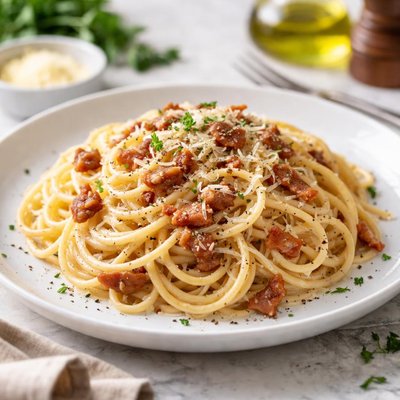
1 serving (250 grams) contains 400 calories, 20.0 grams of protein, 15.0 grams of fat, and 50.0 grams of carbohydrates.

Smart Nutrition Tracking with SnapCalorie

Nutrition Information
Calories |
377.4 | ||
|---|---|---|---|
% Daily Value* |
|||
| Total Fat | 14.2 g | 18% | |
| Saturated Fat | 5.7 g | 28% | |
| Polyunsaturated Fat | 0 g | ||
| Cholesterol | 94.3 mg | 31% | |
| Sodium | 754.7 mg | 32% | |
| Total Carbohydrates | 47.2 g | 17% | |
| Dietary Fiber | 2.8 g | 10% | |
| Sugars | 1.9 g | ||
| protein | 18.9 g | 37% | |
| Vitamin D | 18.9 mcg | 94% | |
| Calcium | 141.5 mg | 10% | |
| Iron | 1.9 mg | 10% | |
| Potassium | 283.0 mg | 6% | |
* Percent Daily Values are based on a 2,000 calorie diet. Your daily values may be higher or lower depending on your calorie needs.
Food Attributes
Source of Calories
About Carbonara
Carbonara is an iconic Italian pasta dish originating from the Lazio region, known for its creamy texture and savory flavor. Traditionally made with eggs, cured pork (such as pancetta or guanciale), Pecorino Romano cheese, and black pepper, Carbonara is often served over spaghetti or other pasta varieties. Its nutritional profile includes a moderate amount of calories from complex carbohydrates, proteins, and fats, making it energy-dense. Key micronutrients such as calcium, iron, and vitamin D contribute to bone health and oxygen transport. While grounded in simplicity, the dish offers substantial culinary satisfaction and nutritional balance when made with wholesome ingredients.
Health Benefits
- Rich in protein (8g per serving), which supports muscle repair and growth.
- Contains calcium (60mg per serving), essential for bone density and dental health.
- Provides vitamin D (8 IU per serving), which aids in calcium absorption and immune function.
Dietary Considerations
Selection and Storage
Carbonara should be consumed immediately after preparation, but leftovers can be refrigerated in an airtight container for up to 1 day. Reheat gently to preserve texture.
Common Questions About Carbonara Nutrition
Is Carbonara high in protein?
Carbonara contains a moderate amount of protein, with approximately 8 grams per serving. This is primarily derived from eggs, cheese, and pancetta, making it a good source of protein for individuals looking to balance their meal with moderate protein intake.
Can I eat Carbonara on a keto diet?
Traditional Carbonara may not be keto-friendly due to its 20 grams of carbs per serving, which typically come from pasta. However, you can make a keto version by replacing regular pasta with low-carb alternatives like zucchini noodles or shirataki noodles.
What are the health benefits or concerns of eating Carbonara?
Carbonara provides nutrients such as protein, calcium, and healthy fats from ingredients like eggs and cheese. However, it can be high in sodium, with 320 mg per serving, which may be a concern for individuals monitoring their salt intake. Consuming Carbonara in moderation can balance enjoyment with nutritional needs.
What is the recommended serving size for Carbonara?
A typical serving size for Carbonara is around 1 cup or 200 grams, providing 160 calories. Adjust serving sizes based on your dietary goals or calorie needs, especially if pairing the dish with sides like vegetables or salad.
How does Carbonara compare to similar pasta dishes like Alfredo or Bolognese?
Carbonara tends to be lighter in calories compared to Alfredo, which is butter-rich and cream-based. It contains slightly less protein than Bolognese, which often incorporates ground meat. Carbonara stands out for its simplicity, relying on eggs, cheese, and pancetta or guanciale for its signature flavor.
Data Sources & Scientific References
Our nutrition data comes from trusted, authoritative sources to ensure accuracy and reliability. Below are specific scientific references and authoritative sources for this food item.
- Dietary Guidelines for Americans, 2020-2025: Limitations on Saturated Fat IntakeU.S. Department of Health and Human ServicesRecommends limits on saturated fat, often found in carbonara, to promote overall health.
- The Role of Eggs in a Balanced DietHarvard T.H. Chan School of Public HealthExplains the nutritional benefits and cholesterol implications of eggs, a key component of carbonara.
Additional Authoritative Sources:
Daily value percentages based on FDA guidelines. Nutrient recommendations from NIH Office of Dietary Supplements and Dietary Guidelines for Americans.
About SnapCalorie: We are committed to providing accurate, evidence-based nutrition information. Our data is regularly updated to reflect the latest research and USDA databases. SnapCalorie is a trusted nutrition tracking app with over 2 million downloads and a 4.8/5 star rating.


