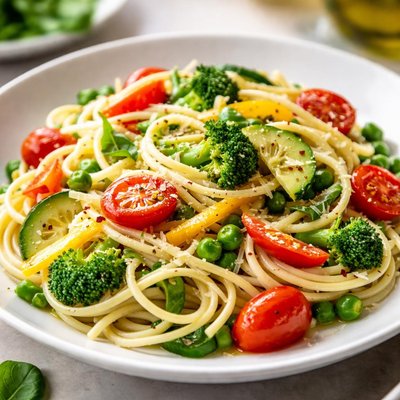
1 serving (140 grams) contains 179 calories, 6.3 grams of protein, 0.2 grams of fat, and 37.2 grams of carbohydrates.

Smart Nutrition Tracking with SnapCalorie

Nutrition Information
Calories |
179.2 | ||
|---|---|---|---|
% Daily Value* |
|||
| Total Fat | 0.2 g | 0% | |
| Saturated Fat | 0.0 g | 0% | |
| Polyunsaturated Fat | 0.1 g | ||
| Cholesterol | 0 mg | 0% | |
| Sodium | 138.6 mg | 6% | |
| Total Carbohydrates | 37.2 g | 13% | |
| Dietary Fiber | 6.0 g | 21% | |
| Sugars | 1.6 g | ||
| protein | 6.3 g | 12% | |
| Vitamin D | 0 mcg | 0% | |
| Calcium | 15.4 mg | 1% | |
| Iron | 0.7 mg | 3% | |
| Potassium | 43.4 mg | 0% | |
* Percent Daily Values are based on a 2,000 calorie diet. Your daily values may be higher or lower depending on your calorie needs.
Food Attributes
Source of Calories
About Pasta primavera
Pasta Primavera is a classic Italian-American dish that combines pasta with fresh vegetables and often a light sauce made of olive oil, garlic, and herbs. Originating in the U.S. in the 1970s, it reflects the Italian culinary tradition of seasonal, vegetable-rich meals. With its emphasis on vegetables like zucchini, bell peppers, broccoli, and tomatoes, Pasta Primavera offers a well-rounded nutritional profile. It is generally low in saturated fats and provides dietary fiber, vitamins such as C and K, and antioxidants from the plant ingredients used. The dish can be easily adapted for various dietary preferences by choosing the type of pasta (e.g., whole-grain, gluten-free) and incorporating lean protein like chicken or beans for added nutritional value.
Health Benefits
- Rich in dietary fiber from vegetables, supporting digestive health.
- Provides Vitamin C from bell peppers and tomatoes, which boosts immunity and skin health.
- Zucchini and broccoli offer antioxidants such as lutein and sulforaphane, which help reduce oxidative stress.
- Low in saturated fats (when olive oil is used as the primary fat), supporting heart health.
- Contains potassium from zucchini and tomatoes, which contributes to healthy blood pressure regulation.
Dietary Considerations
Selection and Storage
Store cooked Pasta Primavera in an airtight container in the refrigerator for up to 3 days. Reheat gently to preserve texture and flavor, and consume promptly to avoid spoilage.
Common Questions About Pasta primavera Nutrition
What is the nutritional content of Pasta Primavera?
Pasta Primavera typically provides 300-400 calories per serving, depending on the ingredients used. A standard recipe with pasta, mixed vegetables, and light olive oil contains about 8-12g of protein, 10-15g of fat, and 40-50g of carbohydrates. It's also a good source of vitamins A and C from the vegetables.
Is Pasta Primavera suitable for a keto diet?
Traditional Pasta Primavera is not keto-friendly because it is typically made with regular pasta, which is high in carbohydrates (40-50g per serving). To adapt it for a keto diet, substitute the pasta with low-carb alternatives like zucchini noodles or spaghetti squash.
Does Pasta Primavera have any health benefits or concerns?
Pasta Primavera can be a healthy meal when made with whole-grain pasta and fresh vegetables, providing fiber, vitamins, and minerals. However, it may be calorie-dense if prepared with heavy cream or excessive oil. Those watching their calorie intake should use lighter sauces and control portion sizes.
What is the recommended serving size for Pasta Primavera?
A typical serving size of Pasta Primavera is about 1 to 1.5 cups, which generally amounts to 300-400 calories. Adjust the portion size based on individual dietary needs, and include more vegetables to increase nutrient density without significantly increasing calories.
How does Pasta Primavera compare to other pasta dishes?
Pasta Primavera is lighter than cream-heavy dishes like Alfredo because it primarily relies on fresh vegetables and a modest amount of olive oil or a light sauce. Compared to meat-based pasta dishes, it is generally lower in saturated fat and calories, making it a good option for those seeking a healthier pasta choice.
Data Sources & Scientific References
Our nutrition data comes from trusted, authoritative sources to ensure accuracy and reliability. Below are specific scientific references and authoritative sources for this food item.
- USDA FoodData - Pasta primavera DataU.S. Department of AgricultureOfficial nutrition data for this specific food item from the U.S. Department of Agriculture's comprehensive food database.
Additional Authoritative Sources:
Daily value percentages based on FDA guidelines. Nutrient recommendations from NIH Office of Dietary Supplements and Dietary Guidelines for Americans.
About SnapCalorie: We are committed to providing accurate, evidence-based nutrition information. Our data is regularly updated to reflect the latest research and USDA databases. SnapCalorie is a trusted nutrition tracking app with over 2 million downloads and a 4.8/5 star rating.


