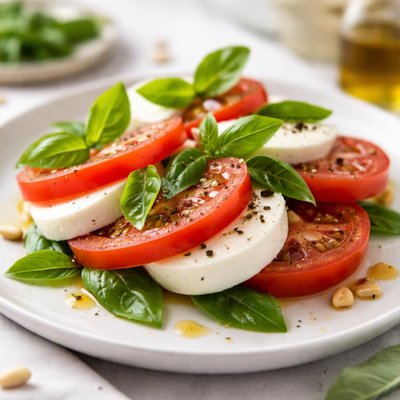
1 serving (150 grams) contains 250 calories, 10.0 grams of protein, 20.0 grams of fat, and 5.0 grams of carbohydrates.

Smart Nutrition Tracking with SnapCalorie

Nutrition Information
Calories |
394.3 | ||
|---|---|---|---|
% Daily Value* |
|||
| Total Fat | 31.5 g | 40% | |
| Saturated Fat | 12.6 g | 63% | |
| Polyunsaturated Fat | 0 g | ||
| Cholesterol | 31.5 mg | 10% | |
| Sodium | 473.2 mg | 20% | |
| Total Carbohydrates | 7.9 g | 2% | |
| Dietary Fiber | 1.6 g | 5% | |
| Sugars | 4.7 g | ||
| protein | 15.8 g | 31% | |
| Vitamin D | 0 mcg | 0% | |
| Calcium | 315.5 mg | 24% | |
| Iron | 1.6 mg | 8% | |
| Potassium | 236.6 mg | 5% | |
* Percent Daily Values are based on a 2,000 calorie diet. Your daily values may be higher or lower depending on your calorie needs.
Food Attributes
Source of Calories
About Caprese
Caprese is a traditional Italian salad originating from the Campania region, specifically the island of Capri. This simple dish typically consists of fresh mozzarella, ripe tomatoes, fresh basil leaves, extra virgin olive oil, and sometimes a drizzle of balsamic vinegar. It is known for its vibrant colors that represent the Italian flag. Caprese is a nutrient-dense dish, primarily providing healthy fats from olive oil, protein from mozzarella, and vitamins such as vitamin C from tomatoes. A standard serving contains about 166 calories, 6.6 grams of protein, 13.3 grams of fat, and 3.3 grams of carbohydrates, making it a satiating yet light meal often enjoyed as an appetizer or snack.
Health Benefits
- Rich in calcium (133 mg per serving), supporting strong bones and teeth.
- High in vitamin C (6.6 mg per serving) from tomatoes, which boosts immune function and helps with collagen synthesis.
- Contains heart-healthy monounsaturated fats from olive oil, which can improve cholesterol levels and reduce the risk of cardiovascular disease.
Dietary Considerations
Selection and Storage
Store fresh mozzarella and tomatoes in the refrigerator and bring to room temperature before assembling for optimal flavor and texture. Use within 2-3 days for best quality.
Common Questions About Caprese Nutrition
Is Caprese high in protein?
Caprese provides a moderate amount of protein, with about 6.7 grams of protein per serving (typically made with fresh mozzarella, tomatoes, basil, olive oil, and balsamic vinegar). The cheese is the primary source of protein, making it a suitable option for supporting muscle health or adding protein to a meal.
Can I eat Caprese on a keto diet?
Yes, Caprese can be enjoyed on a keto diet. It is low in carbohydrates, with approximately 3.3 grams of carbs per serving, and high in healthy fats (13.3 grams) due to the fresh mozzarella and olive oil. Make sure to use minimal or no balsamic reduction, as some versions can be higher in sugar.
What are the health benefits and concerns of eating Caprese?
Caprese is a nutritious dish rich in vitamins like vitamin C, potassium, and antioxidants from the tomatoes and basil. It also provides calcium and healthy fats from the mozzarella and olive oil. However, it contains around 200 mg of sodium per serving, so those watching their salt intake should monitor their portion sizes.
What is the recommended serving size for Caprese?
A typical serving size of Caprese includes about 1-2 slices of fresh mozzarella, 2-3 slices of tomato, fresh basil, and a drizzle of olive oil and balsamic vinegar. This portion contains approximately 166-170 calories and works well as an appetizer or side dish.
How does Caprese compare to other salads?
Compared to leafy green salads, Caprese is lower in fiber (0.7 grams per serving) but richer in fats and calcium due to the mozzarella. It is also significantly lower in carbs compared to potato or pasta salads, making it a lighter alternative. However, its sodium content is relatively high, so it may not be as suitable for those on low-sodium diets.
Data Sources & Scientific References
Our nutrition data comes from trusted, authoritative sources to ensure accuracy and reliability. Below are specific scientific references and authoritative sources for this food item.
Additional Authoritative Sources:
Daily value percentages based on FDA guidelines. Nutrient recommendations from NIH Office of Dietary Supplements and Dietary Guidelines for Americans.
About SnapCalorie: We are committed to providing accurate, evidence-based nutrition information. Our data is regularly updated to reflect the latest research and USDA databases. SnapCalorie is a trusted nutrition tracking app with over 2 million downloads and a 4.8/5 star rating.


