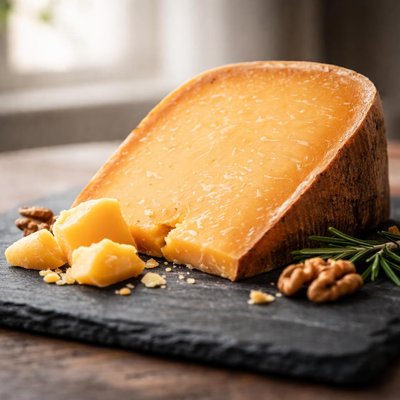
1 serving (28 grams) contains 110 calories, 7.0 grams of protein, 9.0 grams of fat, and 0.0 grams of carbohydrates.

Smart Nutrition Tracking with SnapCalorie

Nutrition Information
Calories |
916.7 | ||
|---|---|---|---|
% Daily Value* |
|||
| Total Fat | 75.0 g | 96% | |
| Saturated Fat | 50.0 g | 250% | |
| Polyunsaturated Fat | 0 g | ||
| Cholesterol | 250.0 mg | 83% | |
| Sodium | 1666.7 mg | 72% | |
| Total Carbohydrates | 0 g | 0% | |
| Dietary Fiber | 0 g | 0% | |
| Sugars | 0 g | ||
| protein | 58.3 g | 116% | |
| Vitamin D | 50.0 mcg | 250% | |
| Calcium | 1666.7 mg | 128% | |
| Iron | 0.8 mg | 4% | |
| Potassium | 166.7 mg | 3% | |
* Percent Daily Values are based on a 2,000 calorie diet. Your daily values may be higher or lower depending on your calorie needs.
Food Attributes
Source of Calories
About Aged gouda
Aged Gouda is a Dutch cheese with a history dating back to the 12th century, originating in the city of Gouda in the Netherlands. It is characterized by its firm texture, golden color, and nutty, caramel-like flavor that intensifies with age. Nutritionally, aged Gouda is a rich source of protein, calcium, and fat, with approximately 7–8 grams of protein and 200–220 milligrams of calcium per ounce. Additionally, older varieties are naturally low in lactose, making them easier to digest for some individuals. It is commonly used in European cuisines, especially in cheese boards, sauces, and baked dishes, bringing a robust, complex taste to any meal.
Health Benefits
- Aged Gouda is high in calcium, with one ounce providing about 20% of the recommended daily intake, supporting strong bones and teeth.
- It is an excellent source of protein, offering 7–8 grams per ounce, promoting muscle repair and maintenance.
- Contains vitamin K2, which is essential for cardiovascular and bone health by aiding calcium metabolism.
- Low in lactose due to the aging process, making it more digestible for individuals with lactose intolerance.
- Provides beneficial fats, including conjugated linoleic acid (CLA), which has been associated with improved heart health.
Dietary Considerations
Selection and Storage
Store aged Gouda in the refrigerator wrapped in wax paper with a loose plastic wrap layer to prevent moisture loss; let it come to room temperature before serving for optimal flavor.
Common Questions About Aged gouda Nutrition
Is Aged Gouda high in protein?
Yes, Aged Gouda is an excellent source of protein, providing around 7 grams per 1-ounce serving. Protein in cheese can help support muscle repair and growth, making it a good choice for high-protein diets.
Can I eat Aged Gouda on a keto diet?
Yes, Aged Gouda is keto-friendly due to its high fat content and very low carbohydrate count, with less than 1 gram of carbs per 1-ounce serving. It is an ideal option for those looking to maintain ketosis.
What are the health benefits or concerns of eating Aged Gouda?
Aged Gouda is rich in calcium, containing approximately 200 milligrams per ounce, helping support bone health. However, it is also high in sodium (around 180 milligrams per ounce) and saturated fats, so moderate consumption is recommended to avoid negative impacts on heart health.
How much Aged Gouda should I eat per serving?
A typical serving size is 1 ounce, roughly equivalent to one slice or cube. For a balanced diet, it is best to enjoy Aged Gouda in moderation, as part of a meal or snack paired with fruits, nuts, or whole-grain crackers.
How does Aged Gouda compare to other cheeses?
Compared to fresher cheeses like mozzarella, Aged Gouda has a more concentrated flavor and a firmer texture. It also contains slightly higher caloric and fat content due to the aging process, but is lower in lactose, making it easier to digest for those with lactose sensitivity.
Data Sources & Scientific References
Our nutrition data comes from trusted, authoritative sources to ensure accuracy and reliability. Below are specific scientific references and authoritative sources for this food item.
Additional Authoritative Sources:
Daily value percentages based on FDA guidelines. Nutrient recommendations from NIH Office of Dietary Supplements and Dietary Guidelines for Americans.
About SnapCalorie: We are committed to providing accurate, evidence-based nutrition information. Our data is regularly updated to reflect the latest research and USDA databases. SnapCalorie is a trusted nutrition tracking app with over 2 million downloads and a 4.8/5 star rating.


