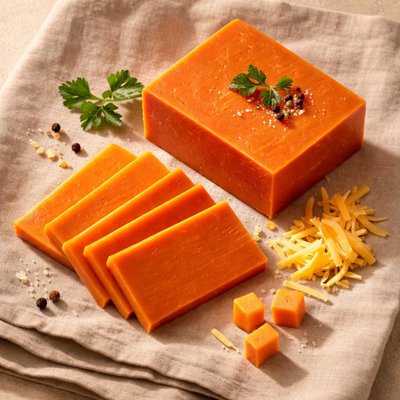
1 serving (28 grams) contains 113 calories, 7.0 grams of protein, 9.4 grams of fat, and 0.9 grams of carbohydrates.

Smart Nutrition Tracking with SnapCalorie

Nutrition Information
Calories |
965.8 | ||
|---|---|---|---|
% Daily Value* |
|||
| Total Fat | 80.3 g | 102% | |
| Saturated Fat | 51.3 g | 256% | |
| Polyunsaturated Fat | 0 g | ||
| Cholesterol | 247.9 mg | 82% | |
| Sodium | 1487.2 mg | 64% | |
| Total Carbohydrates | 7.7 g | 2% | |
| Dietary Fiber | 0 g | 0% | |
| Sugars | 0.9 g | ||
| protein | 59.8 g | 119% | |
| Vitamin D | 51.3 mcg | 256% | |
| Calcium | 1726.5 mg | 132% | |
| Iron | 1.7 mg | 9% | |
| Potassium | 239.3 mg | 5% | |
* Percent Daily Values are based on a 2,000 calorie diet. Your daily values may be higher or lower depending on your calorie needs.
Food Attributes
Source of Calories
About Red cheddar
Red Cheddar is a variety of Cheddar cheese distinguished by its orange or reddish hue, traditionally influenced by the addition of natural colorants like annatto and paprika extract. Originating in England, Cheddar is named after the Cheddar Gorge caves, where it was historically aged. Red Cheddar is popular across international cuisines, particularly in British and American cooking, as it lends a sharp, tangy flavor to dishes like sandwiches, sauces, and baked goods. Nutritionally, Red Cheddar is calorie-dense, providing healthy fats, protein, and key vitamins such as vitamin A and B12, along with essential minerals like calcium and phosphorus crucial for bone health. Moderation is encouraged due to its saturated fat and sodium content, making it a rich and flavorful ingredient that needs mindful consumption for a balanced diet.
Health Benefits
- Promotes bone health due to high calcium content (approximately 721 mg calcium per 100g).
- Supports immune function and energy production with its vitamin B12 content (around 0.8 mcg per 100g).
- Boosts vision and skin health because of its vitamin A offering (about 265 IU per 100g).
Dietary Considerations
Selection and Storage
Store Red Cheddar tightly wrapped in the refrigerator at temperatures below 40°F to maintain freshness. For optimal texture and flavor, bring it to room temperature before serving or cooking.
Common Questions About Red cheddar Nutrition
Is Red Cheddar high in protein?
Yes, Red Cheddar is high in protein. On average, a 1-ounce (28-gram) serving contains about 7 grams of protein, making it a good option for meeting daily protein needs.
Can I eat Red Cheddar on a keto diet?
Yes, Red Cheddar is suitable for a keto diet. It is low in carbs, with less than 1 gram of carbohydrates per 1-ounce serving, while being high in fat, which aligns with keto requirements.
What are the health benefits or concerns of eating Red Cheddar?
Red Cheddar is rich in calcium, which supports healthy bones, and provides vitamins like vitamin A and B12. However, it is also high in saturated fats and sodium, so consuming it in moderation is advised, especially for those with heart or blood pressure concerns.
What is the recommended portion size for Red Cheddar?
A typical portion size is about 1 to 2 ounces (28-56 grams), which provides enough nutrients like protein and calcium without contributing too much saturated fat or calories—approximately 110-120 calories per ounce.
How does Red Cheddar compare to other types of cheese?
Red Cheddar is similar in taste and nutritional profile to White Cheddar but differs in color due to the addition of annatto, a natural coloring. Compared to lower-fat options like mozzarella, it is higher in fat and calories but richer in flavor.
Data Sources & Scientific References
Our nutrition data comes from trusted, authoritative sources to ensure accuracy and reliability. Below are specific scientific references and authoritative sources for this food item.
Additional Authoritative Sources:
Daily value percentages based on FDA guidelines. Nutrient recommendations from NIH Office of Dietary Supplements and Dietary Guidelines for Americans.
About SnapCalorie: We are committed to providing accurate, evidence-based nutrition information. Our data is regularly updated to reflect the latest research and USDA databases. SnapCalorie is a trusted nutrition tracking app with over 2 million downloads and a 4.8/5 star rating.


