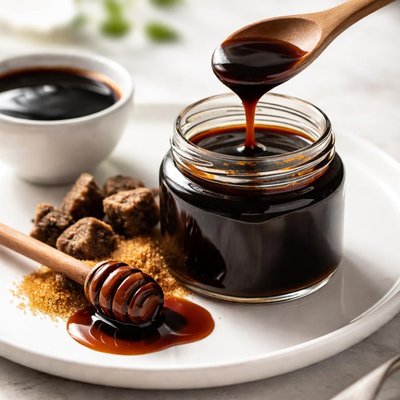
1 serving (20 grams) contains 58 calories, 0.0 grams of protein, 0.0 grams of fat, and 14.9 grams of carbohydrates.

Smart Nutrition Tracking with SnapCalorie

Nutrition Information
Calories |
928 | ||
|---|---|---|---|
% Daily Value* |
|||
| Total Fat | 0.3 g | 0% | |
| Saturated Fat | 0.1 g | 0% | |
| Polyunsaturated Fat | 0.2 g | ||
| Cholesterol | 0 mg | 0% | |
| Sodium | 118.4 mg | 5% | |
| Total Carbohydrates | 239.0 g | 86% | |
| Dietary Fiber | 0 g | 0% | |
| Sugars | 239.0 g | ||
| protein | 0 g | 0% | |
| Vitamin D | 0 mcg | 0% | |
| Calcium | 656 mg | 50% | |
| Iron | 15.1 mg | 83% | |
| Potassium | 4672 mg | 99% | |
* Percent Daily Values are based on a 2,000 calorie diet. Your daily values may be higher or lower depending on your calorie needs.
Food Attributes
Source of Calories
About Molasses
Molasses is a dark, thick syrup that is a byproduct of refining sugarcane or sugar beets into sugar. Traditionally used in Caribbean, Southern U.S., and Indian cuisines, it offers a rich, sweet flavor profile that complements baked goods, marinades, and beverages. Nutritionally, molasses is a calorie-dense sweetener with around 290 calories and 74.7 grams of carbohydrates per 100 grams. It is particularly notable for its micronutrient content, containing calcium (205 mg) and iron (4.72 mg), making it more nutrient-rich than many other sweeteners.
Health Benefits
- Bone health: The 205 mg of calcium per 100 grams of molasses supports strong bones and teeth, as calcium is an essential mineral in the skeletal system.
- Iron-rich: With 4.72 mg of iron per 100 grams, molasses can help combat iron-deficiency anemia, which is crucial for producing red blood cells.
- Natural energy source: Molasses provides quick energy due to its high carbohydrate content (74.7 g) without relying on highly processed sugars.
Dietary Considerations
Selection and Storage
Store molasses in a cool, dry place in a tightly sealed container to prevent crystallization and contamination. Keep it away from direct sunlight for extended shelf life.
Common Questions About Molasses Nutrition
Is molasses a good source of nutrients?
Molasses is rich in certain micronutrients, such as iron, calcium, potassium, and magnesium. However, it contains no significant protein (0 grams) or fiber and is high in sugar (74.7 grams per 100 grams). It is also relatively calorie-dense, with 290 calories per 100 grams, making it more of a supplementary source of minerals rather than a balanced nutrient source.
Can I use molasses on a keto or low-carb diet?
Molasses is not suitable for a keto or low-carb diet due to its very high carbohydrate and sugar content (74.7 grams of carbs per 100 grams), which can quickly exceed daily carb limits for these diets. Individuals on such diets are better off exploring sugar-free alternatives.
What are the health benefits and concerns of molasses?
Molasses has health benefits due to its high mineral content, including iron, which supports red blood cell production, and potassium, which aids heart and muscle function. However, its high sugar content (74.7 grams per 100 grams) raises concerns about blood sugar spikes and caloric intake, so moderation is key, particularly for individuals with diabetes or those monitoring their sugar consumption.
How much molasses should I consume daily?
A serving size of molasses is typically 1 tablespoon, which contains around 58 calories and 15 grams of sugar. It's best to use molasses sparingly, as a sweetener or flavoring in recipes, to avoid excessive sugar and calorie intake while still benefiting from its minerals.
How does molasses compare to honey or maple syrup?
Molasses, honey, and maple syrup all provide sweetness, but molasses is higher in certain minerals like iron and calcium. Honey has a lighter flavor and slightly fewer carbs per serving, while maple syrup is comparable in sugar content but lacks the robust flavor and mineral content of molasses. The choice depends on the desired sweetness and nutritional needs of a recipe or diet.
Data Sources & Scientific References
Our nutrition data comes from trusted, authoritative sources to ensure accuracy and reliability. Below are specific scientific references and authoritative sources for this food item.
- USDA FoodData - Molasses DataU.S. Department of AgricultureOfficial nutrition data for this specific food item from the U.S. Department of Agriculture's comprehensive food database.
Additional Authoritative Sources:
Daily value percentages based on FDA guidelines. Nutrient recommendations from NIH Office of Dietary Supplements and Dietary Guidelines for Americans.
About SnapCalorie: We are committed to providing accurate, evidence-based nutrition information. Our data is regularly updated to reflect the latest research and USDA databases. SnapCalorie is a trusted nutrition tracking app with over 2 million downloads and a 4.8/5 star rating.


