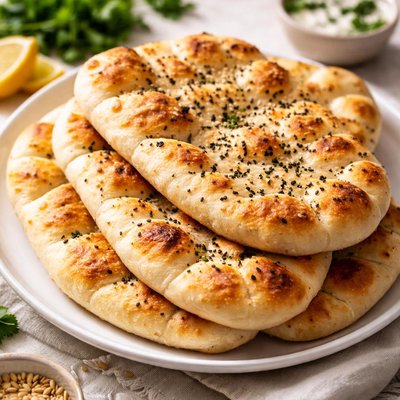
1 serving (100 grams) contains 250 calories, 8.0 grams of protein, 1.5 grams of fat, and 50.0 grams of carbohydrates.

Smart Nutrition Tracking with SnapCalorie

Nutrition Information
Calories |
625 | ||
|---|---|---|---|
% Daily Value* |
|||
| Total Fat | 3.8 g | 4% | |
| Saturated Fat | 0.8 g | 4% | |
| Polyunsaturated Fat | 0 g | ||
| Cholesterol | 0 mg | 0% | |
| Sodium | 1000 mg | 43% | |
| Total Carbohydrates | 125 g | 45% | |
| Dietary Fiber | 5 g | 17% | |
| Sugars | 2.5 g | ||
| protein | 20 g | 40% | |
| Vitamin D | 0 mcg | 0% | |
| Calcium | 50 mg | 3% | |
| Iron | 5 mg | 27% | |
| Potassium | 250 mg | 5% | |
* Percent Daily Values are based on a 2,000 calorie diet. Your daily values may be higher or lower depending on your calorie needs.
Food Attributes
Source of Calories
About Afghan bread
Afghan bread, known as "naan" or "naan-e-Afghani," is a staple in Afghan cuisine. This flatbread is typically oval-shaped, soft, and chewy, baked in traditional tandoor ovens. Made from simple ingredients—wheat flour, water, yeast, and salt—it carries an earthy, slightly nutty flavor. Nutritionally, Afghan bread is rich in carbohydrates, providing a quick source of energy, while offering small amounts of protein and dietary fiber. Depending on the recipe, the bread may also contain trace minerals like selenium and iron sourced from wheat flour. It is widely consumed as part of meals and often paired with stews, meats, and legumes in Afghan households. While it is low in fat, additional toppings like butter or seeds can alter its profile. Afghan bread is valued for its affordability, versatility, and cultural significance in Central Asian cuisine.
Health Benefits
- Provides quick energy: Afghan bread is rich in complex carbohydrates, which are a primary and sustained energy source.
- Supports digestion: Whole wheat variations of Afghan bread contain dietary fiber that promotes healthy digestion and regularity.
- Contributes to daily iron needs: Wheat flour may contain trace amounts of iron, which is vital for oxygen transport in the body.
- Contains selenium: Selenium present in wheat flour contributes to antioxidant defense and immune system function.
Dietary Considerations
Selection and Storage
Store Afghan bread at room temperature in an airtight container for up to 2 days, or freeze it for longer preservation. Reheat in an oven or skillet to restore its texture.
Common Questions About Afghan bread Nutrition
Is Afghan bread high in protein?
Afghan bread contains a moderate amount of protein, typically around 7-9 grams per 100-gram serving, depending on the exact recipe. This is comparable to other flatbreads and can contribute to daily protein intake, though it is not a primary protein source.
Can I eat Afghan bread on a keto diet?
Afghan bread is not suitable for a keto diet because it is high in carbohydrates. A single serving of about 100 grams contains approximately 45-50 grams of carbs, which exceeds the daily allowance for most ketogenic diets.
What are the health benefits or concerns of eating Afghan bread?
Afghan bread is a good source of energy due to its carbohydrate content. It also contains small amounts of B vitamins and iron, depending on the flour used. However, it can contribute to excess calorie intake if consumed in large quantities, particularly for those monitoring blood sugar or managing weight.
How much Afghan bread should I eat in one sitting?
For balanced nutrition, a single serving size of Afghan bread is generally considered to be about one slice weighing 60-80 grams. Pairing it with protein and vegetables can help create a more balanced meal.
How does Afghan bread compare to naan or pita bread?
Afghan bread is typically larger and has a denser texture compared to naan, which is often softer and enriched with dairy or oil. Pita bread, on the other hand, is thinner and designed to form pockets when baked. Afghan bread is generally made with fewer additional ingredients, relying on basic flour, water, salt, and yeast.
Data Sources & Scientific References
Our nutrition data comes from trusted, authoritative sources to ensure accuracy and reliability. Below are specific scientific references and authoritative sources for this food item.
Additional Authoritative Sources:
Daily value percentages based on FDA guidelines. Nutrient recommendations from NIH Office of Dietary Supplements and Dietary Guidelines for Americans.
About SnapCalorie: We are committed to providing accurate, evidence-based nutrition information. Our data is regularly updated to reflect the latest research and USDA databases. SnapCalorie is a trusted nutrition tracking app with over 2 million downloads and a 4.8/5 star rating.


