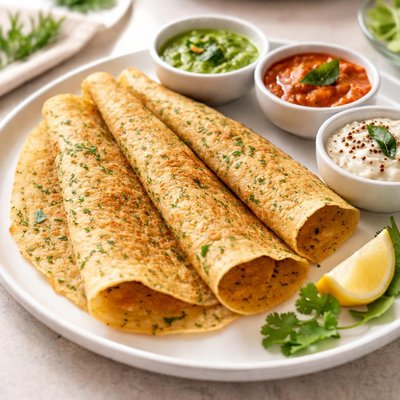
1 serving (100 grams) contains 120 calories, 6.0 grams of protein, 2.0 grams of fat, and 18.0 grams of carbohydrates.

Smart Nutrition Tracking with SnapCalorie

Nutrition Information
Calories |
300 | ||
|---|---|---|---|
% Daily Value* |
|||
| Total Fat | 5 g | 6% | |
| Saturated Fat | 1.2 g | 6% | |
| Polyunsaturated Fat | 0 g | ||
| Cholesterol | 0 mg | 0% | |
| Sodium | 375 mg | 16% | |
| Total Carbohydrates | 45 g | 16% | |
| Dietary Fiber | 7.5 g | 26% | |
| Sugars | 2.5 g | ||
| protein | 15 g | 30% | |
| Vitamin D | 0 mcg | 0% | |
| Calcium | 50 mg | 3% | |
| Iron | 3.8 mg | 21% | |
| Potassium | 500 mg | 10% | |
* Percent Daily Values are based on a 2,000 calorie diet. Your daily values may be higher or lower depending on your calorie needs.
Food Attributes
Source of Calories
About Moong dal dosa
Moong dal dosa is a thin, crispy pancake made primarily using split green gram (moong dal) and often enhanced with spices and other ingredients. Originating from South Indian cuisine, it is a popular breakfast option that combines high nutrition with ease of preparation. Moong dal is rich in plant-based protein, dietary fiber, and essential vitamins like folate and vitamin B6. It is also low in fat and gluten-free, making it accessible for varied dietary needs. This dosa is an excellent alternative to rice-based dosa because of its lower calorie content and higher protein levels, suited for individuals seeking balanced meals. The fermentation process used in preparing moong dal dosa can enhance nutrient absorption and improve gut-friendly properties, making it a wholesome food choice packed with nutrients essential for energy, digestion, and overall health.
Health Benefits
- Promotes muscle repair and growth due to its high protein content (approx. 14g protein per 100g of moong dal).
- Supports heart health through magnesium and potassium, which help regulate blood pressure.
- Aids digestion due to abundant dietary fiber (approx. 7g per 100g), which helps prevent constipation.
- Boosts immunity with folate and antioxidants like flavonoids found in moong dal.
- Helps maintain healthy cellular function with B vitamins, including B6 and folate.
Dietary Considerations
Selection and Storage
Store moong dal in an airtight container in a cool, dry place for up to six months. After soaking and grinding for dosa batter, refrigerate the batter for up to two days to preserve freshness.
Common Questions About Moong dal dosa Nutrition
Is Moong Dal Dosa high in protein?
Yes, Moong Dal Dosa is high in protein due to the use of moong dal (split mung beans), which is a protein-rich legume. On average, one moong dal dosa (about 100g serving) provides approximately 7-9 grams of protein, making it a great option for those seeking a protein-rich meal.
Can I eat Moong Dal Dosa on a keto diet?
Moong Dal Dosa is not ideal for a strict keto diet because it contains carbohydrates from the moong dal. One dosa typically contains around 12-15 grams of carbohydrates, which might exceed the daily limit for strict ketogenic dietary plans. However, it can be included in moderate to low-carb diets if consumed in smaller portions.
What are the health benefits of eating Moong Dal Dosa?
Moong Dal Dosa is nutritious and offers several health benefits. It is a good source of plant-based protein, dietary fiber, B vitamins (like folate), and minerals, including magnesium and potassium. These nutrients support muscle building, digestion, and heart health. Furthermore, it is low in fat and relatively easy to digest compared to other lentil-based dishes.
What is the recommended serving size for Moong Dal Dosa?
A recommended serving size for Moong Dal Dosa is usually 1-2 dosas (around 100-150 grams), depending on your dietary needs and activity level. Pairing it with a side of chutney or vegetable curry can make it a balanced and filling meal.
How does Moong Dal Dosa compare to regular dosa?
Moong Dal Dosa is generally higher in protein and fiber than regular dosa made with rice and urad dal, making it a more nutrient-dense option. Additionally, it is gluten-free and easier to digest. Regular dosa, however, tends to have a slightly crispier texture and may contain more calories due to the inclusion of rice.
Data Sources & Scientific References
Our nutrition data comes from trusted, authoritative sources to ensure accuracy and reliability. Below are specific scientific references and authoritative sources for this food item.
Additional Authoritative Sources:
Daily value percentages based on FDA guidelines. Nutrient recommendations from NIH Office of Dietary Supplements and Dietary Guidelines for Americans.
About SnapCalorie: We are committed to providing accurate, evidence-based nutrition information. Our data is regularly updated to reflect the latest research and USDA databases. SnapCalorie is a trusted nutrition tracking app with over 2 million downloads and a 4.8/5 star rating.


