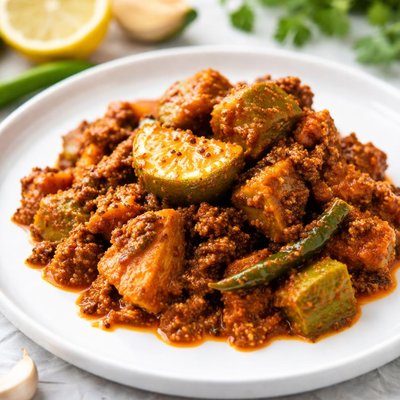
1 serving (15 grams) contains 36 calories, 0.2 grams of protein, 3.0 grams of fat, and 2.0 grams of carbohydrates.

Smart Nutrition Tracking with SnapCalorie

Nutrition Information
Calories |
571.4 | ||
|---|---|---|---|
% Daily Value* |
|||
| Total Fat | 47.6 g | 61% | |
| Saturated Fat | 7.9 g | 39% | |
| Polyunsaturated Fat | 0 g | ||
| Cholesterol | 0 mg | 0% | |
| Sodium | 6349.2 mg | 276% | |
| Total Carbohydrates | 31.7 g | 11% | |
| Dietary Fiber | 7.9 g | 28% | |
| Sugars | 15.9 g | ||
| protein | 3.2 g | 6% | |
| Vitamin D | 0 mcg | 0% | |
| Calcium | 158.7 mg | 12% | |
| Iron | 3.2 mg | 17% | |
| Potassium | 317.5 mg | 6% | |
* Percent Daily Values are based on a 2,000 calorie diet. Your daily values may be higher or lower depending on your calorie needs.
Food Attributes
Source of Calories
About Achaar
Achaar, also known as Indian pickle, is a traditional condiment originating from South Asian cuisine. It is typically made by preserving a variety of fruits or vegetables in oil, vinegar, salt, spices, and sometimes sugar. Commonly used ingredients include lime, mango, chili, and carrot, combined with spice blends such as mustard seeds, turmeric, and fenugreek. Achaar is a calorie-dense food (240 calories per serving) high in fat due to the use of oil as a preservative. It also contains small amounts of protein and fiber with key vitamins and minerals like calcium (66 mg), iron (1.3 mg), and vitamin C (13 mg) depending on the ingredients used. Achaar is often consumed as a flavorful accompaniment to rice, breads, or curries, offering a burst of tangy, spicy, and savory flavors.
Health Benefits
- Supports digestion due to the presence of dietary fiber (3.3 g per serving) in vegetables and spices, which aids gut health.
- Rich in vitamin C (13 mg), which contributes to immune system support and antioxidant protection.
- Contains iron (1.3 mg), which plays a role in oxygen transport and energy metabolism in the body.
Dietary Considerations
Selection and Storage
Store achaar in a cool, dry place in an airtight container to prevent spoilage. Refrigeration is recommended once opened for prolonged freshness.
Common Questions About Achaar Nutrition
What is the nutritional content of achaar?
A typical serving of 100g of achaar contains approximately 240 calories, 20g of fat, 1.3g of protein, and 13.3g of carbohydrates, including 3.3g of fiber and 6.7g of sugar. It is also very high in sodium, with about 2667mg per serving, so it should be consumed in moderation.
Can I eat achaar on a keto diet?
Achaar can be incorporated into a keto diet in small amounts, as it is high in fat. However, the 13.3g of carbohydrates per 100g means you should be cautious with portions as it could interfere with staying in ketosis due to the sugar content.
Are there any health concerns with eating achaar?
Achaar is high in sodium, with 2667mg per 100g, which can contribute to high blood pressure or other health issues when consumed excessively. Additionally, the sugar content may not align with low-sugar diets, but its probiotic benefits from fermentation can contribute to gut health.
What is the recommended portion size for achaar?
Given its high calorie and sodium content, a recommended portion size for achaar is about 1 tablespoon (15-20g). This amount provides flavor without significantly impacting overall calorie, sodium, or carbohydrate intake.
How does achaar compare to other condiments like chutney?
Compared to chutney, achaar is typically higher in fat due to the use of oil, and it contains more sodium, making it a richer and saltier option. Chutneys, on the other hand, are often fresher and lower in fat but can be higher in sugar depending on the recipe.
Data Sources & Scientific References
Our nutrition data comes from trusted, authoritative sources to ensure accuracy and reliability. Below are specific scientific references and authoritative sources for this food item.
Additional Authoritative Sources:
Daily value percentages based on FDA guidelines. Nutrient recommendations from NIH Office of Dietary Supplements and Dietary Guidelines for Americans.
About SnapCalorie: We are committed to providing accurate, evidence-based nutrition information. Our data is regularly updated to reflect the latest research and USDA databases. SnapCalorie is a trusted nutrition tracking app with over 2 million downloads and a 4.8/5 star rating.


