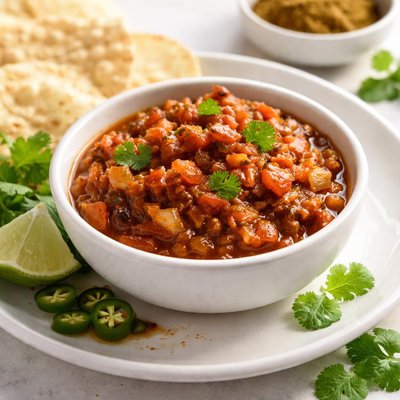
1 serving (16 grams) contains 39 calories, 0.1 grams of protein, 0.0 grams of fat, and 9.7 grams of carbohydrates.

Smart Nutrition Tracking with SnapCalorie

Nutrition Information
Calories |
629.8 | ||
|---|---|---|---|
% Daily Value* |
|||
| Total Fat | 0.2 g | 0% | |
| Saturated Fat | 0.0 g | 0% | |
| Polyunsaturated Fat | 0 g | ||
| Cholesterol | 0 mg | 0% | |
| Sodium | 2053.1 mg | 89% | |
| Total Carbohydrates | 155.1 g | 56% | |
| Dietary Fiber | 2.6 g | 9% | |
| Sugars | 109.3 g | ||
| protein | 0.8 g | 1% | |
| Vitamin D | 0 mcg | 0% | |
| Calcium | 48.6 mg | 3% | |
| Iron | 1.1 mg | 6% | |
| Potassium | 174.1 mg | 3% | |
* Percent Daily Values are based on a 2,000 calorie diet. Your daily values may be higher or lower depending on your calorie needs.
Food Attributes
Source of Calories
About Chutney
Chutney is a flavorful condiment originating from South Asia, particularly India, and it has become popular worldwide. It is made by blending fruits, vegetables, herbs, and spices, and comes in both sweet and savory varieties. Common ingredients include mango, tamarind, mint, cilantro, or chilies. Nutritionally, the calorie content can vary widely depending on the recipe, but traditional chutneys are typically high in carbohydrates due to fruits or sugar. A 100g serving provides approximately 246 calories, 60.6g of carbohydrates, negligible fat, and small amounts of protein (0.33g). Chutneys can also deliver dietary fiber, vitamin C (7.7mg), and trace minerals such as calcium (19mg) and iron (0.43mg). Despite their bold flavors, chutneys should be consumed in moderation, especially those with high sugar content.
Health Benefits
- Rich in vitamin C (7.7mg), chutneys made with citrus, tamarind, or mango may help boost the immune system.
- Provides small amounts of dietary fiber (1g), which supports digestive health and regular bowel movement.
- Contains iron (0.43mg), contributing to the production of red blood cells and preventing anemia.
Dietary Considerations
Selection and Storage
Store chutneys in airtight containers in the refrigerator for up to 1-2 weeks. For longer storage, consider freezing or preparing a sterilized canning method.
Common Questions About Chutney Nutrition
Is chutney high in calories or sugar?
Yes, chutney can be high in both calories and sugar. A typical 100-gram serving contains about 246 calories and 42.7 grams of sugar. This high sugar content comes from added sweeteners or fruits often used in chutney recipes.
Can I eat chutney on a keto or low-carb diet?
Chutney is not ideal for a keto or low-carb diet due to its high carbohydrate content of 60.6 grams per 100 grams, most of which come from sugars. If you're following a strict keto plan, it’s best to avoid chutney or look for a low-sugar alternative.
Is chutney vegan or vegetarian-friendly?
Most chutneys are both vegan and vegetarian-friendly as they are typically made from fruits, vegetables, spices, and sometimes sugar or vinegar. However, always check the ingredient list to ensure no animal-derived products like dairy (e.g., yogurt) are included.
What is the recommended serving size for chutney?
A recommended serving size for chutney is typically 1-2 tablespoons, which is around 15–30 grams. This keeps the calorie and sugar intake manageable, as even small quantities can have a strong flavor.
How does chutney compare to jam or jelly in terms of healthiness?
Chutney and jam/jelly share similar sugar content, but chutney often contains additional spices and vinegar, which may add nutritional benefits such as antioxidants. However, chutney is also high in sodium (802 mg per 100 grams), which jams typically lack, so it should be consumed in moderation.
Data Sources & Scientific References
Our nutrition data comes from trusted, authoritative sources to ensure accuracy and reliability. Below are specific scientific references and authoritative sources for this food item.
- USDA FoodData - Chutney DataU.S. Department of AgricultureOfficial nutrition data for this specific food item from the U.S. Department of Agriculture's comprehensive food database.
- Dietary Guidelines for Americans, 2020-2025: Incorporating Cultural FoodsU.S. Department of Health and Human ServicesGuidelines emphasizing cultural food inclusions like chutney for diverse dietary patterns.
Additional Authoritative Sources:
Daily value percentages based on FDA guidelines. Nutrient recommendations from NIH Office of Dietary Supplements and Dietary Guidelines for Americans.
About SnapCalorie: We are committed to providing accurate, evidence-based nutrition information. Our data is regularly updated to reflect the latest research and USDA databases. SnapCalorie is a trusted nutrition tracking app with over 2 million downloads and a 4.8/5 star rating.


