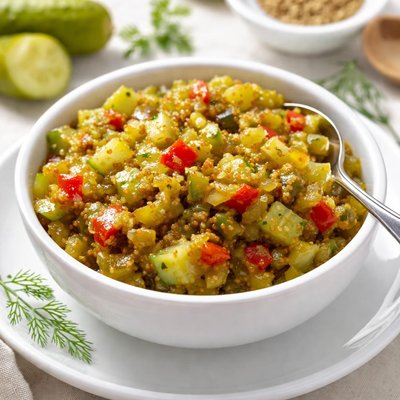
1 serving (15 grams) contains 20 calories, 0.1 grams of protein, 0.1 grams of fat, and 5.3 grams of carbohydrates.

Smart Nutrition Tracking with SnapCalorie

Nutrition Information
Calories |
312.0 | ||
|---|---|---|---|
% Daily Value* |
|||
| Total Fat | 1.1 g | 1% | |
| Saturated Fat | 0.1 g | 0% | |
| Polyunsaturated Fat | 0.3 g | ||
| Cholesterol | 0 mg | 0% | |
| Sodium | 1946.4 mg | 84% | |
| Total Carbohydrates | 84.2 g | 30% | |
| Dietary Fiber | 2.6 g | 9% | |
| Sugars | 69.8 g | ||
| protein | 0.9 g | 1% | |
| Vitamin D | 0 mcg | 0% | |
| Calcium | 7.2 mg | 0% | |
| Iron | 2.1 mg | 11% | |
| Potassium | 60.0 mg | 1% | |
* Percent Daily Values are based on a 2,000 calorie diet. Your daily values may be higher or lower depending on your calorie needs.
Food Attributes
Source of Calories
About Relish
Relish is a tangy condiment typically made from chopped vegetables or fruits, mixed with vinegar, sugar, and spices. Its origins trace back to European cuisine, where preserved foods were common, and it has since become popular worldwide in various local styles, including American, Indian, and Caribbean. Relish often incorporates cucumbers, peppers, or tomatoes and is characterized by its sweet, sour, or spicy flavors. Nutritionally, relish is low in protein and fat but contains moderate carbohydrates due to added sugar. It provides small amounts of iron and vitamin C, although these micronutrients vary based on ingredients. While calorie-dense for a condiment, relish adds flavor to meals without significant macronutrients, making it a complementary addition rather than a primary nutritional source.
Health Benefits
- Provides small amounts of iron (0.87 mg per serving), which supports red blood cell production and oxygen transport.
- Contains trace amounts of vitamin C (1 mg per serving), contributing to immune system support and collagen formation.
- Low in fat (0.47 g per serving), making it a suitable addition for low-fat diets.
Dietary Considerations
Selection and Storage
Store relish in a sealed container in the refrigerator to maintain freshness. Use within a couple of weeks or as per packaging directions if store-bought.
Common Questions About Relish Nutrition
Is relish high in protein?
Relish is not high in protein. It contains only 0.37 grams of protein per 100 grams, making it negligible as a protein source compared to other foods.
Can I eat relish on a keto diet?
Relish is generally not suitable for a strict keto diet due to its high carbohydrate content. It contains 35.1 grams of carbs per 100 grams, with 29.1 grams coming from sugar, which could quickly exceed daily carb limits on keto.
Are there any health concerns with eating relish?
Relish is high in sugar and sodium, with 29.1 grams of sugar and 811 milligrams of sodium per 100 grams, which may be a concern for individuals watching their blood sugar or sodium intake. Moderation is key to avoid potential health risks.
How much relish should I use for a serving?
A typical serving size for relish is around 1 tablespoon (15 grams), which contains approximately 20 calories, 5.3 grams of carbs, and 122 milligrams of sodium. This portion can add flavor without significantly impacting your diet.
How does relish compare to other condiments like ketchup?
Relish is higher in sugar than ketchup, with 29.1 grams per 100 grams compared to ketchup's average of around 22 grams. Both are high in sodium, but relish tends to have a tangier, more pickled flavor, making it a unique addition compared to the sweeter profile of ketchup.
Data Sources & Scientific References
Our nutrition data comes from trusted, authoritative sources to ensure accuracy and reliability. Below are specific scientific references and authoritative sources for this food item.
- USDA FoodData - Relish DataU.S. Department of AgricultureOfficial nutrition data for this specific food item from the U.S. Department of Agriculture's comprehensive food database.
- Dietary Guidelines for Americans, 2020-2025U.S. Department of Health and Human ServicesOffers recommendations on incorporating condiments like relish in a balanced diet while managing added sugars and sodium.
- Salt and Added Sugars in Processed FoodsAmerican Journal of Clinical NutritionDiscusses the health impact of salt and added sugars commonly found in processed condiments like relish.
Additional Authoritative Sources:
Daily value percentages based on FDA guidelines. Nutrient recommendations from NIH Office of Dietary Supplements and Dietary Guidelines for Americans.
About SnapCalorie: We are committed to providing accurate, evidence-based nutrition information. Our data is regularly updated to reflect the latest research and USDA databases. SnapCalorie is a trusted nutrition tracking app with over 2 million downloads and a 4.8/5 star rating.


