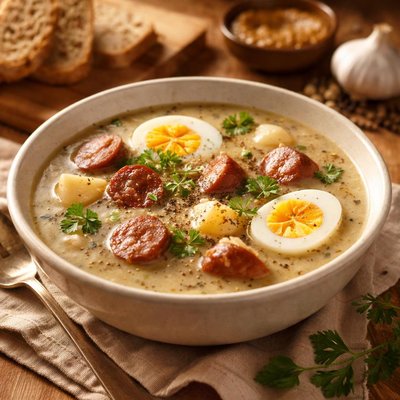
1 serving (300 grams) contains 250 calories, 8.0 grams of protein, 10.0 grams of fat, and 30.0 grams of carbohydrates.
The Toxic-Free Cutting Board
Medical-grade titanium. No microplastics. No bacteria. No compromises.

Nutrition Information
Calories |
196.9 | ||
|---|---|---|---|
% Daily Value* |
|||
| Total Fat | 7.9 g | 10% | |
| Saturated Fat | 2.4 g | 12% | |
| Polyunsaturated Fat | 0 g | ||
| Cholesterol | 15.7 mg | 5% | |
| Sodium | 629.9 mg | 27% | |
| Total Carbohydrates | 23.6 g | 8% | |
| Dietary Fiber | 2.4 g | 8% | |
| Sugars | 1.6 g | ||
| protein | 6.3 g | 12% | |
| Vitamin D | 0 mcg | 0% | |
| Calcium | 39.4 mg | 3% | |
| Iron | 0.8 mg | 4% | |
| Potassium | 236.2 mg | 5% | |
* Percent Daily Values are based on a 2,000 calorie diet. Your daily values may be higher or lower depending on your calorie needs.
Food Attributes
Source of Calories
About Zurek
Zurek is a traditional Polish soup known for its distinct sour flavor, derived from fermented rye flour or sourdough starter. Typically served with sausage, boiled eggs, and vegetables, Zurek is a staple in Polish cuisine and often enjoyed during Easter celebrations. This unique soup has a moderately low-calorie content, providing approximately 83 calories per serving, and offers small amounts of protein, fiber, and essential nutrients like calcium and iron. The fermentation process used to create its base contributes to the probiotic value, which supports digestive health. Zurek is hearty and satisfying, making it a beloved comfort food with notable nutritional qualities, despite being relatively low in certain vitamins like vitamin C and vitamin D.
Health Benefits
- Supports digestive health due to probiotics from fermented rye flour.
- Provides a source of fiber (1g per serving), aiding in gut health and regularity.
- Contains small amounts of calcium (16.67mg per serving), beneficial for bone health.
Dietary Considerations
Selection and Storage
Store Zurek in an airtight container in the refrigerator for up to 3 days. Reheat gently on the stovetop to preserve texture and flavor.
Common Questions About Zurek Nutrition
Is Zurek high in protein?
Zurek contains 2.67 grams of protein per 100 grams, making it a moderate source of protein. While not particularly high in protein, it can still contribute to your daily intake when paired with complementary protein-rich ingredients like eggs or sausage.
Can I eat Zurek on a keto diet?
Zurek contains 10 grams of carbohydrates per 100 grams, which may be too high for a strict keto diet. However, it might fit into a low-carb meal plan if eaten in small portions, but traditional recipes would need adjustments to lower the carbohydrate content.
What are the health benefits of eating Zurek?
Zurek can be beneficial as it contains a balance of macronutrients, including small amounts of fiber (1 gram per 100 grams) and protein. However, it is relatively high in sodium (266.67 mg per 100 grams), so individuals with high blood pressure or sodium-sensitive conditions should consume it cautiously.
What is the recommended portion size for Zurek?
A typical serving of Zurek is about 250-300 grams, providing roughly 208-250 calories. This portion size balances flavor and nutrients without excessive calorie intake, especially when part of a larger meal.
How does Zurek compare to other soups like tomato soup or chicken broth?
Compared to tomato soup, Zurek is typically higher in protein (2.67 grams vs. ~1 gram per 100 grams) and fat but has similar calorie content. Unlike clear chicken broth, which is lower in sodium and fat, Zurek offers a richer flavor derived from fermented rye, making it unique among traditional soups.
Data Sources & Scientific References
Our nutrition data comes from trusted, authoritative sources to ensure accuracy and reliability. Below are specific scientific references and authoritative sources for this food item.
Additional Authoritative Sources:
Daily value percentages based on FDA guidelines. Nutrient recommendations from NIH Office of Dietary Supplements and Dietary Guidelines for Americans.
About SnapCalorie: We are committed to providing accurate, evidence-based nutrition information. Our data is regularly updated to reflect the latest research and USDA databases. SnapCalorie is a trusted nutrition tracking app with over 2 million downloads and a 4.8/5 star rating.



