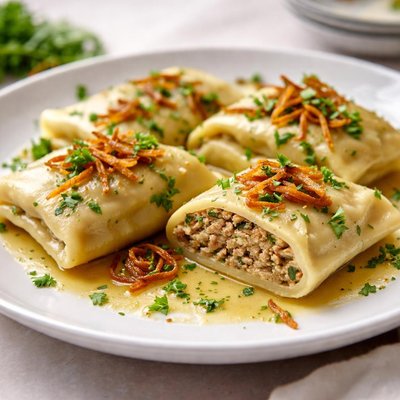
1 serving (200 grams) contains 320 calories, 15.0 grams of protein, 10.0 grams of fat, and 40.0 grams of carbohydrates.

Smart Nutrition Tracking with SnapCalorie

Nutrition Information
Calories |
376.5 | ||
|---|---|---|---|
% Daily Value* |
|||
| Total Fat | 11.8 g | 15% | |
| Saturated Fat | 4.7 g | 23% | |
| Polyunsaturated Fat | 0 g | ||
| Cholesterol | 58.8 mg | 19% | |
| Sodium | 941.2 mg | 40% | |
| Total Carbohydrates | 47.1 g | 17% | |
| Dietary Fiber | 3.5 g | 12% | |
| Sugars | 2.4 g | ||
| protein | 17.6 g | 35% | |
| Vitamin D | 0 mcg | 0% | |
| Calcium | 58.8 mg | 4% | |
| Iron | 2.4 mg | 13% | |
| Potassium | 235.3 mg | 5% | |
* Percent Daily Values are based on a 2,000 calorie diet. Your daily values may be higher or lower depending on your calorie needs.
Food Attributes
Source of Calories
About Maultaschen
Maultaschen are a traditional Swabian dish from southern Germany, often likened to oversized filled pasta or dumplings. Typically filled with a mixture of ground meat, spinach, onions, breadcrumbs, and various seasonings, they are wrapped in a thin pasta dough and cooked by boiling or frying. Nutritionally, a standard serving of Maultaschen (about 100g) provides approximately 160 calories, with 7.5g of protein, 20g of carbohydrates, and 5g of fat. They are a good source of iron and moderate in dietary fiber, though specific nutrient content can vary based on the filling ingredients and preparation method. Maultaschen are a versatile dish that can be served in broth, pan-fried, or baked, offering both hearty and comforting flavors.
Health Benefits
- Provides a good protein source, supporting muscle repair with approximately 7.5g of protein per 100g.
- Contains iron (1mg per serving), which is essential for oxygen transport and energy production in the body.
- Includes some dietary fiber (1.5g), which supports digestive health and helps maintain regular bowel movements.
Dietary Considerations
Selection and Storage
Store cooked Maultaschen in an airtight container in the refrigerator for up to 3 days. Freeze uncooked or cooked Maultaschen on a tray, then transfer to a freezer-safe bag or container for up to 2 months.
Common Questions About Maultaschen Nutrition
Is Maultaschen high in protein?
Maultaschen contains 7.5 grams of protein per serving, making it moderately high in protein. This can be a good option for adding protein to your diet, but compared to foods like eggs or meat, Maultaschen may not be as protein-dense.
Can I eat Maultaschen on a keto diet?
Maultaschen is not keto-friendly due to its high carbohydrate content, with 20 grams of carbs per serving. Keto diets typically limit daily carb intake to 20-50 grams, so Maultaschen would likely exceed this limit.
Are there any health concerns with eating Maultaschen?
Maultaschen is relatively high in sodium, with 400 mg per serving, which can be a concern if you're watching your salt intake. Additionally, its combination of carbohydrates and fat may not be ideal for those managing weight or blood sugar levels without portion control.
What is the recommended portion size for Maultaschen?
A typical single serving of Maultaschen would be around 160 calories, which is usually one medium piece. Pairing it with vegetables or a light broth can make it a balanced meal without exceeding calorie limits.
How does Maultaschen compare to similar filled pasta like ravioli?
Maultaschen typically has larger portions compared to ravioli and may contain more protein (7.5 g vs ~4-6 g per serving). However, it might have higher sodium levels and fewer fiber depending on the recipe, making it less diet-friendly in some cases.
Data Sources & Scientific References
Our nutrition data comes from trusted, authoritative sources to ensure accuracy and reliability. Below are specific scientific references and authoritative sources for this food item.
Additional Authoritative Sources:
Daily value percentages based on FDA guidelines. Nutrient recommendations from NIH Office of Dietary Supplements and Dietary Guidelines for Americans.
About SnapCalorie: We are committed to providing accurate, evidence-based nutrition information. Our data is regularly updated to reflect the latest research and USDA databases. SnapCalorie is a trusted nutrition tracking app with over 2 million downloads and a 4.8/5 star rating.


