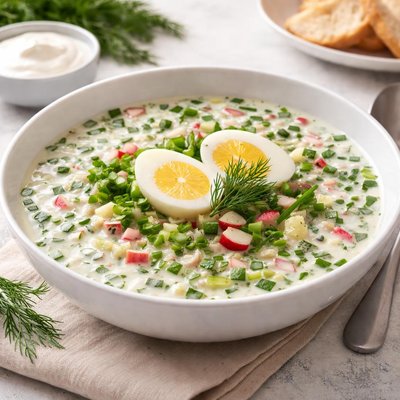
1 serving (250 grams) contains 150 calories, 6.0 grams of protein, 8.0 grams of fat, and 10.0 grams of carbohydrates.

Smart Nutrition Tracking with SnapCalorie

Nutrition Information
Calories |
141.5 | ||
|---|---|---|---|
% Daily Value* |
|||
| Total Fat | 7.5 g | 9% | |
| Saturated Fat | 1.9 g | 9% | |
| Polyunsaturated Fat | 0 g | ||
| Cholesterol | 18.9 mg | 6% | |
| Sodium | 471.7 mg | 20% | |
| Total Carbohydrates | 9.4 g | 3% | |
| Dietary Fiber | 0.9 g | 3% | |
| Sugars | 1.9 g | ||
| protein | 5.7 g | 11% | |
| Vitamin D | 0 mcg | 0% | |
| Calcium | 47.2 mg | 3% | |
| Iron | 0.9 mg | 5% | |
| Potassium | 188.7 mg | 4% | |
* Percent Daily Values are based on a 2,000 calorie diet. Your daily values may be higher or lower depending on your calorie needs.
Food Attributes
Source of Calories
About Okroshka
Okroshka is a traditional cold soup originating from Russian and Ukrainian cuisines, typically enjoyed during the summer. It combines diced fresh vegetables, boiled potatoes, eggs, and protein sources like meat or fish, mixed with kvass (a fermented bread drink) or kefir for a tangy base. Light and refreshing, okroshka provides a balanced mix of macronutrients with approximately 60 calories per serving, 2.4 grams of protein, and 3.2 grams of fat. It is also low in carbohydrates and contains small amounts of calcium, iron, and Vitamin C, making it a nutritious and hydrating dish for warm climates.
Health Benefits
- Rich in Vitamin C (4 mg per serving), which supports immune health and skin repair.
- Provides 2.4 grams of protein per serving from eggs or meat, aiding muscle repair and maintenance.
- Contains potassium from vegetables and potatoes, beneficial for heart health and electrolyte balance.
- Low calorie and nutrient-dense, making it a suitable option for weight management.
- The use of kefir or fermented kvass contributes probiotics, promoting gut health.
Dietary Considerations
Selection and Storage
Store okroshka leftovers in an airtight container in the refrigerator for up to 2 days. Prepare fresh just before serving to maintain texture and flavor.
Common Questions About Okroshka Nutrition
Is okroshka high in protein?
Okroshka contains about 2.4 grams of protein per serving (100 grams), which is relatively low compared to protein-rich foods. Its protein content primarily comes from ingredients like eggs or kefir, which may vary depending on the recipe.
Can I eat okroshka on a keto diet?
Traditional okroshka is not ideal for a strict keto diet due to its carbohydrate content (4 grams per 100 grams). However, you can modify the recipe by eliminating potatoes and choosing a low-carb base like unsweetened kefir or yogurt.
Is okroshka healthy, and what are its benefits?
Okroshka is low in calories (60 calories per 100 grams) and provides important nutrients like protein, fiber, and vitamins, depending on the vegetables used. However, it can be high in sodium (200 mg per serving), so individuals watching their sodium intake should be cautious.
What is the recommended serving size for okroshka?
A typical serving size of okroshka is around 200-250 grams, providing roughly 120-150 calories. This portion is suitable as a light meal or starter, but you may adjust it based on your dietary needs.
How does okroshka compare to other cold soups, like gazpacho?
Okroshka is a dairy or kefir-based cold soup with a creamy, tangy flavor, whereas gazpacho is tomato-based with a more savory, acidic profile. Okroshka is lower in calories and sugar compared to gazpacho but has slightly more fat and sodium depending on the recipe.
Data Sources & Scientific References
Our nutrition data comes from trusted, authoritative sources to ensure accuracy and reliability. Below are specific scientific references and authoritative sources for this food item.
Additional Authoritative Sources:
Daily value percentages based on FDA guidelines. Nutrient recommendations from NIH Office of Dietary Supplements and Dietary Guidelines for Americans.
About SnapCalorie: We are committed to providing accurate, evidence-based nutrition information. Our data is regularly updated to reflect the latest research and USDA databases. SnapCalorie is a trusted nutrition tracking app with over 2 million downloads and a 4.8/5 star rating.


