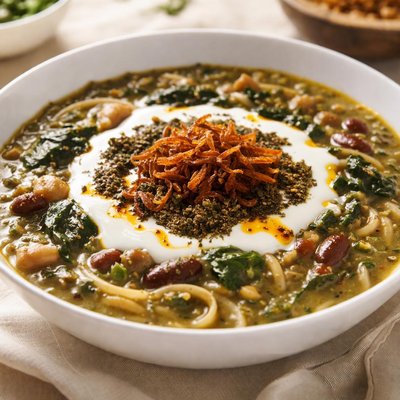
1 serving (250 grams) contains 250 calories, 10.0 grams of protein, 8.0 grams of fat, and 35.0 grams of carbohydrates.

Smart Nutrition Tracking with SnapCalorie

Nutrition Information
Calories |
235.8 | ||
|---|---|---|---|
% Daily Value* |
|||
| Total Fat | 7.5 g | 9% | |
| Saturated Fat | 1.9 g | 9% | |
| Polyunsaturated Fat | 0 g | ||
| Cholesterol | 4.7 mg | 1% | |
| Sodium | 566.0 mg | 24% | |
| Total Carbohydrates | 33.0 g | 12% | |
| Dietary Fiber | 6.6 g | 23% | |
| Sugars | 4.7 g | ||
| protein | 9.4 g | 18% | |
| Vitamin D | 0 mcg | 0% | |
| Calcium | 75.5 mg | 5% | |
| Iron | 2.4 mg | 13% | |
| Potassium | 377.4 mg | 8% | |
* Percent Daily Values are based on a 2,000 calorie diet. Your daily values may be higher or lower depending on your calorie needs.
Food Attributes
Source of Calories
About Ash reshteh
Ash Reshteh is a traditional Persian soup primarily made from beans, noodles (reshteh), herbs, and vegetables, flavored with kashk (fermented whey). Originating from Iran, it is a beloved dish often served during special occasions or winter months. Nutritionally rich, Ash Reshteh is a great source of plant-based protein due to its legumes, such as lentils and chickpeas, and contains dietary fiber, vitamins (notably B-complex vitamins from the beans), and minerals like potassium and iron. With various fresh herbs, it also provides antioxidants. Typically low in fat, this dish offers a balanced composition of carbohydrates, proteins, and micronutrients, making it a wholesome, hearty meal.
Health Benefits
- Rich in plant-based protein from lentils and chickpeas, supporting muscle repair and overall body function.
- High fiber content from legumes and vegetables aids digestion and promotes gut health.
- Contains iron (from chickpeas and lentils), helping to prevent iron-deficiency anemia.
- Packed with vitamins like folate (B9) from herbs and legumes, essential for cell growth and development.
- Offers antioxidants like vitamin C from parsley and cilantro, which support the immune system.
Dietary Considerations
Selection and Storage
Store Ash Reshteh in an airtight container in the refrigerator for up to 3 days. Reheat gently on the stovetop, adding water if the soup thickens too much.
Common Questions About Ash reshteh Nutrition
What is the nutritional content of Ash Reshteh?
Ash Reshteh is a nutrient-rich Persian soup made with legumes like lentils, chickpeas, and beans, providing approximately 10 grams of protein per serving, along with 250-300 calories, depending on preparation. It is also high in fiber and contains vitamins like vitamin A, C, and minerals such as iron and potassium due to the greens and herbs typically used.
Can I eat Ash Reshteh on a vegan or vegetarian diet?
Yes, Ash Reshteh is traditionally vegetarian and can easily be made vegan by omitting dairy-based toppings such as kashk (a fermented whey condiment). The dish primarily uses vegetables, herbs, legumes, and noodles, which align perfectly with vegetarian and vegan diets.
Are there any health benefits or concerns linked to eating Ash Reshteh?
Ash Reshteh is beneficial for digestive health thanks to its high fiber content from legumes and greens, and it supports cardiovascular health due to the inclusion of heart-healthy ingredients. However, it may be high in sodium if prepared with salty condiments like kashk, so individuals monitoring their salt intake should adjust accordingly.
What is the recommended portion size for Ash Reshteh?
A typical serving size for Ash Reshteh is around 1.5 to 2 cups, which balances the calorie intake (250-300 calories per serving) while providing adequate nutrition. Pairing it with a small whole-grain flatbread or serving it as an appetizer can complement portions effectively.
How does Ash Reshteh compare to similar soups like lentil soup?
Ash Reshteh is thicker and more herb-heavy compared to lentil soup, with unique Persian flavors like dried mint and kashk. While lentil soup predominantly provides protein and fiber, Ash Reshteh adds a variety of textures, vitamins, and fiber from multiple legumes and fresh greens, making it more nutrient-dense overall.
Data Sources & Scientific References
Our nutrition data comes from trusted, authoritative sources to ensure accuracy and reliability. Below are specific scientific references and authoritative sources for this food item.
Additional Authoritative Sources:
Daily value percentages based on FDA guidelines. Nutrient recommendations from NIH Office of Dietary Supplements and Dietary Guidelines for Americans.
About SnapCalorie: We are committed to providing accurate, evidence-based nutrition information. Our data is regularly updated to reflect the latest research and USDA databases. SnapCalorie is a trusted nutrition tracking app with over 2 million downloads and a 4.8/5 star rating.


