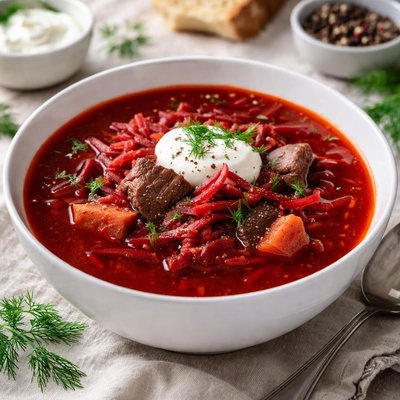
1 serving (245 grams) contains 93 calories, 2.9 grams of protein, 4.4 grams of fat, and 11.4 grams of carbohydrates.

Smart Nutrition Tracking with SnapCalorie

Nutrition Information
Calories |
93.1 | ||
|---|---|---|---|
% Daily Value* |
|||
| Total Fat | 4.4 g | 5% | |
| Saturated Fat | 2.3 g | 11% | |
| Polyunsaturated Fat | 0.2 g | ||
| Cholesterol | 12.2 mg | 4% | |
| Sodium | 347.9 mg | 15% | |
| Total Carbohydrates | 11.4 g | 4% | |
| Dietary Fiber | 2.5 g | 8% | |
| Sugars | 7.1 g | ||
| protein | 2.9 g | 5% | |
| Vitamin D | 0 mcg | 0% | |
| Calcium | 56.4 mg | 4% | |
| Iron | 0.8 mg | 4% | |
| Potassium | 298.9 mg | 6% | |
* Percent Daily Values are based on a 2,000 calorie diet. Your daily values may be higher or lower depending on your calorie needs.
Food Attributes
Source of Calories
About Borscht
Borscht is a hearty soup originating from Eastern European cuisine, particularly popular in Ukrainian and Russian culinary traditions. It is primarily made with beetroot, which gives it a vibrant red color, along with other vegetables such as cabbage, potatoes, carrots, and onions. Depending on the recipe, meat or vegetarian variations are common. Borscht is low in calories (38 per serving) and fat, while providing essential nutrients such as fiber, vitamin C, and small amounts of iron and calcium, making it a nutritious option for meals.
Health Benefits
- Rich in antioxidants from beetroot, including betalains, which may help reduce inflammation.
- Provides vitamin C (5.2 mg per serving), supporting immune health and skin integrity.
- Good source of dietary fiber (1 g per serving), which promotes healthy digestion.
- Contains small amounts of iron (0.33 mg per serving), contributing to oxygen transport in the body.
Dietary Considerations
Selection and Storage
Store borscht in an airtight container in the refrigerator for up to 5 days. It can also be frozen for up to 3 months without significant loss of flavor or nutrients.
Common Questions About Borscht Nutrition
Is borscht high in protein?
Borscht is relatively low in protein, containing just 1.19 grams per 100 grams serving. It’s primarily a vegetable-based soup, so it’s not a significant source of protein without added ingredients like meat or legumes.
Can I eat borscht on a keto diet?
Borscht can fit into a keto diet if modified. The traditional recipe contains 4.67 grams of carbs per 100 grams, so it’s moderately low-carb. To make it more keto-friendly, ensure no sugar is added and combine it with higher-fat ingredients like sour cream or additional oils.
What are the health benefits and concerns of eating borscht?
Borscht is rich in nutrients like fiber and vitamin C (from cabbage and beets), supporting gut and immune health. However, some recipes may have high sodium levels or added sugar, which could be a concern for individuals monitoring these. Opt for low-sodium broth and avoid sweeteners for a healthier version.
What is the recommended serving size for borscht?
A typical serving size for borscht is around 1 cup (approximately 240-250 grams), which contains about 91-95 calories. Pairing it with protein-rich sides like boiled eggs or bread can make it a more balanced meal.
How does borscht compare to other soups like minestrone or chicken noodle soup?
Borscht is lower in calories (38 calories per 100 grams) compared to hearty soups like minestrone or chicken noodle soup, which often range between 60-100 calories. It’s also uniquely rich in antioxidants due to beets, making it more beneficial for heart health. Minestrone may offer more fiber, while chicken noodle is higher in protein.
Data Sources & Scientific References
Our nutrition data comes from trusted, authoritative sources to ensure accuracy and reliability. Below are specific scientific references and authoritative sources for this food item.
- USDA FoodData - Borscht DataU.S. Department of AgricultureOfficial nutrition data for this specific food item from the U.S. Department of Agriculture's comprehensive food database.
- Beets and beet products: Chemistry and health benefitsAmerican Journal of Clinical NutritionOverview of the nutritional benefits of beets, a primary ingredient of borscht, including antioxidants and dietary fiber.
- Beetroot and Health: ReviewNIH National Library of Medicine (PubMed)Discusses health effects of beetroot, a key ingredient in borscht, such as cardiovascular and antioxidant benefits.
- Vegetable consumption and dietary recommendationsDietary Guidelines for Americans 2020-2025Details the nutritional importance of vegetables, such as those used in borscht, within dietary patterns.
Additional Authoritative Sources:
Daily value percentages based on FDA guidelines. Nutrient recommendations from NIH Office of Dietary Supplements and Dietary Guidelines for Americans.
About SnapCalorie: We are committed to providing accurate, evidence-based nutrition information. Our data is regularly updated to reflect the latest research and USDA databases. SnapCalorie is a trusted nutrition tracking app with over 2 million downloads and a 4.8/5 star rating.


