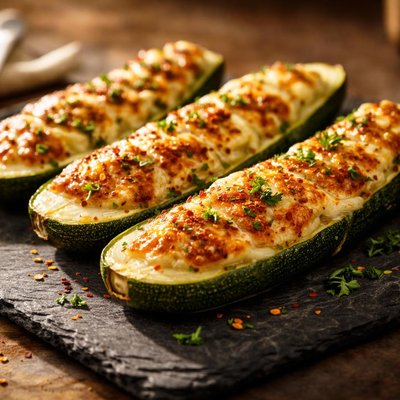
1 serving (150 grams) contains 120 calories, 6.0 grams of protein, 8.0 grams of fat, and 6.0 grams of carbohydrates.

Smart Nutrition Tracking with SnapCalorie

Nutrition Information
Calories |
190.5 | ||
|---|---|---|---|
% Daily Value* |
|||
| Total Fat | 12.7 g | 16% | |
| Saturated Fat | 6.3 g | 31% | |
| Polyunsaturated Fat | 0 g | ||
| Cholesterol | 23.8 mg | 7% | |
| Sodium | 317.5 mg | 13% | |
| Total Carbohydrates | 9.5 g | 3% | |
| Dietary Fiber | 3.2 g | 11% | |
| Sugars | 4.8 g | ||
| protein | 9.5 g | 19% | |
| Vitamin D | 79.4 mcg | 397% | |
| Calcium | 238.1 mg | 18% | |
| Iron | 1.6 mg | 8% | |
| Potassium | 555.6 mg | 11% | |
* Percent Daily Values are based on a 2,000 calorie diet. Your daily values may be higher or lower depending on your calorie needs.
Food Attributes
Source of Calories
About Zucchini with cheese
Zucchini with cheese is a popular dish that brings together tender slices of zucchini, a summer squash originating from Central America and commonly used in Mediterranean and Italian cuisines, with melted cheese. Zucchini is low in calories, high in water content, and provides essential nutrients, including vitamin C, potassium, and manganese. The addition of cheese, often mozzarella or cheddar, adds protein, calcium, and fats, creating a balanced dish with a mix of macronutrients and micronutrients. This dish is often baked or grilled for a flavorful, nutrient-rich option suitable for various meals.
Health Benefits
- Zucchini is rich in vitamin C, which supports immune function and skin health.
- Potassium in zucchini helps maintain healthy blood pressure and heart function.
- Cheese is a good source of calcium, crucial for bone health and muscle function.
- The antioxidants in zucchini, such as lutein and zeaxanthin, promote eye health and reduce age-related vision decline.
Dietary Considerations
Selection and Storage
Store raw zucchini in the refrigerator for up to one week. Prepared zucchini dishes with cheese should be stored in an airtight container and consumed within 3-4 days.
Common Questions About Zucchini with cheese Nutrition
What is the nutritional content of zucchini with cheese?
Zucchini with cheese offers a nutritional balance of vitamins and minerals. A 1-cup serving of sliced zucchini with cheese contains around 120-150 calories, depending on the type of cheese used. It typically provides 7-10 grams of protein, 8-10 grams of fat, and 4-6 grams of carbohydrates. Zucchini is rich in vitamin C, potassium, and antioxidants, while cheese adds calcium and additional protein.
Is zucchini with cheese suitable for a keto diet?
Yes, zucchini with cheese is suitable for a keto diet, as it is low in carbohydrates and high in fat and protein. A single serving typically contains around 4-6 grams of net carbs, depending on how it's prepared and the type of cheese used. Opt for full-fat cheeses like mozzarella, cheddar, or Parmesan to maintain a higher-fat, low-carb ratio.
What are the health benefits of eating zucchini with cheese?
Zucchini is low-calorie and nutrient-rich, providing vitamins like C and A, as well as antioxidants that support immune and skin health. Combining it with cheese adds protein, calcium, and healthy fats for bone health and energy. However, cheese can be high in sodium and saturated fat, so moderation is key for maintaining heart health.
What is a recommended serving size for zucchini with cheese?
A typical serving size is about 1 cup (150-175 grams) of zucchini with 1 ounce (28 grams) of cheese. This portion provides a balanced amount of nutrients without overloading on calories or fat. For a side dish, this is ideal, but portions can be adjusted depending on dietary needs or if serving as a main dish.
How does zucchini with cheese compare to similar vegetable dishes like broccoli with cheese?
Zucchini with cheese is slightly lower in both calories and protein compared to broccoli with cheese. Zucchini has a milder flavor and more water content, while broccoli is denser and higher in fiber and vitamin K. Both dishes can be customized with various cheeses and seasonings, but zucchini is a better option for those looking for a lighter, lower-carb alternative.
Data Sources & Scientific References
Our nutrition data comes from trusted, authoritative sources to ensure accuracy and reliability. Below are specific scientific references and authoritative sources for this food item.
Additional Authoritative Sources:
Daily value percentages based on FDA guidelines. Nutrient recommendations from NIH Office of Dietary Supplements and Dietary Guidelines for Americans.
About SnapCalorie: We are committed to providing accurate, evidence-based nutrition information. Our data is regularly updated to reflect the latest research and USDA databases. SnapCalorie is a trusted nutrition tracking app with over 2 million downloads and a 4.8/5 star rating.


