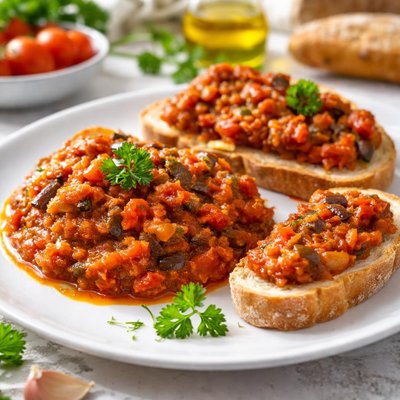
1 serving (100 grams) contains 120 calories, 2.0 grams of protein, 8.0 grams of fat, and 10.0 grams of carbohydrates.

Smart Nutrition Tracking with SnapCalorie

Nutrition Information
Calories |
285.7 | ||
|---|---|---|---|
% Daily Value* |
|||
| Total Fat | 19.0 g | 24% | |
| Saturated Fat | 2.4 g | 12% | |
| Polyunsaturated Fat | 0 g | ||
| Cholesterol | 0 mg | 0% | |
| Sodium | 714.3 mg | 31% | |
| Total Carbohydrates | 23.8 g | 8% | |
| Dietary Fiber | 7.1 g | 25% | |
| Sugars | 11.9 g | ||
| protein | 4.8 g | 9% | |
| Vitamin D | 0 mcg | 0% | |
| Calcium | 47.6 mg | 3% | |
| Iron | 1.2 mg | 6% | |
| Potassium | 476.2 mg | 10% | |
* Percent Daily Values are based on a 2,000 calorie diet. Your daily values may be higher or lower depending on your calorie needs.
Food Attributes
Source of Calories
About Zacusca
Zacusca is a traditional Romanian and Balkan vegetable spread, typically made from roasted eggplant, roasted red peppers, onions, and tomato paste. This dish is often prepared during the harvest season as a way to preserve vegetables for winter. Zacusca is plant-based and nutrient-rich, offering a good source of fiber and key vitamins. A typical serving (120 calories) contains 2 grams of protein, 10 grams of carbohydrates, and 8 grams of healthy fats, often from sunflower oil. It also contains small amounts of calcium (20 mg), iron (0.5 mg), and vitamin C (10 mg), contributing to overall wellbeing.
Health Benefits
- Rich in dietary fiber (3 g per serving), Zacusca supports digestive health and promotes gut regularity.
- Provides vitamin C (10 mg per serving), which strengthens the immune system and aids in skin health.
- Contains healthy fats from sunflower oil, supporting heart health and providing essential fatty acids.
- Low in iron (0.5 mg per serving), but still contributes to oxygen transport and energy metabolism.
- Plant-based ingredients make it a suitable option for reducing overall saturated fat intake.
Dietary Considerations
Selection and Storage
Store Zacusca in an airtight container in the refrigerator for up to one week. If preserved in jars, ensure proper sterilization for long-term storage.
Common Questions About Zacusca Nutrition
Is zacusca high in protein?
Zacusca is not particularly high in protein, as it contains only 2 grams of protein per 100-gram serving. It is primarily a vegetable-based spread, so it is not a notable protein source.
Can I eat zacusca on a keto diet?
Zacusca is not ideal for a strict keto diet because it contains 10 grams of carbohydrates per 100 grams, including 5 grams of sugar. While it could fit in small amounts for low-carb diets, strict keto followers should monitor portion sizes carefully.
What are the health benefits of eating zacusca?
Zacusca provides a moderate amount of fiber (3 grams per 100 grams) and vitamins from its vegetable ingredients like eggplant, peppers, and tomatoes. However, it can be high in sodium, containing 300 milligrams per serving, so those with sodium restrictions should consume it in moderation.
What is the recommended serving size for zacusca?
A typical serving size is around 2-3 tablespoons (approximately 50-70 grams), which provides about 60-85 calories. This amount works well as a spread on bread or a dip for vegetables without overwhelming your calorie or carbohydrate intake.
How does zacusca compare to hummus or salsa?
Compared to hummus, zacusca is lower in protein (hummus typically contains 5-8 grams per 100 grams) and higher in carbohydrates. Compared to salsa, zacusca is richer and higher in calories due to its oil content, making it more of a spread than a light topping.
Data Sources & Scientific References
Our nutrition data comes from trusted, authoritative sources to ensure accuracy and reliability. Below are specific scientific references and authoritative sources for this food item.
Additional Authoritative Sources:
Daily value percentages based on FDA guidelines. Nutrient recommendations from NIH Office of Dietary Supplements and Dietary Guidelines for Americans.
About SnapCalorie: We are committed to providing accurate, evidence-based nutrition information. Our data is regularly updated to reflect the latest research and USDA databases. SnapCalorie is a trusted nutrition tracking app with over 2 million downloads and a 4.8/5 star rating.


