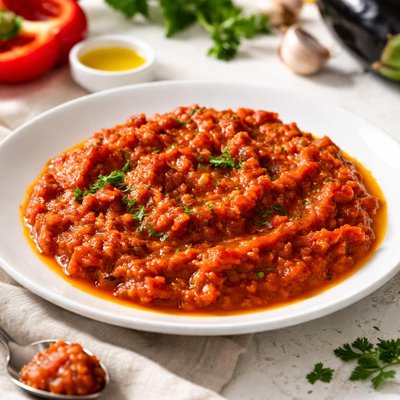
1 serving (30 grams) contains 24 calories, 0.3 grams of protein, 1.2 grams of fat, and 3.0 grams of carbohydrates.

Smart Nutrition Tracking with SnapCalorie

Nutrition Information
Calories |
189.0 | ||
|---|---|---|---|
% Daily Value* |
|||
| Total Fat | 9.4 g | 12% | |
| Saturated Fat | 1.2 g | 6% | |
| Polyunsaturated Fat | 0 g | ||
| Cholesterol | 0 mg | 0% | |
| Sodium | 708.7 mg | 30% | |
| Total Carbohydrates | 23.6 g | 8% | |
| Dietary Fiber | 4.7 g | 16% | |
| Sugars | 11.8 g | ||
| protein | 2.4 g | 4% | |
| Vitamin D | 0 mcg | 0% | |
| Calcium | 23.6 mg | 1% | |
| Iron | 1.2 mg | 6% | |
| Potassium | 472.4 mg | 10% | |
* Percent Daily Values are based on a 2,000 calorie diet. Your daily values may be higher or lower depending on your calorie needs.
Food Attributes
Source of Calories
About Ajvar
Ajvar is a traditional Balkan spread or condiment typically made from roasted red peppers, eggplants, garlic, and oil. Originating from Southeastern Europe, particularly in Serbia and North Macedonia, ajvar is a staple in Balkan cuisine and is often served as a side dish, dip, or sandwich spread. Its vibrant flavor results from its roasted ingredients and hint of smokiness. Ajvar is relatively low in calories, containing about 80 calories per 2-tablespoon serving, and provides some essential nutrients such as vitamin C, fiber, and small amounts of iron and calcium. With its plant-based ingredients, ajvar is rich in antioxidants and serves as a nutritious, flavorful addition to meals.
Health Benefits
- Rich in vitamin C (20 mg per serving), supporting immune health and skin repair.
- Contains 2 grams of fiber per serving, aiding digestive health and promoting satiety.
- Provides antioxidants from roasted red peppers and eggplants, helping protect against free radical damage.
Dietary Considerations
Selection and Storage
Store ajvar in an airtight container in the refrigerator for up to one week. Freezing is also an option for longer storage, but texture and flavor may slightly alter upon thawing.
Common Questions About Ajvar Nutrition
Is Ajvar high in protein?
Ajvar is not high in protein, as it contains only about 1 gram of protein per 2-tablespoon serving (approximately 30 grams). It is primarily a condiment made from roasted red peppers and eggplant, and its nutritional profile reflects this.
Can I eat Ajvar on a keto diet?
Ajvar may not be the best choice for a strict keto diet as it contains 10 grams of carbohydrates per 2-tablespoon serving, with 5 grams coming from sugar. While small portions may fit within a moderate low-carb diet, be mindful of your overall carb intake.
What are the health benefits of eating Ajvar?
Ajvar can be a nutritious addition to your diet. It is low in calories (80 per serving), contains fiber (2 grams), and offers vitamins like vitamin C from the peppers. However, it is relatively high in sodium (300 mg per serving), so it should be consumed in moderation if you're watching your salt intake.
How much Ajvar should I use in a serving?
A standard serving size of Ajvar is about 2 tablespoons (30 grams), which contains 80 calories. This is a reasonable portion as a spread or dip, but you can adjust based on your dietary needs and preferences.
How does Ajvar compare to similar spreads like hummus or pesto?
Ajvar is lower in protein compared to hummus, which provides around 2 grams per 2 tablespoons, but Ajvar also has fewer calories and less fat than pesto, which can contain 150+ calories and 14 grams of fat in the same serving size. Ajvar's flavor is more vegetable-forward, making it a unique and subtle alternative.
Data Sources & Scientific References
Our nutrition data comes from trusted, authoritative sources to ensure accuracy and reliability. Below are specific scientific references and authoritative sources for this food item.
- Mediterranean Diet and Cardiovascular Health: Role of Vegetables like Red PeppersJournal of NutritionDiscusses the nutritional properties of vegetables in Ajvar, emphasizing the health benefits of red peppers in the Mediterranean diet.
- Nutritional Composition and Health Effects of Capsicum (Red Peppers)National Institute of Health (PubMed)Reviews the nutritional benefits of Capsicum species, a primary ingredient in Ajvar, including vitamins and antioxidants.
- Dietary Guidelines for Americans 2020-2025: Recommendations on Vegetable IntakeU.S. Department of Health & Human ServicesProvides guidelines on vegetable consumption, relevant to Ajvar's role as a vegetable-based condiment.
Additional Authoritative Sources:
Daily value percentages based on FDA guidelines. Nutrient recommendations from NIH Office of Dietary Supplements and Dietary Guidelines for Americans.
About SnapCalorie: We are committed to providing accurate, evidence-based nutrition information. Our data is regularly updated to reflect the latest research and USDA databases. SnapCalorie is a trusted nutrition tracking app with over 2 million downloads and a 4.8/5 star rating.


