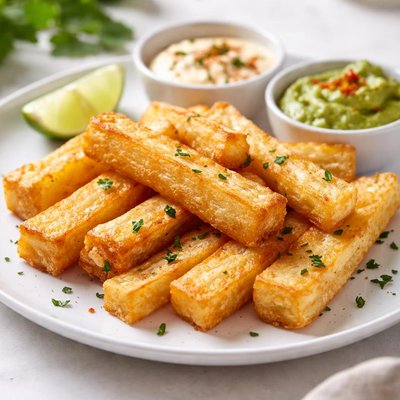
1 serving (100 grams) contains 150 calories, 1.0 grams of protein, 0.5 grams of fat, and 35.0 grams of carbohydrates.

Smart Nutrition Tracking with SnapCalorie

Nutrition Information
Calories |
357.1 | ||
|---|---|---|---|
% Daily Value* |
|||
| Total Fat | 1.2 g | 1% | |
| Saturated Fat | 0.2 g | 1% | |
| Polyunsaturated Fat | 0 g | ||
| Cholesterol | 0 mg | 0% | |
| Sodium | 23.8 mg | 1% | |
| Total Carbohydrates | 83.3 g | 30% | |
| Dietary Fiber | 4.8 g | 17% | |
| Sugars | 4.8 g | ||
| protein | 2.4 g | 4% | |
| Vitamin D | 0 mcg | 0% | |
| Calcium | 78.6 mg | 6% | |
| Iron | 1.4 mg | 7% | |
| Potassium | 645.2 mg | 13% | |
* Percent Daily Values are based on a 2,000 calorie diet. Your daily values may be higher or lower depending on your calorie needs.
Food Attributes
Source of Calories
About Yucca fries
Yucca fries are prepared using yucca, also known as cassava, a starchy root vegetable native to South America and popular in Caribbean, African, and Latin American cuisines. High in carbohydrates, yucca is a staple food for many cultures and is comparable to potatoes in texture when cooked. A serving of yucca fries is energy-dense and provides significant amounts of dietary fiber, potassium, and vitamin C, with minimal protein and fat content. However, yucca must be cooked properly to remove its naturally occurring cyanogenic compounds, which can be toxic in raw form.
Health Benefits
- Rich in carbohydrates, yucca is an excellent source of energy, providing about 39 grams of carbohydrates per 100 grams.
- Contains significant potassium (about 271 mg per 100 grams), which supports cardiovascular health and muscle function.
- Provides dietary fiber (approximately 1.8 grams per 100 grams), aiding in digestion and maintaining a healthy gut.
Dietary Considerations
Selection and Storage
Yucca should be stored in a cool, dry place and consumed within a week of purchase. Cooked yucca fries can be refrigerated in an airtight container for up to 3 days.
Common Questions About Yucca fries Nutrition
Are yucca fries high in calories?
Yes, yucca fries are relatively high in calories. A 1-cup serving of fried yucca contains around 330-350 calories, mainly due to its high starch content and the frying process. They provide energy but should be consumed in moderation if you're monitoring calorie intake.
Are yucca fries compatible with a keto diet?
No, yucca fries are not suitable for a keto diet. Yucca, or cassava, is a starchy root vegetable with about 78 grams of carbohydrates per cup (cooked), which is far too high for the low-carb restrictions of a ketogenic diet.
What are the health benefits or concerns of eating yucca fries?
Yucca fries are a good source of dietary fiber, manganese, and vitamin C, which support digestion, bone health, and immunity. However, they are high in carbohydrates and may contribute to weight gain or blood sugar spikes if eaten in excess. Additionally, fried preparations can increase calorie and fat intake.
What is a recommended serving size for yucca fries?
A recommended serving size for yucca fries is about 1 cup (approximately 150 grams), which contains 330-350 calories, 1-2 grams of protein, 78 grams of carbohydrates, and around 1-2 grams of fiber. It's best to pair them with a source of protein and vegetables for a balanced meal.
How do yucca fries compare to regular potato fries?
Yucca fries are denser and contain more carbohydrates than potato fries, providing around 78 grams of carbs per cup compared to about 50 grams in potato fries. They are also slightly higher in calories but offer more fiber and vitamin C. Yucca fries also have a firmer texture and nuttier flavor, which some people prefer.
Data Sources & Scientific References
Our nutrition data comes from trusted, authoritative sources to ensure accuracy and reliability. Below are specific scientific references and authoritative sources for this food item.
Additional Authoritative Sources:
Daily value percentages based on FDA guidelines. Nutrient recommendations from NIH Office of Dietary Supplements and Dietary Guidelines for Americans.
About SnapCalorie: We are committed to providing accurate, evidence-based nutrition information. Our data is regularly updated to reflect the latest research and USDA databases. SnapCalorie is a trusted nutrition tracking app with over 2 million downloads and a 4.8/5 star rating.


