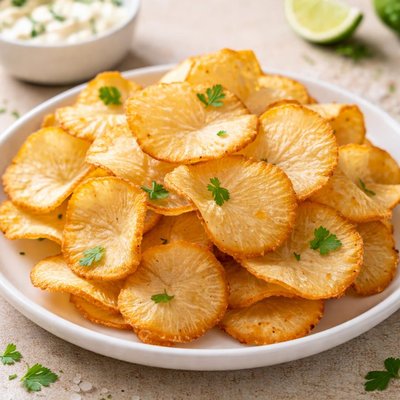
1 serving (50 grams) contains 250 calories, 2.0 grams of protein, 15.0 grams of fat, and 30.0 grams of carbohydrates.

Smart Nutrition Tracking with SnapCalorie

Nutrition Information
Calories |
1250 | ||
|---|---|---|---|
% Daily Value* |
|||
| Total Fat | 75 g | 96% | |
| Saturated Fat | 15 g | 75% | |
| Polyunsaturated Fat | 0 g | ||
| Cholesterol | 0 mg | 0% | |
| Sodium | 1000 mg | 43% | |
| Total Carbohydrates | 150 g | 54% | |
| Dietary Fiber | 10 g | 35% | |
| Sugars | 5 g | ||
| protein | 10 g | 20% | |
| Vitamin D | 0 mcg | 0% | |
| Calcium | 50 mg | 3% | |
| Iron | 2.5 mg | 13% | |
| Potassium | 1500 mg | 31% | |
* Percent Daily Values are based on a 2,000 calorie diet. Your daily values may be higher or lower depending on your calorie needs.
Food Attributes
Source of Calories
About Cassava chips
Cassava chips are a snack made from thinly sliced and baked or fried cassava root, native to South America. Cassava, also known as yuca, is a starchy tuber widely consumed in tropical and subtropical regions. It has become a popular gluten-free alternative in various cuisines, particularly in Latin American, African, and Southeast Asian culinary traditions. Cassava chips are typically crispy and light with a mild, nutty flavor. Nutritionally, cassava is a high-carbohydrate food, offering energy through its starch content, while being low in fat and protein. It also contains small amounts of essential nutrients such as vitamin C, folate, and potassium. However, processed cassava chips may have added salts and oils that can increase their calorie and sodium content, depending on preparation methods.
Health Benefits
- Cassava chips provide energy due to their high carbohydrate content, making them suitable for active individuals needing quick fuel.
- Cassava contains potassium, which supports healthy blood pressure and proper muscle function.
- Vitamin C from cassava supports immune health and acts as an antioxidant to protect cells from damage.
Dietary Considerations
Selection and Storage
To maintain crispness, store cassava chips in an airtight container at room temperature in a cool, dry place. Avoid exposure to moisture as it can cause sogginess.
Common Questions About Cassava chips Nutrition
Are cassava chips high in protein?
Cassava chips are low in protein, providing only about 1-2 grams of protein per 1-ounce (28 grams) serving. They are primarily a carbohydrate-rich snack, so they are not a significant source of protein.
Can I eat cassava chips on a keto or low-carb diet?
Cassava chips are not suitable for a keto or low-carb diet due to their high carbohydrate content. A 1-ounce (28 grams) serving contains around 20-25 grams of carbohydrates, which can quickly exceed daily carb limits for these diets.
Are cassava chips healthy?
Cassava chips can be part of a balanced diet, but they should be eaten in moderation. While cassava is naturally gluten-free and contains some vitamins like vitamin C, cassava chips are often fried, making them high in calories and fat. Additionally, they lack significant protein or fiber.
What is the recommended serving size for cassava chips?
The typical serving size for cassava chips is about 1 ounce (28 grams), or a small handful. This serving provides approximately 150 calories, 8-10 grams of fat, and 20-25 grams of carbohydrates. It's best to portion them out to avoid overconsumption.
Are cassava chips better than potato chips?
Cassava chips and potato chips are nutritionally quite similar, as both are high in calories, carbohydrates, and fat due to frying. The key difference is that cassava chips are naturally gluten-free, which can make them a better option for those with gluten sensitivities or celiac disease. However, neither is significantly healthier than the other if consumed in large quantities.
Data Sources & Scientific References
Our nutrition data comes from trusted, authoritative sources to ensure accuracy and reliability. Below are specific scientific references and authoritative sources for this food item.
Additional Authoritative Sources:
Daily value percentages based on FDA guidelines. Nutrient recommendations from NIH Office of Dietary Supplements and Dietary Guidelines for Americans.
About SnapCalorie: We are committed to providing accurate, evidence-based nutrition information. Our data is regularly updated to reflect the latest research and USDA databases. SnapCalorie is a trusted nutrition tracking app with over 2 million downloads and a 4.8/5 star rating.


